Nigeria Customs advances global trade innovation
The Nigeria Customs Service (NCS) has reaffirmed its commitment to technology-driven border management and international cooperation.
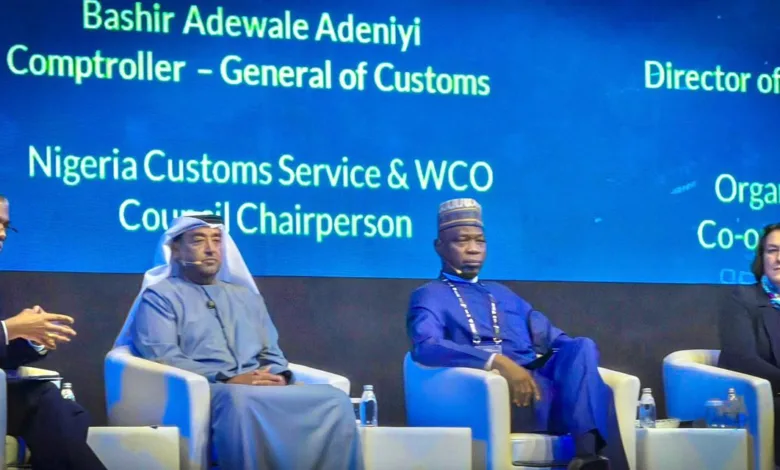
The NCS was led by Comptroller-General of Customs (CGC) Adewale Adeniyi who highlighted its commitment to tech-enabled border management and trade facilitation at the 2026 World Customs Organisation (WCO) Technology Conference in Abu Dhabi, aligning with global best practices in digitalisation, data exchange, and intelligence-led enforcement.
The conference, organised by the WCO under the theme “Customs Agility in a Complex World: Securing and Facilitating Trade through Innovation,” brings together Customs administrations, technology providers, policymakers and industry leaders from across the globe to examine how innovation can strengthen border security while facilitating legitimate trade.
Nigeria’s participation in the high-level event underscores the Service’s ongoing trade modernisation drive and its alignment with global best practices in Customs administration, particularly in data exchange, digitalisation, and intelligence-led enforcement.



Speaking during a panel session titled “Customs Agility in a Complex World: Securing and Facilitating Trade through Innovation,” the CGC, who is also the Chairperson of the WCO Council, emphasised the importance of structured international collaboration in addressing emerging cross-border challenges.
According to the CGC, “Our experience has shown that robust engagement with international organisations such as INTERPOL, World Intellectual Property Organisation (WIPO) and the Universal Postal Union creates opportunities for deeper cooperation, especially in tracking criminal networks, protecting intellectual property and managing emerging trade risks.”
He noted that enhanced data exchange and stronger governance frameworks remain critical to addressing global challenges such as cargo diversion along transit corridors.
“Diversion of goods in transit is not a challenge unique to Nigeria; it is a global issue that requires coordinated Customs-to-Customs cooperation. Through existing WCO instruments and mutual administrative assistance frameworks, Customs administrations can more effectively investigate offences and ensure that goods reach their intended destinations,” Adeniyi said.
The Comptroller-General of Customs further noted that the global Customs response to evolving border challenges has been shaped by a coordinated framework of standards and practical tools developed over time, with technology remaining at the core of these interventions.
According to him, organisational agility goes beyond the deployment of systems and platforms, as it requires the capacity to absorb change, respond to emerging risks and continuously adapt operational approaches.
“Technology has been central to the work of the WCO and Customs administrations worldwide, and the progress recorded by UAE Customs across various operational areas demonstrates what is achievable when innovation is fully embraced,” he said.