Oyo at 50: From memory to mission — by Oluseun Onigbinde
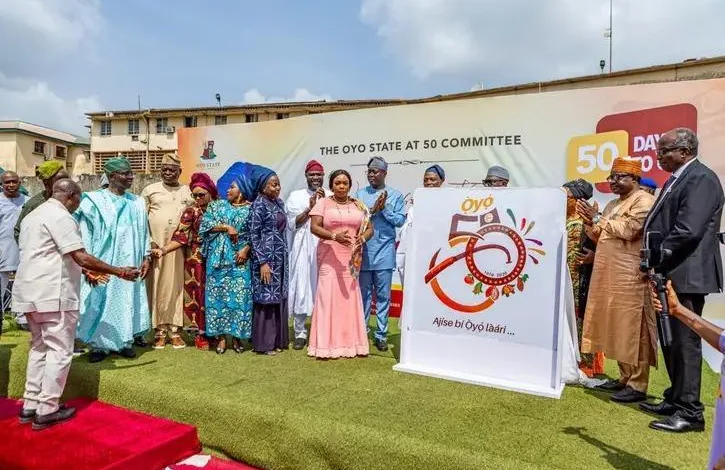
As Oyo state marks fifty years since its creation, a difficult but necessary question confronts us: has the pacesetter state lost its edge, and if so, what will it take to reclaim it? This question animated a recent X (formerly Twitter) Space that brought together policymakers, professionals, technocrats, and civic voices from across the state. The conversation, moderated by civic advocate Oluseun Onigbinde, featured contributions from Hon. Akin Alabi, Ayobami Adekojo, Oladayo Ogunbowale, and other stakeholders who examined Oyo’s proud history, its present challenges, and the choices that will shape its future.
Oyo’s reputation was not built by accident. For decades, Ibadan stood as the intellectual and cultural heartbeat of Western Nigeria. It hosted Nigeria’s first university, television station, stadium, and teaching hospital, alongside research institutes that shaped national thinking. Education, ideas, and innovation were not slogans but lived realities. That legacy earned Oyo its identity as a state that led rather than followed. Today, however, there is growing unease that the state has been living off its history rather than extending it. The contrast between past promise and present reality is increasingly hard to ignore. Industries that once anchored the local economy have thinned out or disappeared, and businesses that might have chosen Ibadan have settled elsewhere. While Oyo remains an important contributor to national productivity, it must now define its next growth clusters and clarify its competitive advantage.
Much of this challenge is structural. Without reliable power, industrial revival remains elusive. This is one area where neighbouring Ogun state has gained a clear advantage, leveraging multiple industrial corridors linked to Lagos to steadily position itself as Nigeria’s leading industrial capital. For Oyo to compete, critical infrastructure—such as the gas pipeline along the Lagos–Ibadan corridor—must gain traction. Harnessing this asset would allow the state to leverage proximity to Nigeria’s largest market while stimulating manufacturing and logistics growth across new development zones.
Education, once Oyo’s strongest advantage, is another area of concern. Public schools that once produced some of Nigeria’s finest minds now struggle to replicate that legacy. Oyo’s historical edge lay in its strong urban learning environment, disciplined values, and high educational standards. The critical question is what public education in Oyo will look like over the next three decades. Will it equalise opportunity, supply skilled manpower for an expanding industrial base, and anchor social mobility, or will those capabilities be ceded to other states? A state that loses its educational edge risks losing its future.




Closely linked to this is the problem of talent flight. Oyo continues to train young people, but too often fails to retain them. The state once enjoyed an early advantage in technology, hosting one of Nigeria’s first internet exchange points and benefiting from a relatively robust telecommunications infrastructure. Yet these advantages were never fully connected to the rise of the service economy or the digital sector. Proximity to Lagos and improving transport links should make Oyo State an attractive base for professionals and businesses in technology, the creative economy, and agribusiness. Geography alone, however, is not enough; policy must actively convert proximity into opportunity.
The social consequences of economic stagnation, which Oyo state increasingly grapples with, are already visible. Rising youth unemployment and drug abuse, particularly in urban centres, are warning signs that cannot be ignored. In a city once renowned for poets, writers, publishers, architects, and artists, the erosion of cultural infrastructure raises a deeper question about identity. How does Oyo reclaim its status as the cultural capital of the region? Sports, arts, vocational training, and community spaces are not luxuries in this context. They are essential tools for social stability, talent discovery, and youth development. Investing in them is as much a security strategy as it is a social one.
Oyo also faces a broader question of economic identity. What should the state be known for in its next chapter? Tourism, agriculture, and agro-processing are often cited as areas of promise, yet they require far more deliberate action. Tourist sites need greater attention, agricultural value chains remain weak, illegal mining persists in parts of the northern axis, and processing capacity is limited. It must be acknowledged that the current administration has made progress, particularly in improving intra-regional road connectivity and advancing agricultural hubs. Still, much more needs to be done to translate infrastructure into inclusive and sustainable economic growth.
Equally important is spatial balance. Growth in Oyo has been heavily concentrated in Ibadan, leaving other towns and secondary cities underutilised. Sustainable development requires deliberate investment beyond the capital. Cities such as Ogbomosho, Oyo, Iseyin, and Saki have the potential to become hubs for education, agriculture, manufacturing, and culture if they are integrated into a coherent statewide vision rather than treated as afterthoughts.
Underlying all these issues is the question of leadership—not leadership defined by projects alone, but by consistency, clarity, and people-centred planning. Flyovers and monuments may be visible, but they do not substitute for human capital development, institutional strength, and policy continuity. States that succeed do so because they pursue long-term plans that survive political cycles and are measured by outcomes rather than announcements. There are encouraging signs that the quality of political leadership in Oyo is improving, and this progress must not be reversed. A sophisticated and engaged electorate remains one of the state’s greatest assets and must be protected.
At fifty, Oyo state stands at a turning point. This anniversary should be more than a moment of reflection; it should be a moment of decision. Reclaiming the Pace-Setter identity will require difficult choices, sustained investment, and the courage to think beyond the next election. It will demand renewed focus on education, energy, youth development, industry, and inclusive growth.
History has already shown what Oyo is capable of at its best. The question now is whether it is ready to build a future that matches its past—or whether the title of Pace-Setter will remain a memory rather than a mission.
Oluseun Onigbinde, the chief executive officer of BudgIT, hails from Ogbomoso, Oyo State