Reuniting leadership for Ogun State’s progress — by Gbenga Onabamiro
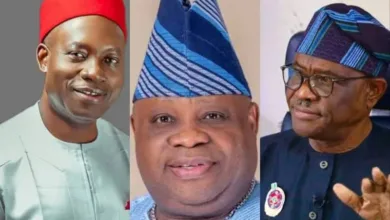
Ogun State has reached a defining moment where personal ego must yield to enduring legacy. For over two decades, three Very important Personalities: Otunba Gbenga Daniel, Senator Ibikunle Amosun, and Governor Dapo Abiodun, have shaped the political destiny of the Gateway State. Once bound by friendship and shared purpose, they now represent a leadership divided by rivalry and recrimination. While disagreements are natural in politics, prolonged feuds have weakened institutions, distracted governance, and cost the state valuable time and trust. This is a moment that calls not for victory over one another, but for vision beyond personal battles, because Ogun State’s future is too important to be sacrificed on the altar of endless political wars.
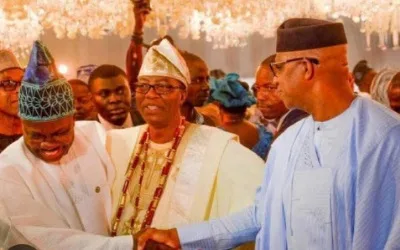
There was a time in Ogun State politics when the bond among the three appeared unbreakable. They were political soulmates—strategists who shared platforms, dreams, and victories. Two would become former Governors; the third is the sitting Governor. Together, they once looked like the “Three Musketeers” of Ogun politics: aligned in purpose, united in ambition, and formidable in influence. Today, that camaraderie lies in ruins.
What remains is a theatre of rivalry so bitter that allies have turned into adversaries, sometimes behaving like sworn enemies while flying the same party flag in the same state. The public record bears painful testimony: intra-party wars, parallel structures, expulsions and suspensions, court battles, and—most tragically—the destruction of party offices and properties that should have symbolised shared ownership and collective destiny.
Each of the three, at different moments, has felt attacked by the others; each has also been accused of deploying power to wound rivals. The Daniel–Amosun fallout reshaped the state’s political map, birthing hostility that spilled into elections and governance. The Amosun–Abiodun rupture followed, marked by open disagreements, factionalisation, and bruising contests that weakened party cohesion. Daniel and Abiodun, once close, have not been immune from mutual suspicion either. The cycle has repeated itself: friendship, fallout, retaliation.
Lost in all of this is our dear Ogun State.
Political rivalry is not a crime; it is the oxygen of democracy. But when rivalry degenerates into vendetta—when properties are destroyed under one guise or the other, members expelled and institutions weaponised, the people pay the price. Investors read instability as risk. Civil servants absorb uncertainty. Young people learn that politics is war, not service.
Ogun State has no shortage of challenges: infrastructure gaps, youth unemployment, industrial expansion that needs coordination, education that demands sustained investment, and security that requires unity of command. These problems do not ask which Governor initiated which project; they ask for continuity, cooperation, and calm leadership.
This is why the three must stop the fight.
History has already secured their places. Gbenga Daniel’s era marked ambitious visioning and foundational projects. Ibikunle Amosun’s tenure reshaped urban aesthetics and asserted state authority.
Dapo Abiodun’s administration is pushing economic corridors, infrastructure renewal, and industrial consolidation. None can erase the other. Ogun’s progress is cumulative, not competitive.
They share a common political home and a common constituency. Public infighting within the same party weakens governance, emboldens opposition, and erodes public trust. Leadership is not measured by how fiercely one defeats an ally, but by how maturely one manages differences.
Reconciliation is not surrender. Statesmanship demands the humility to de-escalate, to draw red lines around violence and destruction, and to agree, that Ogun’s interest comes before personal grudges. They do not need to be friends again; they need to be responsible elders.
The Three Musketeers once stood shoulder to shoulder. Ogun State needs them to stand down from endless battles and stand up for the future. The state is bigger than any ambition, stronger than any feud, and wiser than politics of perpetual war.
Enough of the dirty fights. Enough of the broken bridges.
For Ogun to move forward, our influential political figures must choose collaboration over conflict, legacy over ego, and progress over pride.
Ogun State does not need new heroes; it needs healed leaders. History will not remember who won internal battles, but who rose above them for the common good. Otunba Gbenga Daniel, Senator Ibikunle Amosun, and Governor Dapo Abiodun have each had their moment in power, now they must earn their moment in legacy. The time has come to lower the temperature, protect shared political institutions, and place Ogun above ego. If they choose unity over rivalry, the state will move faster, stronger, and surer. If they do not, history will judge the silence of wisdom more harshly than the noise of conflict.
- Onabamiro is a Professor and a distinguished indigene of Ogun State