Rigging, vote buying must end for democracy to thrive – Adebayo
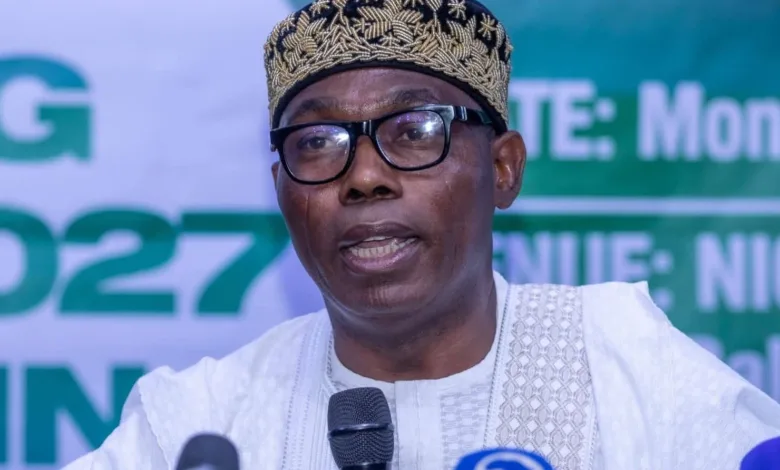
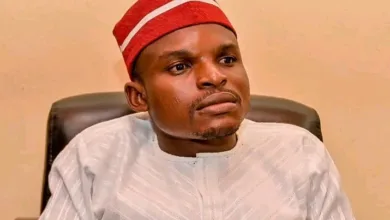
The presidential candidate of the Social Democratic Party (SDP) in the 2027 general elections, Prince Adewole Adebayo, has said that election rigging and vote buying must be eliminated for Nigeria’s democracy to thrive. Speaking recently in a media interview, Adebayo shared his views on the proposed six-year single term for the president, expectations for the SDP ahead of the 2027 elections, and other national issues. Excerpts
At one point, a group within your party put forward its own presidential candidate. What is the current situation?
We are not bothered about that. It is a normal occurrence in politics. If you recall, a similar situation arose four years ago when some people floated Senator Hina’s name. Eventually, the matter was resolved in Lagos when he publicly raised my hand and declared that we had only one candidate.

I believe the burden is now on the Independent National Electoral Commission (INEC) to avoid wasting time on such distractions and simply follow the law. In politics, just as in sports, there will always be people trying to pull you back, tug at your shirt, or trip you up. It is a contact sport, but our focus remains firmly on the goal.
My priority is to deliver on the mandate given to me by the party, to offer Nigerians an alternative vision and renew their hope that things can improve. We are committed to implementing the provisions of Chapter Two of the Constitution, particularly the Fundamental Objectives and Directive Principles of State Policy. We also intend to provide practical solutions to the country’s economic, security and welfare challenges.
Nigeria must take advantage of emerging opportunities in new industries, especially at a time when young people make up the majority of the population. These are the issues we should be discussing.
As far as the legal requirements for nomination are concerned, we have fulfilled our obligations. The responsibility now lies with INEC to conduct a free, fair and credible election. Our task is to engage the people and ensure that the campaign focuses on issues that matter, rather than the internal disputes of political parties.
What Nigerians deserve is a contest of ideas, with the media providing a fair platform for all parties to present their programmes. That way, voters can make informed decisions when the time comes.
The challenges Nigeria is facing today stem from the agenda that President Tinubu presented during the last election. At the time, many people were distracted by debates over issues such as the Muslim-Muslim ticket and other matters that were not central to governance. They overlooked policy proposals that we warned could create serious difficulties for the country. Unfortunately, those concerns have now become reality.
You have spoken about the expectations of Nigerians, particularly in anticipation of the 2027 elections. What are your views on the proposal for a single six-year term for the president?
It’s a distraction. These are the kinds of debates that tend to surface around election periods. The government is like a football team that is one goal up with 15 minutes left on the clock, they start playing for time, doing everything possible to manage the clock.
Whether it is a six-year term or a four-year term is not the real issue. The real issue is building a system that actually works—one where the voter truly decides the outcome, and where INEC is not viewed as though it were a secret society.
Political parties should be platforms for ideas and for nurturing new leaders, so that at congresses and conventions, credible new figures emerge who inspire hope. Nigeria has capable people who can offer solutions to these challenges, and they will continue to present ideas that can work.
My focus, especially as we approach June 12, is that we must once and for all eliminate the problem of election rigging. We must ensure that voters are free to vote and that their votes truly count.
Ultimately, the question of how long someone stays in office is secondary. What matters is what is done while in office. The current system of four years, with the possibility of renewal for another four years if the people so decide, is sufficient, provided that elections are free, fair, and credible.That is where our attention should be.
There are people who believe the SDP may not have what it takes to win a presidential election. Do you think you can win a free and fair election to become Nigeria’s president, and what gives you that confidence?
I have better things to do if I want to entertain myself, I have plenty of hobbies, which we can talk about another time. But politics, at a time like this, is not about entertainment; it is about responding to the issues of the moment.
What is bringing us back to this discussion is the expectation that Nigeria must finally have free, fair, and credible elections, where vote buying and rigging are eliminated. Only then can we truly measure the strength of political parties and understand where each stands.
Under the current system, it is difficult for any honest person to confidently swear that the results reflect the true will of the people. Across the country, the demand for alternatives is growing every day. There is hardly any area of national life where the ideas being promoted by the SDP do not resonate.
Our positions on security, the economy, infrastructure, welfare, and the ethics of governance are the kinds of ideas Nigerians are increasingly interested in. The SDP, in that sense, remains close to the grassroots.
We are also known for our firm principles. We do not buy votes. We do not campaign on ethnicity or religion. Nobody can come into the SDP and claim entitlement based on “it is our turn” politics, we will not accept that. We insist on discipline, and we protect the integrity of our platform.
The challenge in the short term is that, in a flawed system, those who bend the rules often appear to have an advantage. But over time, systems that rely on illegality and distortion become unsustainable. When that happens, Nigerians are forced to pay closer attention to the need for credible elections, where issues like war chests and illicit funding no longer dominate.
At that point, politics begins to shift toward merit: how popular a party is, how competent a candidate is, how free they are from scandal, and how well they understand the issues that matter.
That is the direction we are pushing for. We try to lead by example and avoid shortcuts that only give the illusion of success. Sometimes, you see public resources mismanaged on projects that could have been delivered at far lower cost, and you realize the system rewards inefficiency and bad practice in the short term.
But in the long run, such a system cannot sustain itself. With a growing youth population and rising awareness, Nigeria will eventually have no choice but to embrace good politics, because good politics is the only pathway to good governance, and good governance is the foundation for solving our national challenges.
You have been critical of the removal of fuel subsidies. If elected president in 2027, would you reinstate the fuel subsidy? Given your argument that its removal has contributed significantly to rising poverty and hardship, do you believe subsidies should be brought back? Would that form part of your economic agenda for Nigeria?
No, the issue is that while the removal of the subsidy was a major mistake, President Tinubu has gone on to make even bigger mistakes since then.
What we argued four years ago, and we were among the few voices saying it was that Nigerians should not be deceived by the narrative surrounding subsidy removal. We made that argument for three reasons.
First, we maintained that there was no real subsidy in the first place. What was being described as subsidy removal was essentially a price adjustment for products that Nigeria was not producing. The real solution lay in fixing the country’s refining capacity by rehabilitating the four state-owned refineries, two in Port Harcourt, one in Warri, and one in Kaduna. We had spent enormous sums on turnaround maintenance over the years, yet there was little accountability for how those funds were used.
Our proposal was based on a three-step approach. The first step was to ensure that the refineries became operational in the medium term. Given the resources already invested, many of them could work if there was genuine political will.
Second, we proposed reducing people’s dependence on petrol, particularly low-income earners and energy-poor households. Through a functional multimodal transportation system, which could be developed within a relatively short period, and by enabling workers to commute using employment-linked transport schemes, Nigerians would be less vulnerable to fluctuations in petrol prices.
Third, we argued that Nigeria should be structured to refine more petroleum products than it consumes. That would place the country on a sustainable path and reduce dependence on imports.
Our fundamental disagreement with the government was that it failed to appreciate the multiplier effect of fuel pricing on the economy. If you do not understand the multiplier effect, you have no business managing an economy. Petrol prices affect both production costs and the cost of living. They increase operating expenses for industries, businesses, and offices, while simultaneously driving up inflation and reducing the welfare of ordinary citizens.
At the time, the government focused narrowly on what was estimated to be about N2 trillion in subsidy costs. It turned the issue into a boogeyman, much in the same way that insecurity is sometimes used to frighten people today, rather than addressing the underlying structural problems. What has emerged instead is a new petroleum industry framework in which individuals within government have become major players.
You have visited Oyo State, Plateau State, and several other parts of the country in the aftermath of attacks, killings, and abductions. If you were Nigeria’s president today, would you negotiate with bandits, or would you adopt a different approach to addressing the country’s security challenges?
No, absolutely not. As president, there can be no room for negotiating with criminality. You cannot enter into partnerships with criminals, nor can you share the country’s territorial integrity with bandits.
And who are these bandits? If you profile them properly, many are low-level combatants. They are not an overwhelming force comparable to a conventional military threat. They have simply become emboldened because the government has created space for them to operate. Criminals become bold when they believe there are no consequences for their actions.
The reality is that the government possesses greater firepower, superior intelligence capabilities, and the resources necessary to confront these threats. The problem is not a lack of capacity; it is a lack of political will.
Nigeria’s security agencies are filled with capable and professional officers. Take the police, for example. Many people underestimate the Nigeria Police Force, but they do so at their own peril. The police have highly competent personnel. However, they are constrained by a security architecture in which politics often takes precedence over professionalism.
A Commissioner of Police is frequently distracted by political pressures, while the Inspector-General of Police can be drawn into partisan activities rather than focusing on core security responsibilities. Law enforcement agencies should be allowed to operate professionally and independently. The role of politicians is to make laws and provide oversight, not to direct day-to-day policing operations.
In many democratic countries, law enforcement agencies enjoy a significant degree of operational independence. Political leaders do not simply pick up the phone and order the arrest of political opponents. That level of institutional independence is what Nigeria needs if it is to build an effective security system.
What has happened in Nigeria is that the political class has gradually overshadowed security professionals. We need to reverse that trend and restore professionalism to our security institutions.
I want Nigerians to understand that no terrorist group, bandit network, or kidnapping gang is capable of overwhelming the Nigerian state if the government is determined to fulfil its constitutional responsibility. The challenge is not capacity; it is commitment.
Citizens must also make security a central issue in public discourse and electoral decisions. When communities face threats, they should raise the alarm early and demand action from government. And when it is time to vote, security should be a top consideration—not ethnicity, religion, or financial inducements.
The most basic duty of government is to protect lives and property. Nigerians deserve a government that takes that responsibility seriously and performs its constitutional obligations effectively. That is why the SDP continues to engage communities across the country—to understand their challenges and offer practical solutions.
There are those who say that talk is cheap and that it’s easier said than done. You criticise the governmenlt, but when you get into office, the realities may be different. Do you agree?
No, no. You see, talk is not cheap; it is senseless talk that is cheap. Sensible talk requires critical thinking, access to accurate data, an understanding of what is happening, and knowledge of how government works.
Anyone who aspires to lead a government without understanding what is going on within that government does not deserve to be there. We must recognise the importance of understanding our system of governance and how it functions.