Seeds of reform, fruits of renewal, by Olu Verheijen
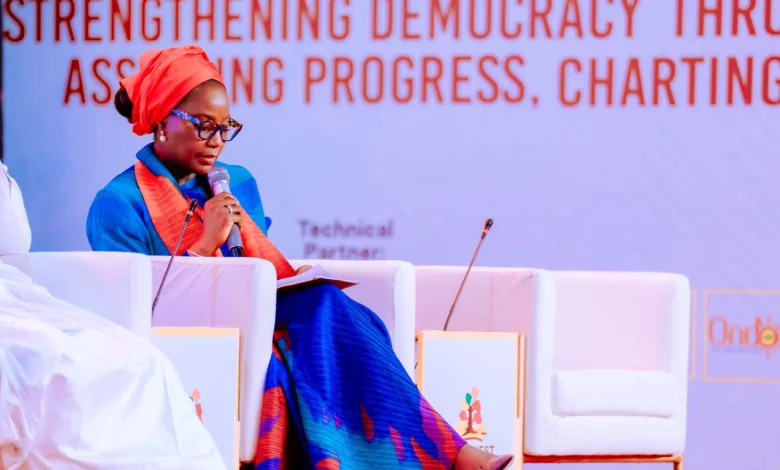
Our royal fathers, political leaders, our mothers—seen and unseen, excellencies, distinguished ladies and gentlemen—permit me to stand on existing protocols.
I thank our co-host, my Governor, His Excellency Lucky Ayedatiwa.
I also thank our Chief Host, the legend and the institution himself, Pa Ruben Fashoranti. Thank you for everything, Papa.
Opening
My people of the Southwest, every farmer knows that harvest does not come the same day you plant. You must first till the land, sow the seeds, and pray for rain.
That is what our nation has been doing over the past two years — sowing the seeds of reform so that the harvest of prosperity may reach every family, every farm, and every school.
Fiscal & Economic Reforms – “Clearing the Ground for Growth”
The fuel and foreign exchange subsidies were like weeds that drained our soil — consuming trillions that could have built schools, roads, and clinics.
By removing them, President Tinubu cleared the field so that new crops can grow.
These reforms have increased allocations to states, giving the Southwest more resources to invest in our communities, our infrastructure, and our people.
Power Sector Reforms – “No Harvest Grows Without Rain”
Electricity is the water that nourishes our economy.
Through the Presidential Metering Initiative, one million meters are being deployed across the Southwest — ending estimated billing, promoting fairness, and improving liquidity to attract fresh investment.
Targeted electricity subsidies ensure that the poorest households continue to access affordable power, while wealthier consumers pay their true share.
New investments through the Power Sector Debt Reduction and Distribution Reform Programmes (PPSDRP, DISREP, PPI) are expanding generation and transmission infrastructure.
Soon, our farmers and small industries will enjoy more reliable power — to preserve produce, process cassava, and power small factories. That is what harvest feels like.
Gas for Growth – “Fertilizing the Soil”
Our land cannot produce without fertilizer, just as our economy cannot grow without energy.
The government is expanding pipelines such as the Escravos–Lagos System, delivering gas to industries in Sagamu, Ibadan, and Ilorin — with Ondo State directly benefiting as the network spreads across the Southwest.
Over $8 billion in new upstream gas investments have already been unlocked, with another $20 billion expected by 2029.
Gas is not just for electricity — it is the raw material for fertilizers, methanol, and petrochemicals. These are the nutrients that make our farmlands more productive, our factories busier, and our exports more competitive.
New gas projects will feed fertilizer and petrochemical plants that support farmers in Ondo, Ekiti, and Oyo — reducing fertilizer costs, boosting crop yields, and powering local agro-processing industries.
These value chains — from gas to fertilizer, farm to factory — will deliver:
•   Cheaper food at home as local production expands and transport costs fall.

•   Exportable agro-products such as cassava starch, cocoa butter, and ethanol that can compete globally.
This is how we turn gas beneath our soil into food on our tables — and jobs in our communities.
⸻
Energy Independence – “Growing What We Consume”
A wise farmer does not keep buying from others what he can grow himself.
For too long, Nigeria exported crude oil only to import refined petrol at higher cost. Those days are ending.
Through bold fiscal reforms, deregulation, and private sector-led investments in refineries, Nigeria is now achieving self-sufficiency in petroleum products.
This transformation means that the fuel powering our cars and tractors is increasingly refined at home — by Nigerians.
The recent announcement that a Dangote refinery will scale up operations marks a turning point. We are moving from being an import-dependent nation to a regional energy supplier.
This shift reduces foreign-exchange pressure, stabilizes fuel prices, and opens new export revenue streams that strengthen the naira and the national budget.
For our farmers, cheaper and more reliable fuel means lower logistics costs from farm to market.
For our civil servants, it means a more stable economy that protects purchasing power.
For our universities and polytechnics, it means new opportunities for research and innovation in refining technology, supply chain management, and energy systems.
We have planted reforms in our oil and gas fields — and the fruit is energy independence, new jobs, and pride in what we make with our own hands.
“The Harvest Is Near”
We acknowledge the hardships that come with reform.
The yam does not sprout the same day it is planted. But when it does, the farmer smiles — because he remembers the sweat that made it grow.
We have planted reforms that are already sprouting — in energy, in jobs, in stability.
The rains are gathering: more investments, more local industries, more power.
The harvest will be rich — not just in Abuja and Lagos, but in every village and town across the Southwest and the nation.
From the farms of Ose to the classrooms of Ogbomoso, every Nigerian will soon feel the yield of the seeds we have sown.
Our planting season is ending. The harvest is near — and this time, everyone will eat from the bounty.
Under President Bola Ahmed Tinubu, GCFR, Hope is Renewed — Hope built on Action.
- Address delivered by Olubukola Arowolo Verheijen,
Special Adviser to the President on Energy at the South-West Stakeholders’ Citizen-Government Dialogue organized by Afenifere and DAWN Commission in Akure