State Police : IGP Disu, take your flowers! — by Ismail Omipidan
When the immediate past Inspector-General of Police, Kayode Egbetokun, left office, I gathered that part of the reason he was removed was his reported opposition to the establishment of State Police. At the time, I was hesitant to buy into that narrative, largely because of certain things I knew and the complexity of the issue.
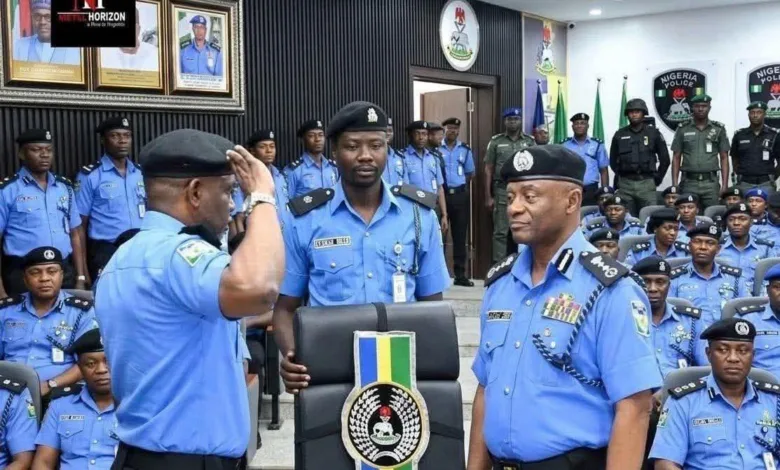
However, with the inauguration of a State Police Committee by the new IGP, Tunji Disu, coming barely days after President Bola Ahmed Tinubu told lawmakers to consider constitutional amendments to accommodate State Police, I am now more persuaded to believe that narrative. For me, this sequence of events sends a clear signal that President Tinubu is serious about the issue. He appears determined to move beyond rhetoric and push for structural reform in Nigeria’s policing architecture. As someone who has long advocated for State Police, I welcome this development, and Mr President has my unwavering support.
Before the 2015 presidential election, one of the key promises made by the then-opposition All Progressives Congress (APC) was the establishment of a decentralised policing system. They argued that true federalism would guarantee such a structure.
To demonstrate what appeared to be a commitment to that agenda, a committee was set up, chaired by Mallam Nasir El-Rufai, with Senator Olubunmi Adetunbi serving as secretary. I was the Political Editor of The Sun at the time and played a role in advocating for the committee’s work. However, what became of the committee’s report remains unknown till today.


Sadly, from then till now, it is clear to any discerning Nigerian that our current security architecture does not seem to be working. And that is why some of us are advocating for the establishment of State Police. We must, therefore, end the cycle of pretense by our leaders when it comes to national security. Enough of the endless security summits and talks that rarely produce tangible results.
In 2024, Speaker Tajudeen Abbas convened what he called a dialogue on security. From that gathering, most of the participants were unmistaken in their preference for a state police, insisting that it was the right path forward. The dialogue, which took place just as I was putting finishing touches to my book, ‘Persona Non Grata’, encouraged me to devote some space to discuss state policing and why I believe it is necessary and desirable. It was my modest attempt to analyse the challenges of our country’s security situation and to offer ideas that could provoke Nigerian leaders to pause, reflect, and consider how best to build a functional and sustainable security architecture. This is why I commend IGP Disu for taking the step to set up the state police committee barely a week after his appointment. Take your flowers! You have earned it.
As a media consultant to the Senate Committee on Constitution Review in the 7th Senate, and as someone who worked very closely with former Deputy President of the Senate, Senator Ike Ekweremadu, I have followed closely the debate for and against decentralised policing system, and I have come to the inevitable conclusion that state police is what we need, if we are serious about confronting our current and future security challenges frontally.
To help the police and our lawmakers save time, energy and resources on the matter, so as to fast-track the process, I advise them to revisit the report of Ekweremadu’s committee, which highlighted key legal and policy provisions that need to be reviewed to aid the establishment of state police.
The Ekwerenadu’s committee had explained the need to amend Sections 214 and 215 of the constitution that empower the federal government to exclusively control the police force. It also recommended removing “police” from Item 45 of Part I of the Second Schedule to allow states to establish their own police services under approved guidelines. Additionally, the National Assembly would be empowered to provide the framework for the establishment, structure, and powers of the state police.
It submitted further that the powers of state governors should be limited to making policing policies and should not extend to the operational use and control of the police, just like the National Judicial Council (NJC), and that the Federal Police Service should exercise a level of oversight over the activities of state police among others.
Given that President Tinubu’s position on State Police is now unambiguous, I would be willing to share a sample of the proposed bill prepared by the Ekweremadu Committee at the time. The document, of course, can be further reviewed and improved upon, and I would gladly make it available to the relevant authorities should they show interest.
The Bill seeks to establish The Federal Police, State Police, National Police Service Commission, National Police Council, and State Police Service Commission for the states.
IGP Disu, you have taken off well. Nigerians who are advocates of state police are watching. It is my prayer that you land well. Fi Amanillah (journey mercies). Nigeria’s security challenges demand bold and practical solutions, and decentralising policing is, in my view, a step in the right direction.
–Omipidan is a seasoned Political Strategist, an author, a journalist and Public Affairs Analyst.