The silence that speaks: Peter Obi and the IPOB question — by Kayode Adebiyi
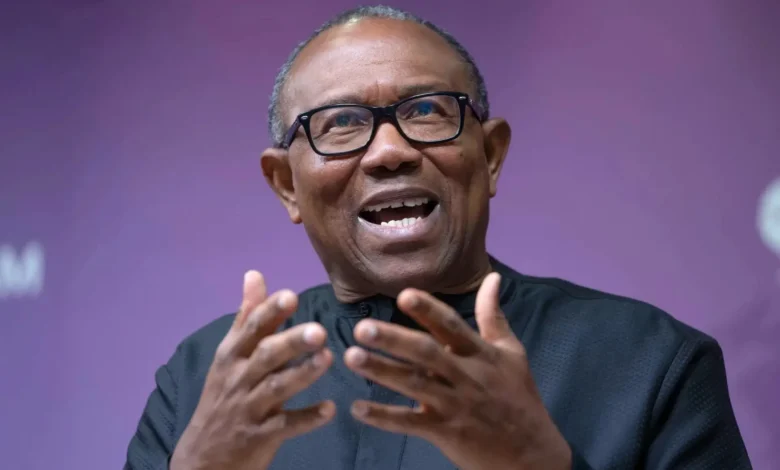
There is a kind of silence that says more than a thousand speeches. And in Nigerian politics, few silences have raised as many questions as Peter Obi’s prolonged quiet on IPOB.
Over the years, Obi has carefully built a reputation as the voice of conscience by manipulation. The man of restraint. The apostle of good governance. The politician who speaks passionately about insecurity and national cohesion. Yet, on one of the most disruptive security challenges within his own region, his voice has been noticeably missing. Not measured. Not nuanced. Just missing.
IPOB is a proscribed organisation. That is not an opinion; it is the position of the Nigerian state. Its activities, alongside those of its armed offshoot, ESN, have severely damaged economic life in the South East. Weekly shutdowns, enforced fear, and violence have become normalised. Businesses suffer. Families lose income. Ordinary people live under quiet intimidation.
Its most visible figures, Nnamdi Kanu and Simon Ekpa, are both in jail, one in Nigeria, the other in Finland. Yet Obi has never clearly or publicly condemned the group’s methods or distanced himself from its excesses. Instead, he has at times sounded sympathetic, even questioning why Kanu should be detained at all.

That statement alone unsettles many. Not because empathy is wrong, but because leadership demands clarity. A man who seeks to lead a fragile and diverse federation cannot afford ambiguity when violence and intimidation are involved. Understanding grievances is one thing. Appearing to excuse lawlessness is another.
Perhaps the most painful silence has been over the Monday sit-at-home orders. In Onitsha Main Market, Aba, Owerri, and across the South East, traders have paid the price week after week. Shops shut. Goods rot. Fear decides when people work. Obi, a former governor with enormous influence in the region, never publicly called for an end to it. Never appealed directly to traders to reclaim their livelihoods. Never used his moral authority to calm the streets.
Then came a contrast that many could not ignore.
When Chukwuma Soludo, Governor of Anambra State, decided that enough was enough, he acted. He engaged where dialogue was possible and enforced the law where it was necessary. The result was immediate. Markets reopened. Businesses returned. Normal life resumed. That is what leadership looks like in practice, not theory.
This is why Obi’s frequent commentary on national insecurity rings hollow to some. You cannot speak loudly about insecurity in distant regions while tiptoeing around the violence and intimidation closer to home. You cannot condemn disorder in abstract terms and avoid it when it wears familiar colours.
Leadership is not about always pleasing your base. It is about saying difficult things when silence is more convenient. Obi’s challenge is not what he has said over the years. It is what he has consistently refused to say. At the end, who showed leadership between Obi and Soludo?
And in politics, silence is never neutral.