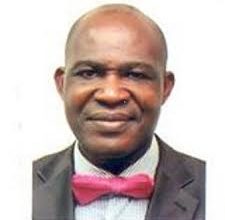
Theories vs distance: Why coups are difficult in Nigeria, by Oluwadare Ayeni

This perspective comes from a scholar of political science and public administration, not from a professional military officer. It is an analysis of why coups in Nigeria have become increasingly difficult, and it invites validation or critique from serving or retired military officers.
Africa’s post-independence history is marked by frequent military interventions. From Cairo to Conakry, from Lagos to Lilongwe, soldiers repeatedly stepped into politics, claiming to save nations from corruption and collapse. Between 1960 and 1990, more than sixty successful coups and over a hundred failed or attempted ones reshaped the continent’s political landscape. Ghana’s Kwame Nkrumah was overthrown in 1966, Nigeria’s Tafawa Balewa and Aguiyi Ironsi fell the same year, Idi Amin seized Uganda in 1971, Mengistu Haile Mariam rose in Ethiopia in 1974, and Samuel Doe captured Liberia in 1980. Each case reflected the fragility of political institutions and the recurring belief that the army could restore order.
Scholars have long tried to explain this cycle. Ali Mazrui described it as the “military messiah complex,” the illusion that soldiers could redeem the nation through force. Bayo Adekanye highlighted structural causes such as economic inequality, politicized recruitment, and institutional weakness. Huntington, Nordlinger, Welch, Paret, Decalo, and others emphasized professionalization and civil–military relations, arguing that coups flourish when the military becomes the arbiter rather than the servant of politics. Oyeleye Oyediran and Eboe Hutchful examined how institutional decay, weak civilian oversight, and patronage networks fueled interventions.
Nigeria experienced these dynamics firsthand. Between 1966 and 1990, it suffered multiple coups: the 1966 overthrows, the 1975 removal of Gowon, the 1976 Dimka assassination of Murtala Mohammed, Buhari’s 1983 takeover, Babangida’s 1985 coup, and the failed Major Gideon Orkar attempt in 1990. Lagos, the federal capital until 1991, made plotting coups relatively easy: barracks, radio stations, and government offices were clustered within short distances, allowing conspirators to seize power quickly.

The relocation of the capital to Abuja changed that equation. The city was planned, isolated, and militarily light. Major barracks, armored units, and supply depots remained in Kaduna, Zaria, Jos, and Lagos. Any coup plotter would have to mobilize troops across long distances, navigate checkpoints, and risk detection. Geography itself became a barrier, raising the operational and logistical cost of plotting a coup. Babangida understood that distance could serve as a practical deterrent.
He also complemented this physical strategy with intelligence reforms, officer rotations, and tighter control over communications. The Aso Rock Presidential Villa, combined with dispersed federal institutions and loyal security units, made swift seizures nearly impossible. Since 1991, Nigeria has not experienced a successful coup. Distance, alongside practical institutional measures, has been critical in maintaining this stability.
Yet geography alone is not sufficient. Scholars argue that coup prevention requires institutional legitimacy, professionalization, and political inclusion. Soldiers intervene not just because they can, but because they perceive civilian failure. Fukuyama emphasizes that the endurance of democracy depends on state capacity, legitimacy, and trust. A government that delivers justice, security, and public goods reduces the moral and practical appeal of military intervention.
In Nigeria, the difficulty of coups today results from the interaction of theory and distance. Geographic separation makes rapid seizure of power physically hard, while reforms guided by civil–military theory strengthen institutions and professionalize the military. However, to make coups truly obsolete, the Nigerian government must address the root social and economic causes that create public sympathy for military intervention.
This means investing decisively in poverty reduction through job creation, education, and infrastructure that reaches every community. It requires transparency, accountability, and an end to corruption at all levels of government. Policies must empower citizens, ensure equitable distribution of resources, and give people confidence that democratic processes can meet their needs. When Nigerians see governance that works, justice that is fair, and opportunities that are real, the allure of the barracks as a savior will vanish.
Geography and theory have made coups difficult; good governance, economic opportunity, and social equity will make them unnecessary. A Nigeria where citizens trust their leaders and feel included in the nation’s progress is a Nigeria where coups cannot survive. The ultimate deterrent to military intervention lies not just in distance or theory, but in building a society where the people believe in the system and see no reason to support disruption.
Oluwadare Ayeni, PhD
Associate Professor of African Democracy and Public Governance
Department of Public Administration, Obafemi Awolowo University, Ile-Ife