Tinubu pledges stronger global partnerships as 21 new envoys present credentials
By Kunle Sanni –
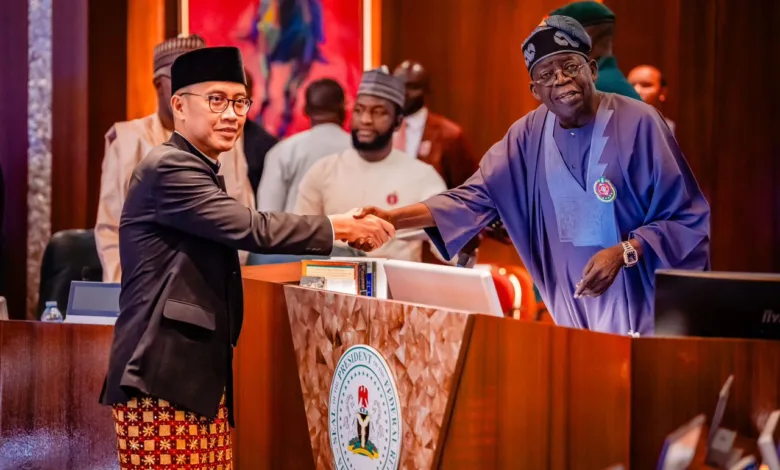
President Bola Tinubu on Thursday reaffirmed Nigeria’s commitment to deepening international cooperation and promoting global peace as he received letters of credence from 21 newly appointed foreign envoys in Abuja.
The diplomats — 17 ambassadors and four high commissioners — were received at the Council Chamber of the State House, where the president emphasised Nigeria’s readiness to strengthen bilateral ties, expand economic partnerships, and collaborate on shared global challenges.
“On behalf of the government and people of Nigeria, I warmly welcome you,” President Tinubu said. “Nigeria values longstanding friendships across all regions of the world, and your accreditation today reaffirms our collective commitment to expanding cooperation in areas of mutual interest.”


He encouraged the envoys to engage closely with the Ministry of Foreign Affairs and assured them of his open-door policy, noting that Nigeria is prioritising reforms to strengthen democratic institutions, boost investment, and accelerate sustainable development.
Tinubu highlighted key sectors where partnerships are needed, including trade, energy, agriculture, education, technology, defence, and cultural exchange. “The global community faces evolving challenges — from security threats and climate pressures to economic instability. Nigeria is ready to work with your governments to promote peace, stability, and prosperity,” he said.
Japanese ambassador Suzuki Hideo, speaking on behalf of the newly accredited diplomats, praised Tinubu’s “visionary leadership” and economic reforms, saying they have strengthened Nigeria’s fiscal landscape and boosted investor confidence.
He also highlighted Nigeria’s influential role in West Africa and across the continent, describing the country as “a beacon of resilience and promise.”
The ambassadors who presented their credentials include representatives from Japan, Chad, Gabon, Türkiye, Palestine, Spain, Indonesia, Mauritania, Austria, Thailand, Sweden, the Czech Republic, Liberia, Poland, Italy, Slovakia, and Iran. High commissioners from Ghana, India, Bangladesh, and Barbados were also accredited.