TY Danjuma: the soldier who refused the crown, by Olabode Opeseitan
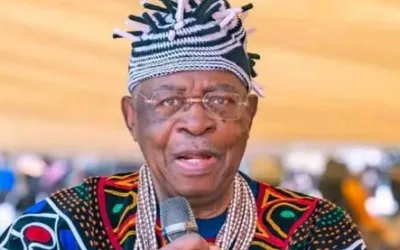
In February 1976, Nigeria stood on the edge of another abyss. General Murtala Muhammed had just been assassinated in a failed coup. His deputy, General Olusegun Obasanjo, narrowly escaped death and was visibly shaken. The nation was leaderless, the military high command was restless, and the country’s fragile unity hung in the balance.
At that moment, all eyes turned to one man: Lieutenant General Theophilus Yakubu Danjuma, Chief of Army Staff. He had the trust of the troops, the respect of the officers, and the full backing of the Supreme Military Council. The pendulum of power swung his way.
But Danjuma did something extraordinary. He said no.
The Power He Refused
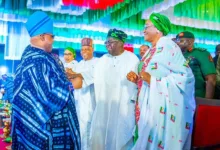
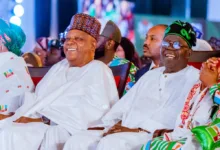
According to former President Ibrahim Babangida’s 2025 autobiography, ‘A Journey in Service’, the Supreme Military Council met the day after Murtala’s assassination to choose a successor. Though Obasanjo was next in line, he initially declined, offering to retire from the Army. The council leaned toward Danjuma. Even Obasanjo thought Danjuma should take over.
But Danjuma resisted. He insisted that Obasanjo, as Murtala’s deputy and a senior Lieutenant General, must succeed him, not for personal gain, but for the sake of national unity and constitutional order. His insistence broke the stalemate. Obasanjo accepted. Nigeria was spared another rupture.
A Soldier Forged in Fire, Tempered by Restraint
Commissioned in 1960, Danjuma’s military career spanned some of Nigeria’s most turbulent chapters, from peacekeeping in the Congo to the crucible of civil war. He rose swiftly through the ranks, commanding brigades, court-martialing corrupt officers, and eventually becoming Chief of Army Staff.
He played key roles in the capture of Enugu, the liberation of Jaja Wachuku, and the defeat of the Dimka coup.
He also represented Nigeria at the International Court Martial in Trinidad and Tobago and presided over military tribunals that enforced discipline within the ranks. But his most enduring legacy was not in the wars he fought, but in the power he refused.
In a military era defined by ambition, Danjuma chose unity over dominance.
Reconciling the Past with the Patriotic
History does not offer us saints. It offers us men: flawed, formidable, and forged in the fires of their time. General Danjuma’s role in the July 1966 counter-coup remains one of the most debated episodes in Nigeria’s post-independence history.
Allegations surrounding the deaths of General Aguiyi-Ironsi and Colonel Adekunle Fajuyi are serious, painful, and unresolved.
Danjuma has denied ordering their execution. But what is undeniable is this: a decade later, when he held the levers of power and could have seized power, he chose not to.
That choice does not erase the past, but it illuminates a man who, at a critical hour, placed country above self.
A Patriot Beyond Uniform
Danjuma retired from the Army in 1979 and transitioned into business, philanthropy, and statesmanship. He founded South Atlantic Petroleum and the TY Danjuma Foundation, which has impacted thousands through health, education, and humanitarian interventions.
Though now in his late 80s and largely withdrawn from public life, he remains a voice of conscience, speaking out against injustice, defending national unity, and mentoring a generation of leaders.
The Last Salute
General T.Y. Danjuma is not just a soldier. He is a study in stopping the allure of power in its tracks. He showed that the highest form of leadership is knowing when not to lead. He could have taken the crown. Instead, he preserved the republic.
That, we believe, is the mark of an Exceptional Patriot.