When tragedy becomes theatre: A word for Edo’s political opportunists — by John Mayaki
In moments involving children, humanity ought to come before politics. You cannot claim to be a human being if you cannot show basic sympathy as a human being. The unfortunate incident that marred the Children’s Day celebration at the Samuel Ogbemudia Stadium in Benin City understandably generated concern among parents and well-meaning Edo people.
Reports indicate that panic broke out after a security operative deployed tear gas or pepper spray during a disturbance, leading to confusion in which some pupils required medical attention. The Edo State Government and the hospital management has since stated that there were no fatalities, that affected pupils received treatment, and that investigations are underway. Whatever one’s political persuasion may be, every decent person can agree on one thing: children must always come first.
So, even though I already knew beforehand that they were not the deepest of thinkers and the most astute of persons, the actions of certain political actors, political journeymen, political opportunists and commentators have left many Edo people disappointed. At a time when sympathy ought to have been the first language spoken, some instead rushed to turn an unfortunate occurrence into political ammunition.
Before asking after the welfare of the affected children, before acknowledging the fears of distressed parents, before even pausing to reflect on the emotional toll of the incident, fingers were already being pointed, accusations already sharpened, and partisan narratives already assembled.


This tendency to exploit every unhappy situation for political advantage is not statesmanship. It is opportunism. No responsible society should encourage a culture where empathy is suspended simply because there is political propaganda to be gleaned. The first instinct in moments like this ought to be compassion. Were the children safe? Were the injured attended to? Were parents reassured? Those are the questions humane people ask first.
One may not like a particular government. One may even banter or exchange propaganda that bites every now and then. That is politics. We already understand the need for putting government on its toes to improve and do better. In any functioning democracy, those conversations are legitimate. But there is a distinction between constructive scrutiny and the eager politicisation of every incident before the dust has even settled.
It also bears remembering that large public gatherings, especially involving children, can sometimes produce regrettable incidents even in highly developed societies. Crowd panic, isolated security misjudgments, and stampedes are not peculiar to one administration, one state, or one country. The true measure of leadership is often not whether unforeseen incidents occur, but how swiftly and responsibly authorities respond when they do.
Indeed, there is another side to this story that should not be forgotten. The very turnout at the stadium reflected something important: parents entrusted their children to participate because Children’s Day still matters, because the joy of childhood still matters, and because families considered the occasion meaningful enough to show up in large numbers. That spirit should not be overshadowed by political bitterness. The very fact that parents, teachers and children were present at the stadium that day is a reflection of large support for Governor Okpebholo.
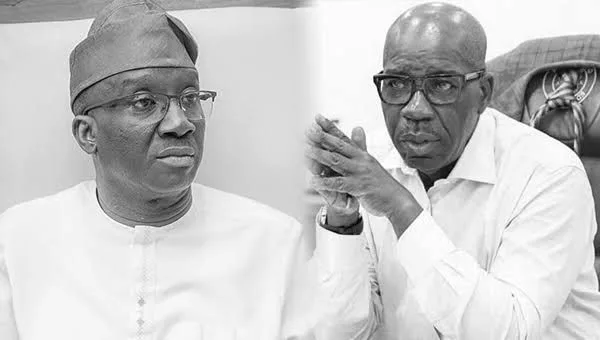
And this is where some of Edo’s political journeymen must exercise caution. It is easy to become so consumed by grievance or political rivalry that one begins to see every event merely as an opportunity for attack. A former governor used the opportunity of the stampede, not to wish anyone “Happy Children’s Day”, not to check on anyone’s welfare, but to post a video of his own Children’s Day parade during his time as governor.
For someone who authored a nebulous and forgettable opinion on how to move on from privileged office, I am surprised he didn’t author another one on how to govern people you do not care about. If he truly cared, he would have wished the children happy children’s day or issued some other statement showing public sympathy. That is the mark of a true and noble leader.
The other journeyman in tow, a renegade media personality currently on self-exile in some crevice of the British commonwealth, posted a video where nothing of import was said except that we saw first aid being administered to the children and emergency services were responding to the situation. The video recorder, however found a dolorous mania in calling the name of the governor and captioning it with a description of the Nigerian president as evil among other petty statements.
Some would argue that he has more vocal mobility than political philosophy, and I don’t blame them. A loud mouth accompanying an empty mind makes for rabblerousing journalism. They have their uses. I cannot begin to explain to him what he should have been taught growing up. The former governor, however, though evidently insensitive to the plight of the people, is an intelligent man, so he should understand when he is being corrected. The other fellow will not understand.
A fatherly word, therefore, to those who make a vocation out of outrage: Edo people are not blind. They can tell the difference between genuine concern and political performance. They know when criticism is driven by love for the state and when it is driven by old battles that refuse to die.
Rather than searching tirelessly for storms to magnify, perhaps more energy should be invested in recognising progress where it exists and offering useful criticism where improvement is needed.
Governance is not theatre, and Edo deserves more than perpetual cynicism. The people also have long memories. They remember eras rich in promises, memoranda, and grand announcements. They also remember periods when tangible outcomes were harder to see than eloquent speeches and celebrated agreements. That history, too, remains part of the public record.
For now, let compassion lead. Let us wish every affected child full recovery, commend emergency responders who stepped in, encourage accountability where necessary, and resist the temptation to turn children’s distress into partisan sport. Some moments call for politics. Others call first for humanity.