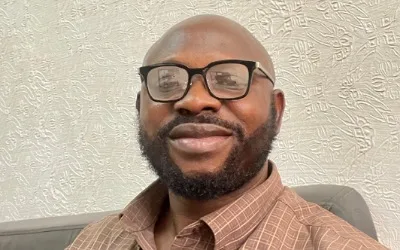
Spiritualisation of wealth and Nigeria’s prebendal democracy, by Oluwadare Ayeni
When I was about to re-sit for my West African Examination Council (WAEC) papers in the early 1990s, I lived in a small apartment very close to my school in Ekiti State. The building was old but convenient for a student, and it offered the quietness I needed to study. Yet, beneath that quietness was an unspoken dread. I was warned repeatedly by neighbours and elders that the man who owned the apartment was deeply involved in ẹ́dá, a mysterious spiritual practice also known as soul enslavement. People whispered that he had “tied” human spirits to serve him in the pursuit of wealth. His riches were inexplicable, his compound unusually large for that time, and people spoke of strange nocturnal activities around his home.
As a teenager, I was both afraid and curious. I did not fully understand what ẹ́dá meant, but it stayed in my mind. Over the years, as I studied society, politics, and religion, that early encounter began to shape a lifelong question, to what extent has this culture of spiritualised wealth, this enslavement of unseen forces, defined how Africans, and especially Nigerians, imagine power and economic success?
In Yoruba cosmology, the quest for prosperity is never entirely material. Wealth is perceived as a convergence of visible and invisible economies. Among the Yoruba, practices such as osólè and ẹ́dá were part of a complex metaphysical tradition where individuals sought to command spiritual entities, often the spirits of the dead or elemental forces, to bring fortune and stability. But beneath this search for prosperity lay a deeper social metaphor, the idea that the mastery of spirits conferred authority over men. The wealth of the osólè practitioner was both economic and spiritual, and his command over bound spirits mirrored his control over human dependents in the community.
This worldview introduced an early form of what may be called spiritual capitalism, where material accumulation was inseparable from the ability to dominate the spiritual realm. Wealth was not necessarily the product of production or exchange but of possession, the ability to control forces beyond the ordinary. The osólè man became a symbol of mystical power and social status, his wealth a sign of his intimacy with unseen realms. This was not unlike the zombie economy of Haitian voodoo cosmology, where enslaved souls are compelled to work eternally for their master’s gain.

The moral implication of such cosmologies was profound. They quietly established a logic that power and prosperity come from subjugation, of spirits, of bodies, or of systems. Those who mastered the unseen could command the seen. Thus, the early rich men in precolonial Yoruba society often derived their prestige not just from trade or inheritance, but from the perception that they possessed spiritual control over life itself.
When colonialism later arrived, it did not erase this logic, it merely transformed it. The European mercantile economy and its brutal commodification of human beings found an echo in this older metaphysics of wealth through domination. The coloniser’s plantation economy replaced spiritual servitude with physical servitude, but the underlying principle remained, the reduction of the human spirit to an instrument of wealth. Colonial rule merely transferred the centre of power. Those who once ruled through spiritual domination now sought legitimacy through alliances with the new economic and religious order. But the psychology of osólè survived, its principles re-emerged in new forms of political patronage, religious manipulation, and moral complicity. The modern African elite inherited this cosmology of control, replacing bound spirits with bound citizens, and invisible slaves with institutional dependence.
In Nigeria today, prebendal democracy is, in many ways, the modern osólè, a system where public institutions and citizens are spiritually and economically enslaved to serve the greed of the political class. Just as the osólè practitioner commanded unseen servants to multiply his riches, politicians now command state machinery, bureaucracies, and even electorates to sustain their private empires. The people become zombies of democracy, animated only during elections, silent afterward. The state becomes a shrine, and public funds the sacrificial blood that keeps the spiritual economy of corruption alive. In religious rhetoric, politicians justify their power as divine favour, in practice, they reproduce the same spiritual bondage that defined precolonial wealth acquisition.
Thus, the osólè spirit survives, not in the forest, but in the corridors of power, not in charms and calabashes, but in political offices and religious pulpits. Wealth, still, is spiritualised, power, still, is personalised, and the collective, still, is enslaved. To decolonise our democracy, Nigeria must first exorcise this ancient spirit of wealth through servitude. We must return to the ethical roots of African spirituality that honoured community, equity, and collective destiny. True spirituality must liberate, not enslave. True wealth must serve the many, not the few.
Until then, the ghosts of ẹ́dá and osólè will continue to haunt our national life, binding our democracy in invisible chains, turning citizens into political zombies, and turning faith into the handmaiden of corruption.
Oluwadare Ayeni, PhD
Associate Professor of African Democracy and Public Governance, Department of Public Administration, Obafemi Awolowo University, Ile-Ife