Who writes our dead? Why Nigeria needs a serious obituary culture — by Folorunso Adisa
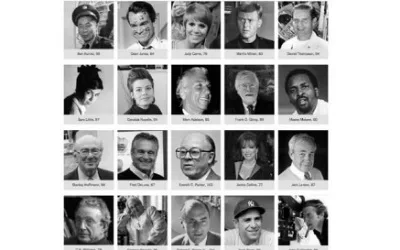
Among the world’s great newspapers, The New York Times is widely regarded as the gold standard for obituary writing. Its death notices are not hurried announcements or ceremonial farewells. They are deeply researched, narrative-driven biographies. Miniature histories, written with patience, texture, and moral curiosity. In many cases, they function as a final journalistic summation: a full portrait of a life lived in public view, with its triumphs, contradictions, and context carefully preserved.
As things stand, no Nigerian newspaper practices, if any at all, obituary writing at this level or with this consistency. That absence is understandable, even if regrettable. Newsrooms are under pressure. Advertising revenue dictates editorial priorities. Breaking news, political drama, and stories that guarantee clicks understandably take precedence over biographical work that serves memory more than money. Yet what we lose in this bargain is not trivial. We lose history, nuance, and the chance to document our collective journey through the lives of those who shaped it.
There is also the question of craft. Narrative obituary writing is not a skill many possess. It requires depth, restraint, research, and the ability to tell a human story without sentimentality or malice. In Nigeria, only a handful of master columnists consistently demonstrate this capacity. Writers such as the inimitable Sam Omatseye and Dr. Lasisi Olagunju have, through their columns, shown how death can become a window rather than a curtain. Their essays do not only announce loss; they excavate lives, situate legacies, and invite readers to reflect on what can be learned, borrowed, or avoided. Even then, such treatments are rare and often limited to fellow journalists or, occasionally, academics.
This gap need not persist. Nigerian newspapers could deliberately institutionalise obituary writing by dedicating trained journalists to the craft. Such reporters would not be summoned only when death strikes, but prepared in advance, armed with archives, interviews, and historical grounding. Senior academics from departments of English, Literary Studies, Communication, and Journalism, alongside accomplished columnists and editors, could lead structured workshops and seminars to pass on the discipline of biographical storytelling.

A society that does not carefully write its dead risks misunderstanding its living. Obituaries, when done well, are not about death alone. They are about memory, meaning, and continuity.