Osun: Payroll audit and backfiring ghost hunting — by Bamidele Johnson
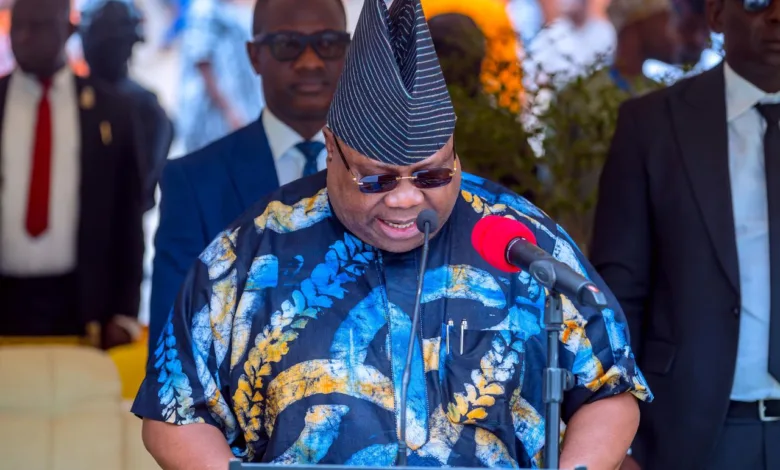
I have tried, very hard, to resist the conclusion that Ademola Adeleke runs something that often feels less like a government and more like a travelling theatre. But he comes across, to me at least, like a cartoon character and the government he heads like a freak show with sirens.
Perhaps that assessment is unfair. Perhaps it springs from a poor appreciation of modern branding. But when governance is performed in a steady rhythm of public dancing, celebrity adjacency and constant theatrics, impressions form. They harden. They calcify.
Supporters insist he is popular because he delivers. They argue that the stern-faced men before him, most especially the wispy, goateed fella and paragon of public finance illiteracy, delivered grief instead of governance. They say seriousness is overrated and that vibes can co-exist with value.
Then came the ongoing payroll audit saga and suddenly, the cartoon began writing itself.
When a government commissions a forensic audit into its own payroll, it is stepping out of costume. It is saying the books matter, that public money matters and that the truth matters, even when it is inconvenient.



The Adeleke administration hired Sally Tibbot Consulting Limited to comb through the payroll. Civil servants, pensioners, agencies, councils, tertiary institutions, anyone and everyone who earns from the state was, in theory, about to come under the headlights of scrutiny.
The consultants reported that as of January 2023 the payroll carried 37,456 staff and 17,918 pensioners, costing about ₦4.48 billion monthly.
After physical verification and data validation, they concluded that only 29,004 staff could be confirmed as legitimate. That left 8,452 names flagged as irregular.
If those names were removed, they said, the monthly wage bill would fall to ₦3.34 billion and yield savings of about ₦1.14 billion every month. That is roughly ₦13.7 billion a year, which
is neither a rounding error nor a typo. It is serious money. Serious money in a state that was left a coconut husk by the policies of Rauf Aregbesola, who thinks of himself as an Awo regen.
The firm also said it developed an automated payroll administration system to prevent future fraud. According to the consultants, that system was never deployed. Then the tent collapsed. The government rejected the report. Officials described the findings as inflated and misleading. They said a state-led re-verification exercise confirmed that more than 8,000 of the flagged names were genuine workers. The implication was simple. The ghost hunt had chased too many living people.
At that point, the issue stopped being about phantom salaries. It became about credibility.
If the audit was flawed, the public needs to be shown how. Step by step, that is. The people need to know which methodology failed, which datasets were incomplete and which verification steps were mishandled. Forensic audits are technical instruments that are not rebutted with a mere shrug or dance moves.
There is also a procedural puzzle. Why hire an external forensic firm only to subject its conclusions to an internal process that overrides it? If the state’s re-verification is the ultimate judge, what exactly was the consultant engaged to do? Provide suspense? Make us ooh and aah?
Public funds paid for this exercise. If the report is unreliable, that raises big procurement questions. If it is accurate, dismissing it raises governance questions. Either way, the public deserves clarity. The country has endured the ghost worker saga for decades. In 2012 in Zamfara State, a civil servant with an Ordinary National Diploma was on the payroll and was discovered to be a one-year old girl. The same year in Plateau State, the government found it was paying a ghost Information Comnissioner. You have to wonder if he was allocated a an official car, driver and accommodation. Utterly breathtaking stuff.
Everywhere, administrations promise cleansing. Each audit produces dramatic figures. I do not remember anyone punished for benefiting from ghost workers, which means the audits are hardly, if ever, transparent. What separates reform from ritual is consistency and transparency.
The solutions are not dramatic. They are boring. Publish the full report. Publish the detailed rebuttal. Invite independent experts to review both. Let the numbers speak without choreography.
Once governance begins to resemble spectacle, every serious exercise risks being dismissed as another act. And when ₦13.7 billion a year is hovering in the air, citizens deserve more than front row seats at a freak show. They deserve answers.