Beyond old narratives: A measured response to criticism of Jimoh Ibrahim — by Uche Nnadozie
The recent opinion piece by Sonala Olumhense on the appointment of Jimoh Ibrahim as Nigeria’s Permanent Representative to the United Nations is, at best, a selective interpretation of history and, at worst, a deeply flawed attempt to discredit a public figure without balance or context.
It is important to begin with facts, not insinuations. Dr. Jimoh Ibrahim does not have any criminal conviction in Nigeria or abroad. In a country where allegations are often amplified as verdicts in the court of public opinion, it is critical to distinguish between accusations, disputes, and judicial outcomes. Business disagreements, regulatory challenges, and litigation—common in large-scale enterprise—are not equivalent to criminal guilt.
Dr. Ibrahim is not an obscure figure thrust suddenly into public service. He is a globally exposed businessman, a scholar, and a strategic thinker. He holds multiple advanced degrees, including two PhDs from reputable international institutions—an indication of intellectual depth that is often missing in the narrow profiling of his critics. He is also a legal practitioner of repute, trained and educated at the highest levels, bringing a strong understanding of law, governance, and institutional frameworks.
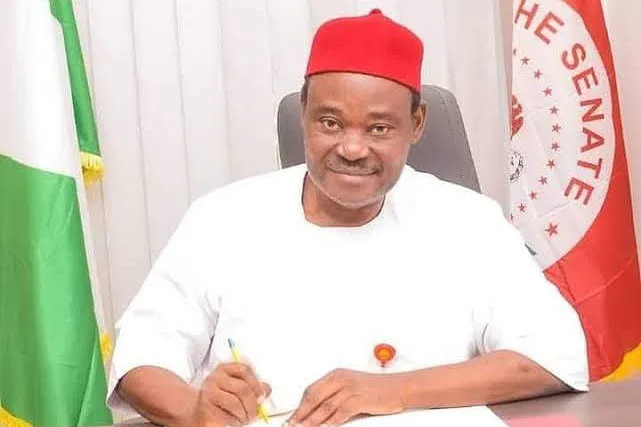
Beyond academia and business, he is a serving senator of the Federal Republic of Nigeria, having been duly elected to represent the good people of Ondo South. This is no small feat. Electoral victory in a competitive democratic environment like ours reflects public trust, political relevance, and grassroots connection. His role in the National Assembly underscores his competence in lawmaking, representation, and negotiation—core skills that are directly transferable to diplomacy at the highest level.
In addition, Dr. Ibrahim is the founder of a university, a testament to his commitment to education, capacity building, and long-term national development. Such an achievement speaks not only to enterprise but to vision—an understanding that sustainable progress is anchored on knowledge and human capital.
To reduce such a career to a catalogue of contested corporate episodes is to ignore the complexity of enterprise in emerging markets like Nigeria. Many of the institutions referenced in the critique operated within turbulent economic environments shaped by policy inconsistencies, global shocks, and structural inefficiencies. It is overly simplistic to attribute their outcomes solely to one individual without acknowledging these broader dynamics.
More importantly, diplomacy in the 21st century is no longer the exclusive preserve of career bureaucrats steeped in traditional protocols. The world has evolved. Today’s global stage demands individuals who understand economics, technology, negotiation, and the intersection of public and private interests. In that regard, Dr. Ibrahim’s profile aligns with a modern, results-driven approach to representation.
The fixation by some opinion writers on antiquated benchmarks—where only a certain mould of individuals is deemed “fit” for public or international roles—ignores the reality of a changing world. Nations are increasingly deploying unconventional but competent figures to advance their interests globally. Nigeria cannot afford to remain trapped in outdated thinking while others innovate.
Furthermore, it is worth noting that public commentary must carry a responsibility to inform, not inflame; to improve not condemn. When narratives are built on unresolved claims, one-sided accounts, and emotive language, they risk undermining not just individuals but national institutions. Criticism is essential in a democracy, but it must be grounded in fairness and completeness.
The appointment by President Bola Tinubu should therefore be seen within the broader context of positioning Nigeria in a rapidly evolving global order. Representation at the United Nations is not merely about rhetoric; it is about negotiation, influence, and strategic engagement. These are areas where experience in high-level business and global exposure can be significant assets.
Nigeria’s image abroad will not be strengthened by amplifying internal cynicism. Rather, it will be shaped by the performance of its representatives and the willingness of its citizens to engage constructively.
Senator Ibrahim deserves to be judged by his conduct in office—not by recycled allegations or entrenched biases. The world has moved forward, and so too must our standards of assessment.