Babatunde Gbadamosi’s defeatist hysteria over Lekki-Ikoyi Link Bridge — by Wale Ajetunmobi
People with sharp and bright minds will obviously not buy into the false narrative of Chinedu Rhodes-Vivour’s defeatist running mate, Babatunde Gbadamosi. Only a dull internet audience whom both losers daily entertain with their cocktails of gossip will glorify the misleading claims captured in his post, which have no basis in fact.
In this season of politics, an irresponsible comment like this is likely to create unnecessary buzz around political discussion if not factually addressed. The reason why this long explainer matters to reassure the teeming Lagosians who are already anticipating top-notch leadership from Dr. Kadri Obafemi Hamzat — the candidate of the moment.
𝐅𝐚𝐜𝐭 𝐚𝐛𝐨𝐮𝐭 𝐋𝐞𝐤𝐤𝐢-𝐈𝐤𝐨𝐲𝐢 𝐋𝐢𝐧𝐤 𝐁𝐫𝐢𝐝𝐠𝐞
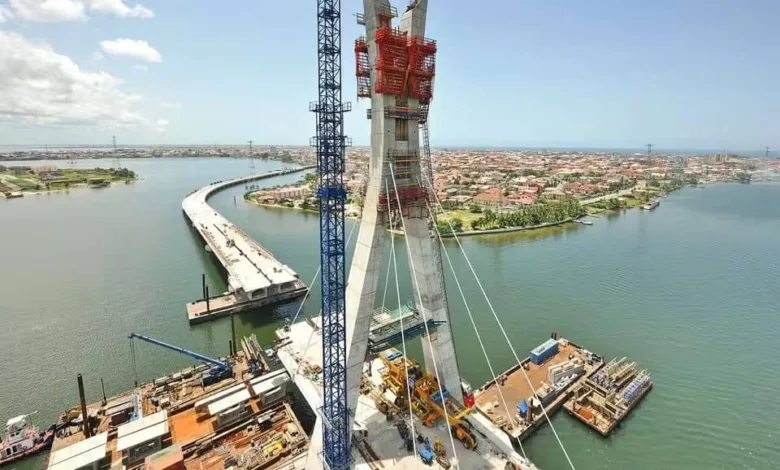
Yes, it is true that the then Commissioner for Works, Dr. Obafemi Hamzat, oversaw the construction of the 1.68 km cable-stayed Lekki-Ikoyi Link Bridge, an important asset built by Governor Babatunde Raji Fashola to ease traffic congestion affecting vehicular travel across the sprawling urban communities of Eti Osa.
When completed in May 2013, the bridge cost approximately N29 billion (about $190 million at the then prevailing exchange rates). This figure aligned with Nigeria’s general infrastructure cost benchmark during the construction period.



The cable-stayed bridge, which is the first of such projects in Nigeria and the West African sub-region, was built by Julius Berger. It has an approximately 90 to 91 metres A-shaped pylon, stay cables, dual carriageways, prominent sidewalks, approaches and deep foundations, with piles up to about 60 to 75 metres high over the lagoon and navigational clearance below.
𝐓𝐡𝐞 𝐜𝐨𝐬𝐭 𝐚𝐥𝐢𝐠𝐧𝐞𝐝 𝐰𝐢𝐭𝐡 𝟐𝟎𝟎𝟗-𝟐𝟎𝟏𝟑 𝐛𝐞𝐧𝐜𝐡𝐦𝐚𝐫𝐤𝐬
There is no where in the world where cable-stayed bridges are not capital intensive. Cable-stayed bridges are more expensive per unit metre than girder or long viaduct bridges because of the specialised pylons, stay cables, geometry and construction techniques deployed to build cable-stayed bridges.
The Ikoyi-Lekki Link Bridge cost approximately $6,000 per metre square based on the calculations of the period, and considering the deck area, which is a total of 31,900 metre square. This was a period when the international benchmark for cable-stayed bridges averaged above $7,000 per metre square, excluding varying costs of environmental constraints.
During construction of the Lekki-Ikoyi Bridge, the cost per square metre reflected the capital for an Environmental Impact Assessment (EIA), waterfront constraints, imported skills and materials, soil conditions requiring deep piles, and the need for a durable, high-quality structure built to endure.
𝐅𝐚𝐥𝐬𝐞 𝐞𝐪𝐮𝐢𝐯𝐚𝐥𝐞𝐧𝐜𝐞
In his grossly deceptive remarks about the Lekki-Ikoyi Link Bridge project, Gbadamosi pointed to high cost “per kilometre”, even when the entire bridge deck was not even up to 2km. He compared the Lekki-Ikoyi Cable-stayed Bridge with a 26.7 kilometre-long self-anchored suspension Qingdao Jiaozhou Bay Bridge in China.
This comparison lacks a sensible basis and sincerity, because the befuddled pretender concealed key aspects of the projects he used in his deceptive comparison. He intentionally omitted the structural details of the China bridge just to provoke hysteria from his intellectually lazy supporters.
He never mentioned the true deck spans of the China bridge, material markets, and its environmental conditions.
The fact: Qingdao Jiaozhou Bay Bridge is a 26.7km component of the 41.58km Jiaozhou Bay Connection Project. The project cost ¥10 billion (approximately $1.58 billionat the time the construction completed in 2011).
Suspension bridges are more expensive than cable-stayed designs, and the costs are likely to rise further if a country does not have local expertise or machinery.
Julius Berger, known for high-quality output and premium pricing on complex projects, constructed the Lekki-Ikoyi Link Bridge, with the construction firm importing substantial expertise required for the engineering masterpiece.
Since the delivery of the project, no independent audit of the project has confirmed inflated costs beyond the standard Nigerian infrastructure benchmarks within the construction period.
The Lekki-Ikoyi Link Bridge project delivered a functional, aesthetically notable structure that significantly addressed real traffic issues between Lekki and Ikoyi.
Besides, the bridge has now become a significant part of the Lagos architectural heritage, attracting tourists from around the world. Facebook co-founder, Mark Zuckerberg, famously took an early morning jog on the bridge, recognising its unique architectural beauty and usefulness.
Nollywood practitioners, content creators and even schools reference the bridge in their daily crafts — all pointing out that the infrastructure is built to provide not just traffic solutions, but also livelihoods.
Over a decade later, one serial loser is talking about Naira and Kobo of a project that has since enhanced the Lagos brand in the comity of global cities.
Instead of telling voters what they want to do, Gbadamosi is resorting to finding a needle in a haystack, riling up their supporters to whimper uncontrollably over non-issues.
— 𝐀𝐣𝐞𝐭𝐮𝐧𝐦𝐨𝐛𝐢 𝐢𝐬 𝐒𝐒𝐀 𝐭𝐨 𝐆𝐨𝐯𝐞𝐫𝐧𝐨𝐫 𝐁𝐚𝐛𝐚𝐣𝐢𝐝𝐞 𝐒𝐚𝐧𝐰𝐨-𝐎𝐥𝐮 𝐨𝐧 𝐌𝐞𝐝𝐢𝐚, 𝐚𝐧𝐝 𝐒𝐞𝐜𝐫𝐞𝐭𝐚𝐫𝐲, 𝐏𝐁𝐀𝐓-𝐊𝐎𝐇 𝐍𝐞𝐰 𝐌𝐞𝐝𝐢𝐚 𝐃𝐢𝐫𝐞𝐜𝐭𝐨𝐫𝐚𝐭𝐞.