The conspiracy to keep Africa perpetually underdeveloped — by Olabode Opeseitan
If a borrower consistently repays his loans, lenders usually reward him with cheaper credit. That is how finance is supposed to work. Yet when African countries seek to borrow money, they often pay several times more than wealthier nations carrying far larger debt burdens.
If Africa’s repayment record does not justify the price it pays for capital, what does?
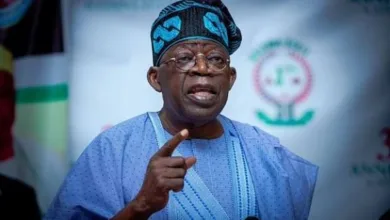
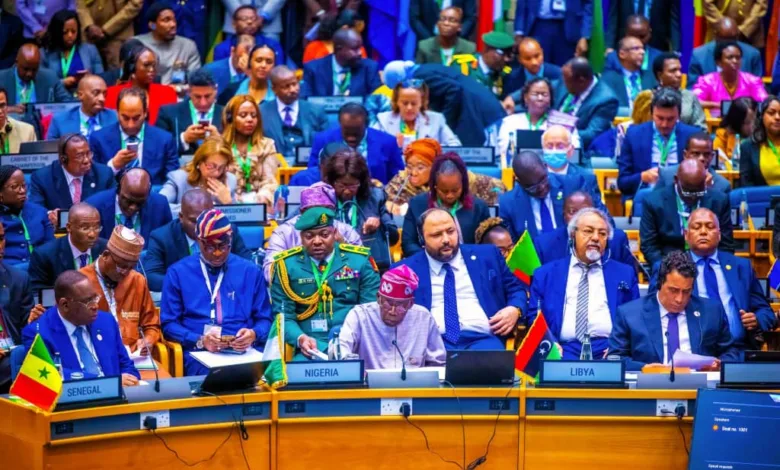
That question is becoming increasingly difficult to ignore. On 21 October, speaking at separate events in London, Nigeria’s Taiwo Oyedele and Ghana’s President John Mahama made essentially the same accusation: Africa is being systematically overcharged for access to global capital.
The Evidence
At Chatham House, Nigeria’s Minister of Finance and Coordinating Minister of the Economy, Taiwo Oyedele, argued that Africa would be economically transformative if the excessive costs imposed on the continent, particularly the cost of borrowing, were removed.



Just hours later, at the Financial Times Africa Summit, President Mahama delivered a remarkably similar message. He argued that the global financial order was stacked against Africa and pointed out that African nations often borrow at interest rates eight times higher than those paid by Western or industrialised nations.
Their concern is not merely that Africa borrows expensively. It is that the continent appears to pay a premium that is difficult to reconcile with its actual risk profile.
According to Oyedele, only one African country is broadly classified as an emerging market and only a handful enjoy investment-grade ratings. Much of the continent remains lumped into the category of “frontier markets”, a label that immediately raises borrowing costs.
He also points to estimates suggesting that developing countries pay $400 billion more in borrowing costs than developed nations. Beyond that lies what he describes as the “narrative cost”, the “prejudice premium” or the “stereotype tax” imposed by perceptions rather than fundamentals.
The complaint is not that lenders assess risk. The complaint is that Africa’s risks may be systematically overstated.
The repayment record, critics argue, does not always match the penalty.
Sifiso Falala, head of the African Union’s newly established Africa Credit Rating Agency (AfCRA), argues that Africa’s ratings frequently fail to reflect how reliably many African countries repay their obligations. Former African Development Bank Group President Dr. Akinwumi Adesina has repeatedly described the “Africa risk premium” as a mispricing rooted in perception rather than fact.
The contradiction is difficult to ignore. Africa contributes only about 4% of global greenhouse-gas emissions, yet many African countries are forced to borrow at punitive rates to finance adaptation to climate disasters they did little to create.
The Cost
The consequences extend far beyond balance sheets.
Every additional percentage point on borrowing costs means fewer roads, fewer power projects, fewer schools, fewer hospitals and fewer opportunities for economic expansion.
High borrowing costs also make climate adaptation more expensive. They raise the cost of infrastructure, discourage investment and reduce governments’ ability to finance development without accumulating unsustainable debt burdens.
In September, speaking at the Council on Foreign Relations during the United Nations General Assembly, Mahama argued that more than $200 billion leaves Africa annually through three major channels: illicit financial flows, debt servicing and excessive risk premiums.
According to his estimates, approximately $90 billion leaves through illicit flows, $80 billion through debt servicing and about $40 billion through risk premiums. By comparison, aid inflows amount to only around $30 billion.
If these figures are accurate, Africa is losing far more through the financial system than it receives through assistance.
The Pattern
A single case may be dismissed as an anomaly. A repeated pattern is harder to ignore.
African policymakers increasingly argue that the continent is judged collectively rather than individually. Investors often speak of “Africa risk” even though Africa consists of 54 countries with vastly different political systems, debt levels, economic structures and repayment histories.
A downgrade in one country can affect perceptions of many others.
A crisis in one region can increase the cost of borrowing for countries with little connection to it.
The result is that African countries frequently face penalties that would be unlikely if they were assessed solely on their own merits.
The question becomes unavoidable: if the underlying data often tell a more nuanced story, why does the pricing persist?
Why do the same complaints continue to emerge from African governments, multilateral institutions and development finance experts? Why does the premium remain even when repayment records improve? At what point does a persistent pattern stop looking like a mistake?
Africa’s Pushback Begins
The growing frustration is now producing an organised response. Mahama and Oyedele are not isolated voices.
Kenya’s President William Samoei Ruto has repeatedly criticised global rating agencies for what he regards as unfair assessments that increase borrowing costs across the continent.
Akinwumi Adesina has spent years challenging what he calls the Africa risk premium and arguing that no nation has ever achieved prosperity through aid dependency.
Most significantly, the African Union launched the Africa Credit Rating Agency (AfCRA) in Mauritius on 7 October. Its mission is ambitious: to provide alternative credit assessments that African leaders believe will better reflect the realities of the continent’s economies.
The initiative faces obvious challenges. Credibility cannot be declared; it must be earned. Investors will judge AfCRA not by its intentions but by the rigour and independence of its analysis.
Even Oyedele has cautioned that the new agency will not transform borrowing costs overnight.
Nevertheless, its creation signals something important. Africa is no longer content merely to complain about the system. It is beginning to build alternatives.
The Solution
Fixing the problem requires more than rhetoric.
First, African countries must increasingly be evaluated on their own merits rather than as part of a single continental risk category.
Second, greater competition among rating agencies could improve price discovery and reduce the influence of entrenched assumptions.
Third, actual repayment histories should carry greater weight in risk assessments.
Fourth, Africa must address its own weaknesses. Governance failures, inconsistent data collection, transparency gaps and institutional weaknesses can legitimately increase perceived risk and should not be ignored.
As Oyedele himself acknowledges, the continent must also put its own house in order.
A particularly important challenge is data sovereignty.
A continent that depends on external institutions to determine and validate critical economic and social indicators will always struggle to shape its own narrative. In the digital age, true economic sovereignty increasingly requires ownership of the data that define national realities.
Finally, African governments must continue efforts to refinance expensive debt, curb illicit financial flows and strengthen domestic institutions that inspire investor confidence.
Meanwhile, rating agencies, the IMF, the World Bank, G20 creditors and global investors should do three things:
Publish methodologies with greater transparency.
Give appropriate weight to repayment history.
Support credible alternatives that broaden perspectives and improve market efficiency.
Conclusion
Whether one calls it a market failure, systemic bias, institutional inertia or something more deliberate, the outcome is the same: Africa pays a premium that many of its leaders believe is neither justified nor sustainable.
The real issue is no longer whether complaints about the system exist. They clearly do. The question is whether the institutions that shape global capital markets are willing to confront them.
Capital priced this expensively functions like a tax on Africa’s future.
It is not enough for rating agencies and global financial institutions simply to deny bias. They must demonstrate, transparently and convincingly, that Africa is being judged by the same standards applied everywhere else.
Until then, the suspicion will remain that Africa’s greatest development challenge is not a lack of potential, but the price the world charges it for having that potential.