K1, the kingship tussle, and the burden of belonging, by Folorunso Adisa

“Ẹda l’on’saree, sẹbi final descion nbẹ lọwọ ọlọrun ọba…, moti fọrọmi lọlọhun lọwọ, jọwọ m’asẹ jẹki ọta bere wipẹ nibo lọlọrun temi wa, ilayi eledumare maasọ mi lọjọ gbogbo”— K1 DE ULTIMATEEveryone who knows me knows this truth: my admiration for King Wasiu Ayinde Marshall runs deep. I’m not a cautious admirer or a distant listener. I’m a full convert to the gospel of his art. His voice has walked me through moments when silence felt heavy. His rhythms steadied my hands as I wrote my energy-sapping master’s dissertation, each verse urging me on like a quiet companion in the night. His rise from the fringes to the pinnacle has always emboldened me that talent, sharpened by diligence, can bend fate.
Because of that affection, I often catch myself defending him instinctively. Admiration creates its own bias. I push back when I hear half-truths dressed as facts. I resist narratives cooked in envy or brewed from stories that grew wild on the grapevine from his foes. I defend him because I know how easily public figures are swallowed by the exaggerations of those who dislike them for reasons they themselves cannot explain.
But here, on the matter of the ongoing kingship tussle, I stand at a distance. I have not written about it until now because my mind sits in the middle, unmoved by partisanship. If you asked me privately, I might say I prefer to see K1 on the stage for now, not the throne. And if this were the Fidipote ruling house (the one to which even the unborn child knows he belongs) I would have championed him without restraint. But if I were in his shoes at this moment, with the terrain as tense as it is, I would have stayed away from the contest entirely.
On the question of belonging to two ruling houses, it is more than right and apt to dismiss his critics as narrow-minded. History is full of princes and princesses who married across royal lines, producing descendants with ties to more than one throne. Just as the wealthy today often marry within their social sphere, royalty once did the same. So the idea is not impossible. It has happened before.
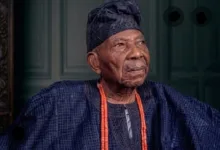



If K1 possesses the documents that prove his lineage, and if no law bars his aspiration, then his candidacy stands on legal ground. If rotation is not codified, he has the right to contest. And as a prince of the Fidipote house, he would naturally be eligible if the process were open.
But legality is only one part of the story. Some things that are permissible by law can still be troubled by moral tension. It is human to aspire, to desire, to reach for a dream that calls your name. However, it is more human to be reflective, to weigh desire against consequence.
Leadership is not only about the throne; it is about those who must gather around it. If the majority of the people I hope to lead do not welcome me, then my reign begins on shaky ground. Respect cannot be imposed. Authority cannot be begged. Cooperation cannot be compelled. A king whose people resist him will spend more time managing conflict than shaping progress.
On the whole, my wish is simple. For K1, for the kingmakers, for the people of Ijebu-Ode: may clarity prevail. May truth straighten the path. May the land receive the Awujale it deserves, one who will carry the people forward and inspire the trust from which real development grows.
“Oju enii’maala aari to, oju eni maal aarii’yọnu”— K1 DE ULTIMATE





1. “Ẹni tí Ọlọ́run bá fún ní ìtàn láti kọ, kì í ṣe pé kó pé ní ọba.”
Your gift, your grace, and your destiny have already distinguished you.
K1 does not need a crown to be honoured — his life’s work has already crowned him in the hearts of millions. Sometimes, ìyì ti Ọlọ́run dá fún ènìyàn ju gbogbo ade lọ.
2. Focus on the legacy that is already unmatched
At his age, he is still fully booked, still commanding respect, still the standard for Fuji.
Many people fade out with age, but his star remains bright. Elders will say:
“When your market is still selling, don’t leave the shop for unnecessary noise.”
His music, his craft, and his influence still have decades of value if he preserves his health, voice, and peace of mind.
3. “Ọba tí kò jókòó lórí àga ilẹ̀ rẹ̀, kì í mọ iye tí àga náà ní.”
Royal matters are delicate, political, and rooted in family lines.
It is sometimes wiser for a respected person not to involve himself deeply in what can bring division or create enemies where none existed.
Paying respect to whoever becomes Awujale, old or young, is wisdom — not submission.
It is understanding.
4. Maintain dignity, avoid public back-and-forth
Silence can be more powerful than any statement. His brand is global; his silence commands more respect than arguments over things that are not his birthright to decide.
5. Continue blessing your supporters
Even if he never takes another title,
Mayegun of Yorubaland,
Oluomo of Lagos,
Olórí Ọmọ Ọba of Ijebu,
and the love of the fans
is already enough honour for three lifetimes.
6. Elderly advice in one sentence:
“Enjoy your grace, guard your peace, focus on your legacy, and leave royal matters for royal houses.”
That is the path of wisdom, long life, and sustained honour.