Leadership beyond policy: Why character still matters — by Kayode Adebiyi
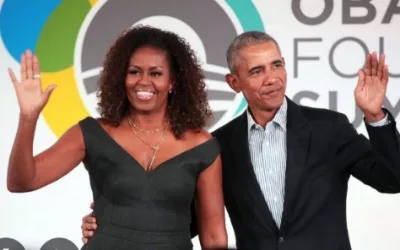
A guy on this platform whose posts I usually avoid completely angered me today. He started cursing and attacking anyone who criticised the ridiculous meme posted on President Trump’s Truth Social account, where the heads of Michelle and Barack Obama were placed on apes.
He was furious that people found it despicable. He asked why those calling Trump out now were the same people who, just weeks ago, were supposedly begging him to come and “save” Nigeria. He then demanded to know how those people could suddenly call Trump racist over a social media post.
This is how badly some people bury their heads in the sand. They are unable to separate the personal idiosyncrasies of an adult president with the emotional maturity of a child from the serious business of state policy.
That episode captures what is deeply broken in today’s political conversations. Many people are either unable or unwilling to separate policy disagreements from moral judgment and leadership from blind loyalty. Criticism is treated as betrayal. Nuance is dismissed as hypocrisy. Even the most indefensible behaviour is excused in the name of ideological loyalty.

There is what I call leadership beyond policy. It is entirely possible to disagree with a leader’s policies without questioning their humanity or decency. It is also possible to agree with certain policy positions while firmly rejecting the person advancing them as unfit to lead. These are not contradictions. They are signs of maturity.
In fact, Barack Obama and Donald Trump illustrate this contrast clearly. Obama exemplifies policy failure in certain areas without the loss of dignity. There are serious and legitimate criticisms I can make of Barack Obama’s presidency.
Despite the historic symbolism of his election, Africa was not prioritised in a way that meaningfully changed the continent’s economic or security realities. Expectations were understandably high, but delivery fell short. That is a fact that I am ready to have an intellectual discourse with anyone about.
The Libyan intervention remains one of the most damaging foreign policy decisions of his administration. The collapse of the Libyan state, the flood of weapons across borders, and the destabilisation of the Sahel have contributed to years of insecurity and terrorism across several African countries, Nigeria inclusive.
On immigration, Obama’s record also complicates the popular liberal narrative. His administration deported more immigrants than many of his predecessors, earning sharp criticism from activists at the time. But not in the way and manner his successor in office is doing it now with ICE.
Culturally, his presidency coincided with the rise and institutionalisation of a form of progressive liberalism, often labelled “woke”, that many people experienced as intolerant of dissent, dismissive of tradition, and aggressively moralising.
These are real policy and ideological disagreements, and they deserve honest debate.
And yet, policy is policy.
Barack Obama carried himself as a statesman. He respected institutions. He spoke with restraint. He showed empathy in moments of tragedy. He understood the weight of the office he held. His failures were failures of judgment and ideology, not failures of character. He remained a man of composure, decency, and moral seriousness.
This distinction matters, goddam it!
Donald Trump represents a very different kind of failure. Some of the frustrations he tapped into were real. Cultural excesses, elite arrogance, and the alienation of ordinary people created fertile ground for backlash. It is even possible to agree with some of the positions he took, particularly resistance to ideological overreach or scepticism toward performative progressivism.
But my agreement with him on isolated policies cannot excuse moral collapse. Trump is vile, rude, and uncouth, not as a matter of taste, but as a matter of leadership fitness. His behaviour reflects a deep deficiency of character and a disturbing comfort with authoritarian instincts.
The ICE immigration clampdown under his administration is chaotic and cruel. It was driven by fear, marked by family separation, and infused with performative harshness. It looked less like orderly law enforcement and more like authoritarian theatre.
On the international stage, his conduct repeatedly undermined basic diplomatic norms. The Greenland episode, where a sovereign territory was casually treated as something to be bought, was not just embarrassing. It exposed a transactional and unserious worldview that has no place in responsible leadership.
Most corrosive of all was his language. The constant name-calling, insults, mockery, and casual dismissal of tragedy drained public discourse of dignity. Serious matters were brushed aside. Human suffering was minimised. Everything was reduced to personal grievance.
Even when Trump stumbled into legitimate critiques, his methods ensured those critiques were poisoned beyond repair. I have some question for that guy who enraged me this morning and for many who finds it hard to see any wrong or flaws in Trump and what he does.
In your daily life, in your workplace, your community, or your family, could you behave the way Trump behaves?
Could you insult colleagues and still expect respect?
Could you mock serious issues and still be trusted?
Could you treat disagreement as disloyalty and still lead?
Could you explain away harm and suffering and still claim moral authority?
If you acted the way Trump acts, would anyone consider you a good leader in an ordinary human setting?
If the answer is no, and it almost always is, then the contradiction is already clear.
What is unacceptable in everyday life does not become admirable simply because it is performed by a president.
Obama’s failures were policy failures with serious consequences. Trump’s failures are in one part policy failures, but also failures of character that threaten institutions, norms, and basic decency.
Of course, I can criticise Obama without condemning him as unfit to lead. One cannot excuse Trump’s conduct without normalising indecency and authoritarianism.
Leadership is not just about the policies you support. It is about how you speak, how you exercise power, how you treat others, and whether you possess the restraint the office demands.
By that standard, Barack Obama remains a flawed but decent statesman.
Donald Trump, regardless of occasional policy agreement, remains unfit for leadership.
Eniyan nya were, eni ako iba loni. Se o digba to ba bu eniyan je ke to mo pe were ni.