Nigeria’s fish production rises by 300,000 metric tonnes in 2025 — Ministry
By Kunle Sanni –
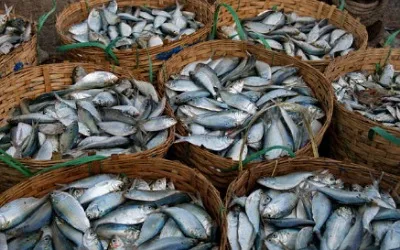
Nigeria recorded an increase of 300,000 metric tonnes in fish production in 2025, marking the first growth in output in more than a decade, the Ministry of Marine and Blue Economy has said.
The development was disclosed in a statement issued on Wednesday by the Special Adviser to the Minister, Dr Bolaji Akinola, who attributed the achievement to reforms introduced under the leadership of the Minister of Marine and Blue Economy, Adegboyega Oyetola.
According to the statement, the rise in fish production reflects the ministry’s efforts to reverse years of stagnation in the sector and reduce Nigeria’s heavy dependence on imported fish. The ministry said the gains are expected to strengthen food security, create jobs and expand value across the fisheries and aquaculture value chain.




Akinola explained that the maritime sector has entered what he described as a decisive phase of renewal, following a series of policy and operational interventions since Oyetola assumed office in August 2023.
He noted that several long-standing constraints that had limited the growth of Nigeria’s maritime and blue economy were addressed, particularly during 2025, leading to improved performance and renewed investor confidence.
“These reforms have repositioned the marine and blue economy as a key pillar of Nigeria’s economic diversification agenda,” the statement said.
Among the major milestones highlighted was the resolution of the Apapa port gridlock, which had disrupted port operations and trade in the Lagos port corridor for more than two decades.
Akinola said sustained policy coordination, improved operational discipline and infrastructure optimisation led to lasting relief in Apapa and surrounding areas by early 2024. He added that the clearance of the gridlock reduced cargo dwell time, cut logistics costs, improved port efficiency and restored the Lagos ports as viable gateways for national and regional commerce.