Nigeria’s goal is food sovereignty, not dependency – VP Shettima
By Kunle Sanni –
Vice President Kashim Shettima has reaffirmed Nigeria’s commitment to achieving food sovereignty, emphasizing that true national independence cannot be realized without self-sufficiency in food production.
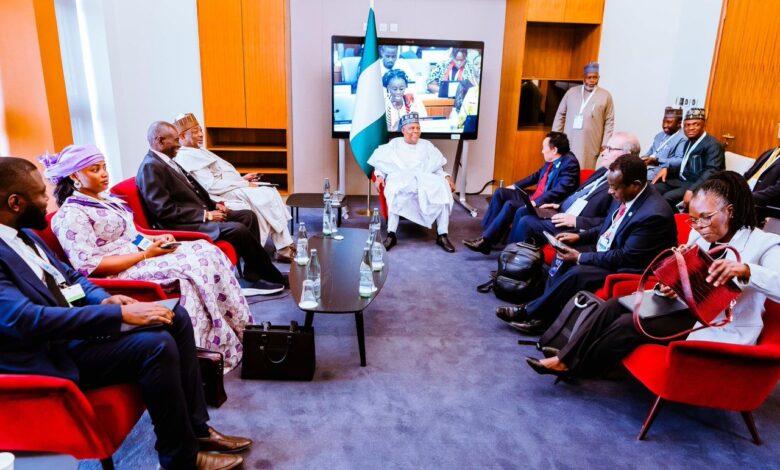
Speaking during a high-level panel at the UN Food Systems Summit +4 (UNFSS+4) in Addis Ababa, Shettima said Nigeria is implementing bold reforms under President Bola Ahmed Tinubu to transform the agricultural sector and address food insecurity, particularly in conflict-affected regions.
“Our target is to attain food sovereignty,” the Vice President stated. “So long as a nation is not independent in food production, it remains a non-sovereign nation.”



He noted that President Tinubu, upon assuming office in 2023, declared a state of emergency on food security in response to systemic challenges exacerbated by insecurity, climate shocks, and inflation.
Shettima added that the administration has since introduced coordinated policy actions, including the establishment of the Presidential Food Systems Coordinating Unit (PFSCU), to streamline interventions and support vulnerable communities—particularly in the conflict-affected North East.
“We believe charity is not the answer,” he said. “In displaced persons’ camps, we are promoting food production to restore dignity and build resilience.”
The Vice President stressed that agriculture in Nigeria must be driven by markets, entrepreneurship, and innovation. He said the government is investing in improved seeds, mechanization, climate-resilient farming, and enhanced extension services to help farmers adapt to changing weather patterns and increase productivity.
On the sidelines of the summit, Shettima held bilateral meetings with heads of key global food and development agencies, including the Food and Agriculture Organization (FAO), the International Fund for Agricultural Development (IFAD), and the World Food Programme (WFP).