Onigbinde: End of a football era- by Tosin Omojola
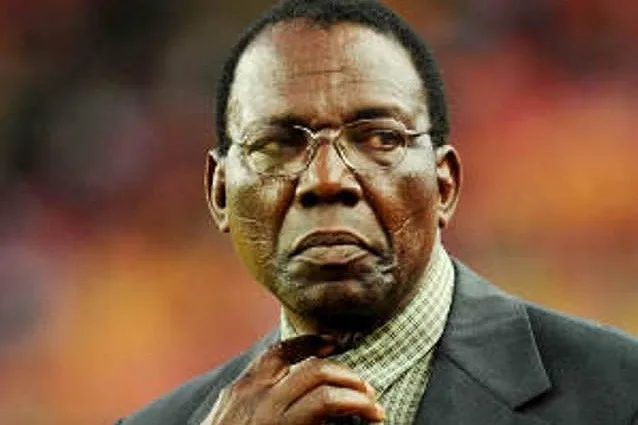
Nigerian football community was on Monday thrown into mourning, following the demise of one of the country’s best in football coaching and administration, Chief Festus Adegboye Onigbinde.
Baba Onigbinde died just a few days to his 88th birthday, bringing to an end, a glorious era that touched lives and the country as a whole.
The story of Nigerian football, without the mention of Chief Onigbinde, makes the story incomplete.
The Limelight
Born on March 29, 1938, in Ibadan, Oyo State, the late Modakeke High Chief was an icon who dedicated his life to the growth and development of football in Nigeria and across Africa.



Onigbinde, a coach, teacher, mentor and administrator, shot into limelight during his days as the coach of the then IICC Shooting Stars of Ibadan, a club he later renamed Shooting Stars Sports Club (3SC) of Ibadan, when he became the club’s General Manager.
High level of competence
The late Onigbinde demonstrated high level competence, discipline, tactical intelligence, and commitment to youth development, which transformed the club into a formidable force both in Nigeria and on the continent of Africa.
Respected globally for his deep knowledge of the game’s tactics and techniques, Onigbinde served as Technical Director of the Nigeria Football Federation (NFF), and also as Technical Adviser of the Trinidad and Tobago Football Federation, in charge of the country’s youth teams. He was for many years a technical advisor of the Confederation of African Football (CAF), and worked on countless Technical Study Groups of both FIFA and CAF at major championships.
Coaching Career
He started his coaching career in the 1960s, and rose to national consciousness in 1977, when he led Water Corporation FC of Ibadan to the quarter-finals of the African Champion Clubs Cup competition. Seven years later, he led Ibadan giants, Shooting Stars FC, to the final of the same competition.
A quintessential teacher, educator and instructor, Chief Onigbinde was the first indigenous coach to lead Nigeria’s senior men national team to win a medal (silver) in the Africa Cup of Nations, achieving the feat with a team of rookies and few experienced performers in Cote d’Ivoire in 1984.
The very cerebral tactician led the Super Eagles to the 2002 FIFA World Cup finals in Korea/Japan, where a mixture of little-known names and experienced players lost narrowly to Argentina and Sweden, and drew with England. He became the first indigenous manager of the Super Eagles at football’s flagship tournament, after Dutchman Clemens Westerhof (1994) and Serbian Bora Milutinovic (1998).
He prosecuted the 2002 World Cup with a consortium of coaches, which included Fanny Amu, Ben Duamlong, Henry Nwosu, Alabi Aissien and Amusa Shittu.
He also served as instructor and educator for the NFF, CAF and FIFA, devoting his time to training the trainers, for which he accumulated accolades from far and near.
Chief Onigbinde’s legacy remains deeply etched in Nigerian and African football. His life symbolised discipline, mentorship, and service, and his name will continue to be remembered for the profound impact he made on the game.
Indeed, the departure of Baba Onigbinde, signifies the end of an era.