Senate committee urges FG to reform payment system, budgeting amid contractor debt
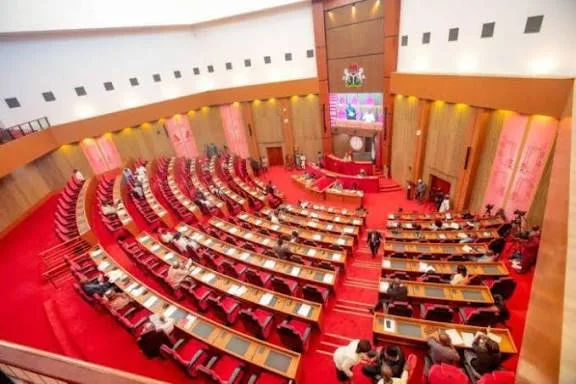
The Senate Committee on Finance has called on the federal government to return to the old payment system for contractors, citing growing debts for projects executed in 2024 and 2025.
According to a report by The Cable newspaper on Thursday, the lawmakers also recommended replacing the current envelope budgeting system with a priority- or performance-based model.
The resolutions were reached during a meeting with the federal government’s economic management team, led by Wale Edun, Minister of Finance and Coordinating Minister of the Economy. Other officials in attendance included Atiku Bagudu, Minister of Budget and National Planning; Shamseldeen Babatunde Ogunjimi, Accountant-General of the Federation; and Zacch Adedeji, Chairman of the Nigeria Revenue Service (NRS).
Chairman of the committee, Sani Musa, said feedback from ministries, departments, and agencies (MDAs) during budget defence sessions showed that economic policies are not benefiting ordinary Nigerians. He urged the economic team to work with the National Assembly to review and replace current operational systems.

“Based on submissions from heads of various agencies, the envelope system of budgeting has failed and needs to be replaced by a priority-based model,” Musa said. “The incremental allocation model has outlived its usefulness. It promotes routine expenditure expansion rather than strategic prioritisation. Similarly, the centralised payment system, which has left many contractors unpaid for completed projects, should be replaced with the previous system that allows MDAs to pay contractors directly.”
Musa also called for strict adherence to the annual budget cycle, stressing that budgets must be time-bound and measurable. “If by December we cannot realistically assess ourselves, then the system is failing. We must return to a disciplined budget cycle where one fiscal year ends before another begins,” he said.
Other senators backed the chairman’s position. Yahaya Abdullahi, representing Kebbi North, reminded the economic team that a budget, once approved by the National Assembly, becomes law and must be implemented. “Failure to implement the budget is illegal,” he said, noting that adjustments for revenue shortfalls must be made through the Fiscal Responsibility Act and returned to parliament for approval.
Jimoh Ibrahim, senator representing Ondo South, also urged the economic team to “increase our debt portfolio and borrowing capacity,” warning that Nigeria’s lending market could shrink over time, limiting future borrowing opportunities even if the economy grows.