The Definitive List: Africa’s gender leadership landscape — by Kelechi Deca
I have been tracking women in corporate leadership across Africa for 10 years, so I can humbly, but authoritatively say one or two things about factors I believe are the driving forces of these changes.
But because 75% of the things I do are off Facebook, when a TV station contacted someone in Rwanda for her views on the issue, the person advised them to reach out to me for a more robust engagement.
I laughed when the TV anchor person called me saying that she thought all I do was geopolitics, animals, cars, and Igbo culture and tradition.
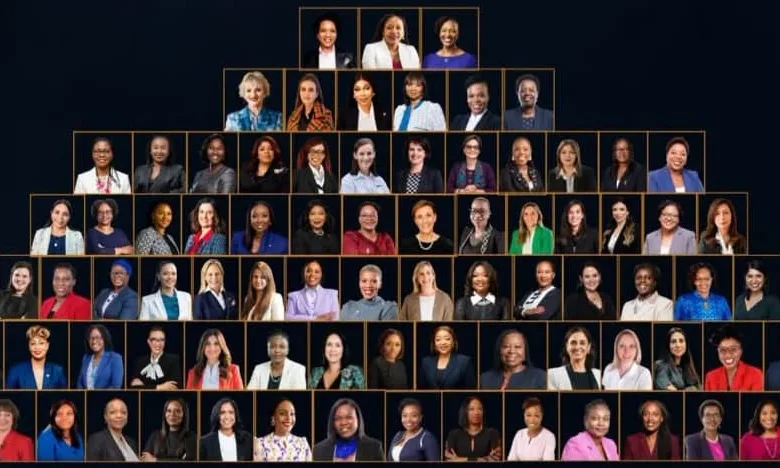
She didn’t even mention Coffee, and that one pain me o. Africa.com is unveiling its Definitive List of Women CEOs in few hours time today.
The Definitive List is an annual independent ranking of the women at the helm of Africa’s largest companies. Working with data provided by Bloomberg, they screen more than 1,400 companies across 25 of Africa’s stock exchanges and ranks these leaders by the revenue of the businesses they run. No nominations. No opinions. The data decides.
This year’s edition spans banking and insurance, mining and industrials, consumer goods, healthcare, real estate, and telecommunications.
It features leaders from across the continent, including Morocco, Egypt, Nigeria, Kenya, Tanzania, Rwanda, Zambia, Zimbabwe, Botswana, Mauritius, and South Africa.
The list is presented across three categories: chief executives of publicly traded companies, leaders of major divisions or subsidiaries of large listed groups, and regional executives leading African operations for global multinationals such as Microsoft, Visa, Mastercard, Nestlé, and Bank of America.
While this is noteworthy, it is still narrow, because there are lots of women doing amazing things, showing extraordinary leadership and innovative skills, and moving mountains who are not captured within the “narrow window” of the above. Probably another organization may expand the window to accommodate those running their own businesses and have taken their businesses to unimaginable height.
From what I observed in this year’s ranking, African women are definitely staking leadership claims within the continents banking industry. For example, for the first time in the FirstRand Group’s history, women lead its three core pillars: Mary Vilakazi as Group CEO, Lytania Johnson as CEO of FNB (First National Bank), and Emrie Brown as CEO of RMB (Rand Merchant Bank).
There is another thing I discovered when it comes to women in leadership positions across the continent. Four countries take the lead on various sectors and industries. South Africa, Nigeria, Rwanda, and Burkina Faso.
When it comes to the country with the highest number of women in board, and senior management positions, South Africa leads.
For traditional corporate boardrooms and overall senior leadership, South Africa consistently ranks highest with 32% of board seats held by women (JSE top 100) and 47.2% of senior leadership roles held by women.
But when it comes to overall management roles across the continent, Nigeria and Burkina Faso stands tall for the broad category of “managerial roles,” as 69.9% of all managerial roles in Burkina Faso are held by women, while in Nigeria, 67.5% of all managerial roles are held by women.
On the country with the highest number of women in CEO and Chair roles positions, Rwanda stands out with 20% of CEOs at listed companies and roughly 33% of board chairs are held by women.
In summary, when we look at board diversity, South Africa leads, if we want the highest percentage of women in management overall, Burkina Faso and Nigeria stands out, but for pinnacle CEO and Chair roles, Rwanda is the top performer.
When we juxtapose this with gender participation in political leadership, national, and regional decision making, it is easier to identify patterns which provide deeper insights.
On women in politics judging with the number in parliaments, Rwanda still leads not only in Africa, but globally with 63.8% of all the seats occupied by women. South Africa follows with 44.7%, Cabo Verde 44.4%, Ethiopia 41.9% , Senegal 41.2% , Namibia 40.6%, Mozambique 39.2% , Angola 39.1%, Burundi 38.2% , and Tanzania with 37.8%.
If you are adept at pattern recognition, you would realize that countries with high parliamentary representation such as South Africa and Ethiopia also tend to have more women in ministerial roles. Tanzania, and Namibia have female presidents, and they also have good female representations in their parliaments.
Interestingly, Namibia has both a female as president and also a female as Vice President. The revolutionary President Netumbo Nandi-Ndaitwah warned earlier this year that she is ready to change the global perception of Africa.
The key driver behind these high numbers is the use of gender quotas either through reserved seats or constitutional mandates requiring a certain percentage of candidates to be women.
Change is hardly organic, it is engineered anywhere in the world. It appears that women in West Africa are comfortable with frying Akara and Kulikuli.
Unfortunately, no West African country featured in the top 10 of countries with female participation in political decision making while southern African countries lead. The reason is rooted in history and culture, a discussion for another day.
It appears that the rub-off effect of what has been happening in Rwanda infected Burundi.
The Definitive List of Women CEOs is more than recognition; it’s a call to action. By highlighting these trailblazers, it aims to inspire women to pursue leadership roles with tenacity and vision.
From across the continent, these women are reshaping markets and building inclusive, thriving businesses. Their stories prove that hard work and bold ideas can transform industries and uplift communities.