US releases official text of agreement with Iran
The United States on Wednesday released the official text of the memorandum of understanding reached over the weekend with Iran.
A senior US administration official read out the 14-point document, which spells out provisions for reopening the Strait of Hormuz, easing certain financial restrictions on Iran and sets out expectations for addressing Iran’s nuclear program during future technical talks.
Titled the “Islamabad Memorandum of Understanding between the United States of America and the Islamic Republic of Iran,” the document was released after outcry that its text hadn’t been released publicly.
“This is fundamentally an agreement that allows us to open the Strait of Hormuz immediately, commit the Iranians to destroying the nuclear dust, and then gives us a dial where if the Iranians dial up their good behavior, we respond by dialing up the kind of economic and sanctions relief that can make them a more prosperous country,” the senior US official said.

The memorandum is due to be formally signed Friday, triggering a 60-day-window to negotiate the final terms of a deal. CNN had earlier reported on a draft agreement laying out the terms. The official text released by the US is similar, but with some language differences, and it refers to a “minimum methodology” for neutralizing Iran’s stockpile of highly enriched uranium, which the draft did not.
The memorandum states that the United States and Iran, together with their allies in the current war, agree to the immediate and permanent termination of military operations on all fronts, including Lebanon, and undertake not to initiate any war or military action against each other.
It also provides for mutual respect for sovereignty and territorial integrity, while committing both countries to negotiate and achieve a final agreement within a maximum of 60 days, extendable by mutual consent.
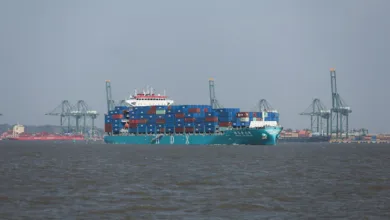
Under the terms of the agreement, the United States will begin removing its naval blockade and other restrictions against Iran, while Tehran will facilitate the safe passage of commercial vessels through the Strait of Hormuz and work with Oman and other Gulf states on the future administration of the waterway.
The document further commits the United States and its regional partners to developing a reconstruction and economic development plan for Iran valued at at least $300 billion, while also outlining a framework for the phased termination of sanctions.
On the nuclear issue, Iran reaffirmed that it would not procure or develop nuclear weapons, while both sides agreed to resolve the disposition of Iran’s stockpile of enriched uranium through a mechanism to be agreed upon during negotiations. The text specifies that, at a minimum, the material would be down-blended on site under the supervision of the International Atomic Energy Agency (IAEA).
Pending a final deal, Iran will maintain the current status of its nuclear programme, while the United States will refrain from imposing new sanctions or deploying additional forces in the region.
The agreement also provides for waivers to allow Iranian crude oil exports, the release of frozen Iranian assets, the establishment of a monitoring mechanism to oversee implementation, and the endorsement of any final agreement through a binding United Nations Security Council resolution.
Earlier on Wednesday, CNN reported details of a draft version of the memorandum obtained from a US official. Diplomatic sources familiar with the negotiations confirmed the contents of the draft, although the White House had maintained that it did not reflect the final memorandum.
One notable difference between the draft and the final text is the inclusion of a “minimum methodology” for neutralising Iran’s stockpile of highly enriched uranium, specifying down-blending under IAEA supervision. The final text also states that Iran will allow commercial vessels to transit the Strait of Hormuz free of charge for 60 days, a provision not included in the draft.
US officials have since described the memorandum as a political document and said it does not capture certain back-channel commitments made by Iran regarding the future of its nuclear programme. The White House did not comment on the draft, while Iran’s semi-official Tasnim news agency described leaked versions of the document as inaccurate.
Credit: CNN