14 banks comply with new CBN’s capital requirements, says Cardoso
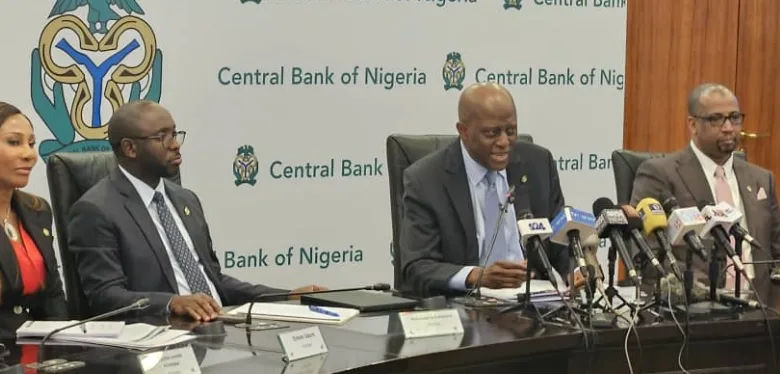
The Governor of the Central Bank of Nigeria (CBN), Mr. Olayemi Cardoso on Tuesday disclosed that about 14 banks have met the regulatory capital requirements.
He spoke on the funding progress during a news conference on Tuesday in Abuja, while announcing the decisions of the CBN’s monetary policy committee(MPC).
The committee reduced the country’s monetary policy rate (MPR) from 27.5 per cent to 27 per cent.
The MPR is the baseline interest rate in an economy, other interest rates used within the economy are built on it.




The MPC’s decision comes after Nigeria’s inflation rate dropped to 20.33 per cent in August 2025.
Speaking at the media briefing, Cardoso said the committee members unanimously voted to reduce the rate by 50 basis points from 27.5 percent to 27 percent.
He said the committee adjusted the cash reserve ratio (CRR) to 45 per cent, and retained the liquidity ratio at 30 per cent.
“All 12 members of the committee were in decisions of the MPC. The committee decided to reduce the monetary policy rate (MPR) by 50 basis points to 27 percent,” the CBN governor said.
“Change the asymmetric corridor to +250/-250 around the MPR, reduce the CRR of commercial banks from 50% to 45%.
“The CRR of Merchant banks remains at 16 percent and also to introduce a 75 percent CRR on non-TSA public sector departments and keep the liquidity ratio unchanged at 30 percent.”
The CBN governor also said the committee’s decision to lower the MPR was predicated on the sustained disinflation recorded in the past five months, projections of declining inflation for the rest of 2025, and the need to support economic recovery efforts.
“The MPC expressed satisfaction with the prevailing macroeconomic stability, evidenced by the improvements in several indicators,” he said.
“These include the sustained disinflation, improved output growth, stable exchange rate and robust external reserves.
“It particularly noted the increased momentum of disinflation in August 2025 being the highest in the past five months.”
“This deceleration underpinned by monetary policy tightening, exchange rate stability, increased capital inflows and surplus current account balance have helped to broadly anchor inflation expectations.”
Other factors that contributed to the deceleration, according to Cardoso, include the continued moderation in the price of petrol and the notable increase in crude oil production.
Citing the submissions of the committee, the CBN governor said the stability in the macroeconomic environment offered some headroom for monetary policy to support economic growth and recovery.
“Notwithstanding the consistent deceleration in inflation, the committee observed the persistent build up of excess liquidity in the banking system, resulting largely from fiscal releases emerging from improved revenues,” he said.
“Be mindful of the need to preserve the prevailing macroeconomic stability. The MPC noted the risk posed by the excess liquidity in the banking system. Members noted that effective vomiting of the interbank market remains critical to enhance translation of monetary policy.