24/7 power remains goal, but sector reforms will take Years — Tegbe

The newly inaugurated Minister of Power, Joseph Tegbe, has restated the federal government’s long-term objective of delivering “reliable and affordable electricity for every Nigerian home, business, and industry, around the clock,” while cautioning that Nigerians should not expect rapid improvements in power supply.
Speaking on Monday after his swearing-in by President Bola Tinubu at the State House in Abuja, Tegbe acknowledged that the country’s electricity challenges are deeply rooted and cannot be resolved within months.
He said the power sector is undergoing broad reforms across the generation, transmission, and distribution value chain, adding that improvements would emerge gradually rather than immediately.
“The challenges that have kept this sector below its potential were decades in the making. They will not be fully reversed in weeks or months,” he said, adding that early gains are already becoming visible.
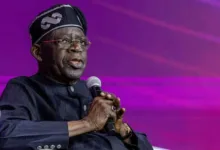



Tegbe emphasized that his administration would prioritize transparency, accountability, and measurable outcomes, noting that engagement with key sector operators and agencies had already begun since his confirmation.
According to him, discussions with international development partners have also signaled potential liquidity support for the sector, which he described as a “significant vote of confidence” in ongoing reforms.
On infrastructure, the minister highlighted the partial revival of the 450-megawatt Alaoji Open Cycle Power Plant in Abia State, operated by the Niger Delta Power Holding Company (NDPHC), with about 375 megawatts now available for dispatch after years of inactivity.
He also pointed to recent upgrades by the Transmission Company of Nigeria (TCN), including the energization of new transmission assets in Abuja, Oyo, and Ogun States aimed at improving grid stability.
Tegbe cited improved responsiveness in addressing outages, including the restoration of electricity supply in parts of Abuja within 24 hours after a transformer failure, as evidence of growing efficiency in the system.