House of Reps moves to secure Jonathan’s safety after Guinea-Bissau Coup
By Kunle Sanni –
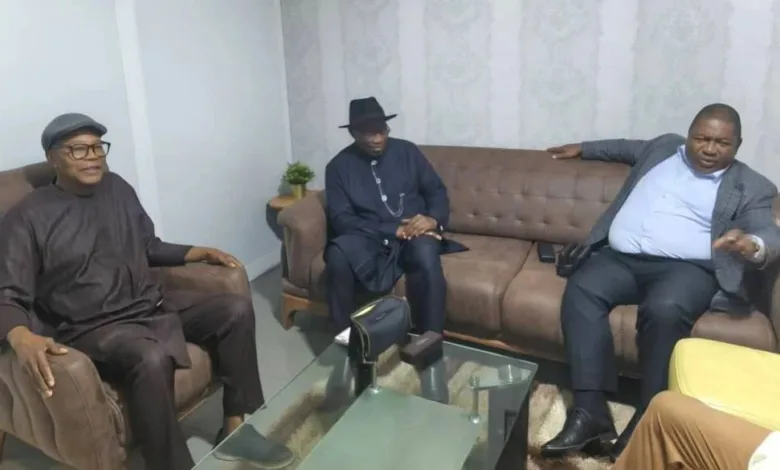
The House of Representatives has called on the federal government to activate all diplomatic channels to ensure the safe return of former President Goodluck Jonathan, who remains stranded in Guinea-Bissau following a sudden military coup.
The matter arose during Thursday’s plenary session, initially focused on rising economic hardships, before Deputy Speaker Benjamin Kalu drew lawmakers’ attention to what he described as an urgent national concern.
House Leader Julius Ihonvbere, representing Owan West/East Federal Constituency of Edo State, explained that Jonathan was carrying out an international election observation assignment when the military intervened.

He highlighted the former president’s extensive global track record monitoring elections in countries such as Zimbabwe, Liberia, Ghana, Mozambique, Pakistan, Tanzania, and South Africa.
“Currently, he is in Guinea-Bissau due to the coup,” Ihonvbere said, stressing that while the House was not debating the coup itself, Jonathan’s security was “a matter of national importance.” He added that federal authorities were already working to guarantee his safe evacuation.
Minority Leader Kingsley Chinda supported the motion, praising Jonathan’s democratic credentials while urging the government not to overlook other Nigerians caught in the crisis. “The importance we attach to his life should also apply to every other Nigerian, whether at home or abroad,” he said.
The House adopted the motion through a voice vote, directing the federal government to intensify diplomatic efforts to secure Jonathan’s release and ensure the safety of all Nigerian nationals in Guinea-Bissau.
Jonathan had traveled to the West African nation as part of a joint African Union, ECOWAS, and West African Elders Forum delegation monitoring last weekend’s presidential election when the takeover occurred. The call follows reports that General Denis N’Canha, head of the presidential military office, announced that a command “composed of all branches of the armed forces” had assumed control of the country, suspended the electoral process, and sealed national borders.