UN warns terrorists using drones, cryptocurrency to strengthen attacks in Nigeria
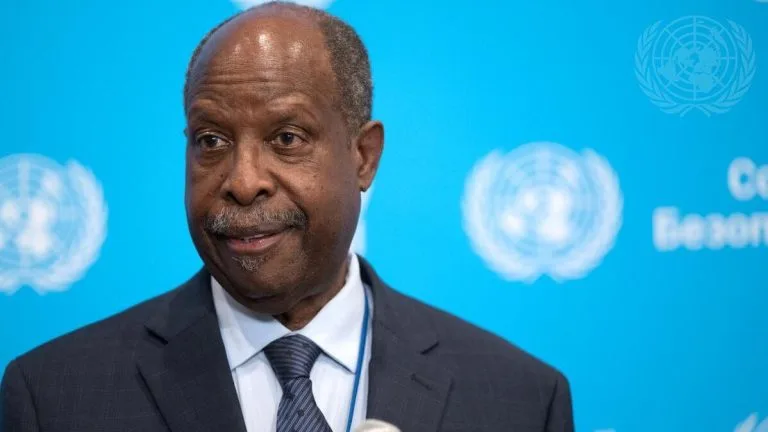
The United Nations has warned that terrorist groups operating in northern Nigeria and across the West African and Sahel region are becoming increasingly sophisticated, deploying drones, advanced communications technology and cryptocurrencies to strengthen their operations.
The warning was delivered by the Special Representative of the UN Secretary-General for West Africa and the Sahel and Head of the United Nations Office for West Africa and the Sahel (UNOWAS), Leonardo Simão, during a briefing to the UN Security Council on the security, political and humanitarian situation in the region.
Presenting the Secretary-General’s report covering November 29, 2025, to June 30, 2026, Simão said the groups were increasingly coordinating attacks across borders while relying on modern technology to expand their operations and weaken public confidence in state institutions.
The UN warning came weeks after the United States announced what it described as the largest seizure of terrorist equipment in Nigeria since the September 11, 2001 attacks. U.S. officials said a joint operation with Nigerian forces recovered a large cache of electronic equipment from jihadist groups and killed 199 fighters during a single raid.



Despite the worsening security situation in Nigeria, Niger and Burkina Faso, Simão pointed to renewed regional cooperation, citing the reopening of the Kamba border crossing between Nigeria and Niger and progress in implementing the International Court of Justice ruling on the Nigeria-Cameroon border.
“Armed groups are increasingly using drones, sophisticated communications and cryptocurrencies while coordinating operations across borders. Fighting poverty and vulnerability must therefore remain a common objective in the broader fight against terrorism,” Simão told the Security Council.
He disclosed that about 6.8 million people have been displaced across the region, while another 1.28 million have become refugees or asylum seekers, with women, children and young people bearing the greatest burden of the humanitarian crisis.
Members of the Security Council agreed that military action alone would not defeat extremism, urging governments to strengthen governance, education, job creation, humanitarian support and regional cooperation to address the root causes of terrorism and insecurity.