Big jeeps, small ideas: Nigeria’s politics of mediocrity — by Babafemi Ojudu
A senior friend and former colleague in the Senate recently asked whom I would vote for as President in the next election.
“I do not know yet,” I replied.
That remains my position. I have yet to hear, with sufficient clarity and conviction, how those seeking the office intend to address Nigeria’s most pressing problems. My vote must rest on more than personal affection, ethnic solidarity or party affiliation. At this stage of my life, with the experience I have acquired, I owe myself—and my country—a considered choice.
I need to be persuaded.
There is something profoundly troubling about a political class that can organise an elaborate procession towards power but struggles to explain what it intends to do with it.
It can assemble governors, procure expensive vehicles, secure endorsements and fill stadiums. Yet ask for a clear, credible account of how it will improve the lives of Nigerians, and the confidence becomes less evident.
Across party lines, our politics is crowded with personalities and starved of sustained engagement with ideas. Too many aspirants can explain whom they must defeat more convincingly than what they intend to build.
Opposition is not an agenda. Incumbency is not an ideology. Neither excuses intimidation, political violence or the substitution of influence for persuasion.
Consider Obafemi Awolowo.
In the campaign leading to the 1979 elections, the Unity Party of Nigeria offered four cardinal programmes: free education, free health services, full employment and integrated rural development.
I was a young school-leaver then. The appeal was easy to grasp because the programmes spoke directly to the circumstances of ordinary people.
A parent understood the value of education. A sick person understood the promise of healthcare. A school-leaver understood employment. A farmer recognised the importance of roads, water, electricity and access to markets.
The programmes connected the pursuit of power to the daily business of living.
Their affordability could be challenged. Their economic assumptions and administrative demands could be questioned. But there was something substantial to debate.
Awolowo gave supporters a programme to defend and opponents an argument to answer.
Integrated rural development also expressed a conception of society: rural communities should offer the services and opportunities that enable citizens to live productively and with dignity. Development should reach people where they lived.
That is part of the work of political thought: connecting problems, establishing priorities and explaining how public action can improve human circumstances.
The National Party of Nigeria offered a different political tradition. Its government became associated with the Green Revolution and low-cost housing, while its slogan, “One Nation, One Destiny,” expressed an aspiration to national unity. Whatever judgment we make about implementation, agriculture, shelter and national cohesion were recognisable elements of its public proposition.
We should not romanticise the Second Republic. It had corruption, patronage, electoral misconduct and bitter divisions. A programme did not guarantee competence or integrity.
Nevertheless, political competition contained identifiable arguments about what government should provide and how society should develop.
Then there was Aminu Kano.
Through the Northern Elements Progressive Union and later the Peoples Redemption Party, he gave political expression to the aspirations of the talakawa—ordinary people confronting entrenched privilege and unequal power.
His politics had an identifiable social purpose. His name endures partly because it still evokes an understanding of whom government should serve.
How many who claim these political inheritances accept their intellectual obligations? How many professed heirs of Awolowo can sustain a serious discussion of public education, fiscal priorities and rural development? How many admirers of Aminu Kano will question privileges from which they benefit?
It has become too easy to wear the cap, display the portrait and repeat the slogan while neglecting the discipline.
We must, however, describe the present failure fairly.
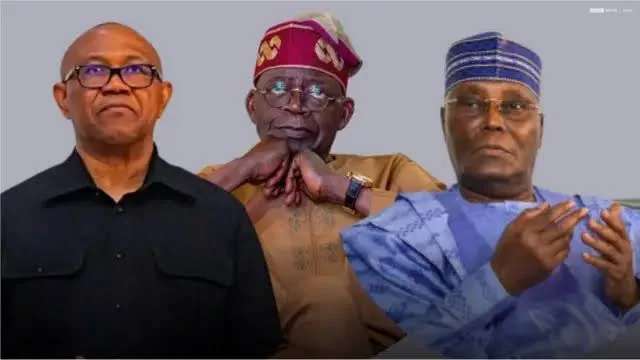
It would be inaccurate to suggest that our principal presidential contenders have never produced policy documents. The 2023 election featured manifestos from Bola Tinubu, Atiku Abubakar and Peter Obi, among others.
The question is what happened to those documents after their presentation.
How consistently have their authors used them to explain decisions, defend priorities and accept scrutiny? Can citizens readily identify their central commitments, funding requirements and delivery timetables?
A manifesto should guide a campaign, discipline a government and give citizens a basis for judging performance between elections. Too often, it recedes once the launch ceremony ends.
Personal modesty, however admirable, cannot by itself establish governing competence. Religious observance cannot substitute for public policy. Nor can an incumbent secure a convincing claim to another term merely by blaming opponents for the country’s difficulties.
Such appeals leave the central questions unanswered.
There is an even more fundamental question: the unity of Nigeria itself. Every promise of prosperity, security and development rests on the continued existence of a country whose people believe they belong together.
Yet, at a time of deep ethnic, religious and regional mistrust, I have heard far too little from those seeking the presidency about how they intend to rebuild that sense of belonging. Who is explaining how to heal our divisions, address legitimate grievances and restore confidence that citizenship carries equal rights and obligations, regardless of origin or faith?
National unity cannot be sustained by slogans alone. It requires fairness in appointments, equity in public policy, respect for our diversity and institutions that protect every citizen. It requires leaders whose words and conduct give Nigerians reason to trust one another and their country.
Those seeking the presidency must tell us how they intend to undertake this work. The responsibility begins with their campaigns: the language they use, the alliances they build and their willingness to reject appeals that set one community against another.
Before asking Nigerians for the mandate to govern, they must explain how they intend to strengthen the nation we share.
As another presidential election approaches, Nigerians deserve a clearer account of their choices.
President Bola Tinubu, as the incumbent, bears a particular responsibility to explain his record and the case for continuing his administration.
What has improved, and for whom? What has fallen short? Which assumptions require revision? What will change? When should citizens expect improvements in household incomes, employment and personal security?
What would another four years deliver, and how would progress be measured?
These are reasonable questions from citizens whose mandate is being sought. Every administration asking people to endure difficult reforms must explain the expected benefits, the timetable and the protection available to those bearing the heaviest costs.
Nigeria has the expertise to develop credible answers. Our universities, professional associations, public service, private sector and diaspora contain people capable of serious policy work.
A political establishment able to finance extensive mobilisation can finance the preparation of a convincing programme.
But a programme requires choices. Its sponsors must establish priorities, confront costs and accept limits. They must also accept obligations that citizens can remember and measure.
Endorsements make fewer demands.
Perhaps that helps explain why the machinery of mobilisation so often appears more impressive than the message.
Recent reporting about expensive vehicles donated for APC youth mobilisation brings the question into focus. PREMIUM TIMES reported on October 26 that First Lady Oluremi Tinubu confirmed donating vehicles to the party’s youth wing, following the circulation of a video showing seven new Toyota Land Cruiser Prado SUVs.
Party organisation requires transport. The legitimate question is how that investment serves a substantive engagement with citizens.
What commitments will the occupants explain to a mother struggling with school expenses, a trader whose working capital is shrinking or a graduate searching for employment? What will they say to the woman frying akara whose day’s labour yields barely enough to sustain her household?
The organiser receives a vehicle. What credible prospect of improvement does the citizen receive?
This question applies to every party. The comfort of campaign organisers must never become a more clearly defined objective than the welfare of voters.
The opposition has an equally serious obligation.
An alternative government requires more than an assembly of prominent people united by dissatisfaction with the incumbent. It requires a coherent explanation of how the country would be governed differently.
Which economic policies would its leaders retain, revise or abandon? How would they finance relief? What would they do about insecurity? Which proposals require legislation? What sacrifices would they ask of Nigerians, and what protections would accompany them?
If the government’s approach is inadequate, the alternative must be presented in enough detail to permit examination.
Citizens deserve more than a choice between official self-congratulation and opposition indignation.
Allegations about an opponent’s conduct or internal affairs may warrant scrutiny. They should not displace the larger discussion of how to govern Nigeria.
A more useful campaign is entirely within our capacity.
Each major contender could present five central commitments, explain their funding and publish a timetable. Public debates could test those commitments through informed questioning. Parties could translate their programmes into Nigerian languages and train organisers to explain them.
Campaign spokespersons should know their own programmes as thoroughly as they know their opponents’ embarrassments.
The standard should apply equally to the ruling party and every challenger. A credible programme must also include respect for electoral rules, peaceful competition and the citizen’s freedom to choose.
Nigeria has become more complex since 1979. Its population is larger, its economy more intricate and its security challenges more severe. These circumstances demand greater preparation from those seeking leadership.
Yet political cunning is too often treated as sufficient evidence of governing ability.
A person may outmanoeuvre rivals without possessing a useful conception of public service. An aspirant may accumulate endorsements without demonstrating the ability to organise effective government.
We have too readily confused the skills required to capture power with the qualities required to use it well.
I make this argument conscious that those of us who have participated in public life must examine our own contribution to the decline. We cannot condemn “the political class” as though we have stood entirely outside it.
The habits we tolerated, the questions we failed to ask and the shortcuts we excused deserve scrutiny too. Acknowledging that responsibility should strengthen our resolve to demand better.
Awolowo and Aminu Kano left ideas that can still be examined, contested and adapted. Their records were not beyond criticism, but they offered conceptions of society with which others had to engage.
What will today’s leaders and aspirants leave for comparable examination?
Convoys, defections and endorsements cannot constitute a sufficient political legacy.
Nigeria needs leaders who can explain where they intend to take the country, how they will get there and how they will bring its people together for the journey.
Let those seeking power present programmes clear enough to be understood, substantial enough to be debated and precise enough to be judged. Let incumbents account for their stewardship, and let challengers demonstrate their readiness.
Our votes should follow that examination.
Until then, the expensive vehicles will continue to pose an uncomfortable question.
They show us how comfortably the organisers intend to travel.
They tell us far too little about where they intend to take Nigeria.