China embarks on first yearlong space stay
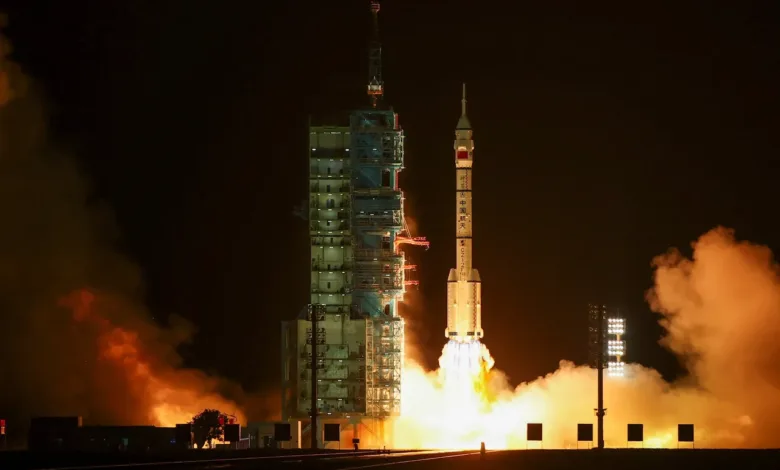
China on Sunday launched its Shenzhou-23 mission, marking a major step in the country’s ambition to send humans to the moon before 2030 and expand its long-term presence in space.
The Long March 2-F rocket carrying the spacecraft blasted off from the Jiuquan Satellite Launch Centre in the Gobi Desert at about 1508 GMT, according to footage aired by state broadcaster CCTV.
China’s Manned Space Agency later confirmed that the spacecraft separated from the rocket about 10 minutes after launch and successfully entered orbit, describing the mission as a complete success.
The agency said the astronauts aboard the spacecraft were in good condition as the mission officially commenced aboard China’s Tiangong space station.




The mission also marks the first time an astronaut from Hong Kong has travelled into space. The astronaut, 43-year-old Li Jiaying, previously served in the Hong Kong police force before joining the country’s space programme.
Other crew members on the mission include 39-year-old Zhu Yangzhu, a space engineer, and Zhang Zhiyuan, a former air force pilot making his first journey into space.
According to Chinese authorities, the astronauts will conduct a series of scientific experiments in life sciences, materials science, medicine, and fluid physics during the mission. One of the major objectives of the mission is a planned year-long stay in orbit by one crew member to study the long-term effects of microgravity on the human body.
Experts say the experiment is part of China’s broader preparations for future lunar and Mars missions. Astrophysicist Richard de Grijs said prolonged exposure to space presents challenges such as bone density loss, muscle deterioration, radiation exposure, sleep disorders, and psychological fatigue. The Shenzhou-23 mission is expected to help China build experience for sustained occupation of the Tiangong space station as it competes with the United States and its Artemis programme in the race for future Moon exploration.