Desmond Elliot: the selective Samaritan, by Bamidele Johnson

“You cannot sit at home and later come to seek help from people who others sacrificed to vote into power,” said actor-turned-legislator Desmond Elliot, who appeared to have suffered a violent bout of foot-in-the-mouth disease, induced by the turnout at yesterday’s Lagos council polls.
I was not in Lagos and I am still not. But if reports are to be believed, the turnout was so low that it could comfortably fit into an Uber with room to stretch. Council polls, by their very nature, have the gravitational pull of a faulty fridge magnet. This is ironic, considering that local government is supposed to be the closest tier to the people. But we move.
Mallam Elliot did not bother to define what “seek help” means. So I shall assist him. I am going to assume he views citizens as modern-day Franciscan mendicant friars, those chaste, robe-wearing souls who survive purely on alms. Except, in our case, people are not begging out of spiritual commitment but because the system is smithereened.
Elliot appears to believe that it is both morally and cosmically wrong to request assistance for school fees, WAEC or JAMB registration, medical bills, burial support, naming ceremony, wedding or pilgrimage sponsorship unless one participated in the voting process. In other words, if you did not vote, you have lost the right to beg. And in Nigeria, where begging is a civic duty, it is an indictment so severe it could make a saint wince.
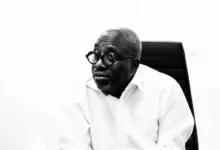
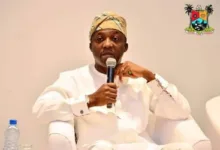
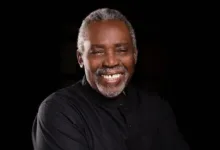

On this deeply logical basis, Elliot might as well establish a constituency Help Desk with bold signs that read: “VOTERS ONLY: BEGGARS MUST SHOW INK-STAINED THUMBS”, “NON-VOTERS, KINDLY GO AWAY WITH YOUR UNTREATED MALARIA OR UNPAID SCHOOL FEES”.
The unspoken message is clear: you should have voted. Preferably for him or his party. Very well, then. But here is where it all comes undone. If Elliot and his fellow politicians could reduce their industrious self-service by a modest 25 percent, cutting down on budget padding, endless SUV procurement and in an opaque fashion, say, there would be significantly less need for citizens to beg.
There is also the question of tax-compliant citizens who, for whatever reason, did not vote. Are they also part of this undeserving mendicant class? If I pay my taxes as a responsible citizen but miss the election because I am bed-ridden, disillusioned or simply unwilling to risk being clubbed at a polling unit, does that disqualify me from requesting support or accountability from public servants?
Elliot’s comment is not merely tone-deaf. It is a masterclass in how not to understand public service. It assumes that government is a transactional bazaar where only those who deposit votes can withdraw favours, and it utterly ignores the foundational truth: the state owes a duty of care to all citizens, votes or not.
It is precisely this mentality that keeps so many Nigerians away from the polls in the first place. The elected forget the job description the moment their nyash meets the chair.