FG remains committed to policies that will unlock Nigeria’s full economic potential, says Bagudu
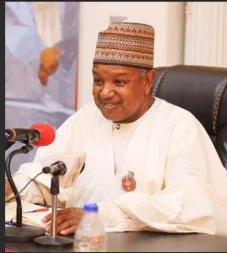
Minister Of Budget And Economic Planning, Sen. Abubakar Bagudu on Monday stated that the Federal Government under President Bola Tinubu remains committed to policies that will unlock the country full economic potential, stressing that the National Development Plan (NDP) 2021-2025 made the private sector the key driver of the economy by allocating an investment size of 86 per cent of the total plan size to the private sector.
Speaking on the state of the Nigerian economy and the preparation of NDP 2026-2030 at the 31st Nigerian Economic Summit (NES#31) in Abuja, Bagudu stated that approximately 28 months ago, the current administration been implementing bold and courageous reforms aimed at stabilizing the economy, enhancing the fiscal space, and addressing insecurity, as captured in the Renewed Hope Agenda and the 8 – Priority Areas of government.
According to him, these measures were crucial to averting a fiscal crisis and laying the foundation for long-term economic growth and development.
He noted that the Government, however, .recognized that these reforms came with short-term challenges for households and businesses.

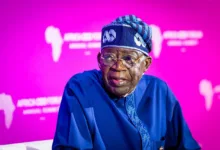
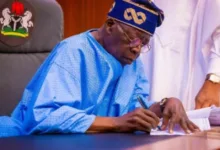
“We are determined to stay the course and ensure that the challenges that hindered the achievement of our manifest destiny are confronted and addressed,” he said.
He stated that the the NDP 2021–2025, the first of six plans toward implementation of Agenda 2050 was designed to unlock Nigeria’s economic potential through strong collaboration with the private sector, States and Local Governments, and civil society.
According to hiim, the plan set ambitious targets, comprises of an average annual GDP growth rate of 4.65 per cent, lifting 35 million people out of poverty, creating 21 million jobs, as well as increasing the revenue-to-GDP ratio to 15per cent.
“Achieving these targets required a total investment of N348.1 trillion, with N49.7 trillion expected from the government and N298.3 trillion from the private sector” he said.
He said the implementation of the plan offer two contrasting scenarios especially as regards policy elasticity. Between 2021 to May 2023, faced significant global and domestic challenges.
“The lingering effects of COVID-19, the Russia-Ukraine war, rising global inflation, commodity price volatility, and tightening fiscal conditions created considerable obstacles.
“Domestically, stagflation, insecurity, political transitions, weak revenue mobilization, fuel subsidies, distorted foreign exchange market and currency redesign combined to exacerbate fiscal constraints and limiting progress,” hhe explained.
On key economic prospects, Bagudu stated that the current administration is committed to achieving Nigeria to a secure and robust economic footing, as it acknowledged challenges, particularly the impact of the reforms on the cost of living.
“The good news however is that we are turning the corner and there is stability in the macroeconomic environment. The next focus of government is sustaining the reform for achieving growth and development. Inflationary expectations are on the decline, and we shall continue to support domestic production.
“We recognize the persistent challenges affecting agricultural productivity, including limited access to agricultural credit, low adoption of modern technology and inputs, climate-related factors, and security concerns.
“To effectively reduce inflation and the cost of living, we have prioritize increasing food supply, improving credit access, promoting the use of modern agricultural technologies and inputs, implementing climate adaptation measures, and ensuring the security of farming communities. Additionally, reducing transportation costs is crucial to easing the financial burden on households and businesses, hence the CNG policy of government,” he said.
He stated further that thee government is aware of the manufacturing sector’s slow growth, which is a direct consequence of low capacity utilization and persistent infrastructure deficits, particularly in power supply, transportation, and logistics.
“To address this, the government is committed to tackling infrastructural deficits and enhance digital connectivity to improve service delivery. We are also focused on aligning the education system with the demands of the industry, ensuring that graduates acquire the necessary skills in line with industry demands,” Bagudu explaineed.
He expressed that the government’s policy responses and economic interventions in fiscal sector as enunciated in the Four Tax Reforms Acts are strategically aimed at strengthening revenue mobilization for sustainable economic growth and development.
Accordingn to him, the reforms being beneficial to the Federal Government has effect on State and Local Governments, which is even more pronounced.
“For example, monthly Federation revenue shared by the three tiers of Government have reached 2.2 Trillion in September 2025from less than 600 billion prior to June 2023. Being a constitutional federation the states and Local Governments now have more revenues in invest in provision of public goods. In fact, the fiscal space for the states had improved significantly with most states now having less debt,” he noted.
On eonomic outlook and future policy direction for the remaining part of the NDP 2021-2025, he said the economic outlook is projected, with real GDP growth expected to accelerate to 4.60 per cent in 2025, 4.43per cent in 2026, and 5.52 per cent in 2027.
“This growth trajectory will be supported by a stable price environment, with inflation projected to moderate to 15.75per cent in 2025, 14.21per cent in 2026, and 10.04per cent in 2027, contingent upon a consistent monetary policy focused on price stability and complementary fiscal consolidation.
“Our policy direction will alo continue to implement a market-driven exchange rate regime, fiscal sustainability, and address the underlying structural challenges,” he said.
He said the initial framework for the second five-year NDP 2026-2030, informed by the Nigeria Agenda 2050, sets aspirational target a GDP of $1 trillion by 2030.
“Realizing this goal demands an 8.78per cent average annual real GDP growth, a 17.18per cent manufacturing contribution to GDP, and a 24.78per cent manufactured export share by 2030. We will commence this strategic planning with a workshop to articulate the NDP 2026-2030’s vision, core objectives, and policy thrusts, ensuring alignment with Nigeria’s long-term development goals.
“The process will be consultative, participatory and inclusive involving all critical stakeholders; namely, the Private sector, State and Local governments political parties, Civil Society Organisations, Labour Union, Market Women Association, physically challenged and indeed all segments of the Society.
“As we implement the remaining period of the National Development Plan (NDP) 2021-2025 and transition into the second five-year plan (2026-2030), we remain committed to policies that will unlock Nigeria’s full economic potential. The government will continue to adopt evidence-based decision-making, foster collaboration across sectors, and implement reforms that promote long-term stability and economic resilience,” he said.