How Adebayo’s critique exposes gap in Tinubu’s Renewed Hope Agenda – by Adedayo Olalekan
When President Bola Ahmed Tinubu assumed office in May 2023, he promised Nigerians a Renewed Hope Agenda anchored on economic recovery, good governance, improved security, agricultural transformation and an uncompromising fight against corruption. More than three years into the administration, however, anti-corruption and governance, alongside agriculture and food security, have remained among the most debated aspects of his presidency.
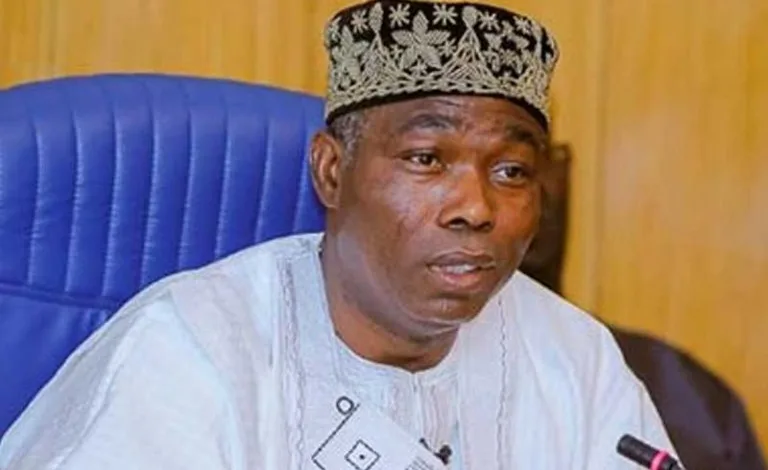
While the administration points to policy initiatives and institutional reforms, many Nigerians assess government by the realities they experience daily—rising food prices, persistent insecurity, declining purchasing power and the perception that corruption remains deeply entrenched. It is against this backdrop that the criticisms of the Social Democratic Party (SDP) presidential candidate, Prince Adewole Adebayo, have gained attention.
Unlike conventional political criticism, Adebayo attempts to connect corruption, insecurity, food inflation and poor governance as parts of a single leadership problem. His argument is that when government fails to protect lives, manage public resources transparently and prioritise citizens’ welfare, every other policy objective including food security becomes difficult to achieve.
Measuring Success by Public Welfare

One of the administration’s major promises was to strengthen governance and intensify the fight against corruption. Although anti-graft agencies have continued investigations and prosecutions, critics argue that public confidence has been weakened by allegations of selective enforcement and political considerations.
For Adebayo, however, the bigger issue is not simply whether corruption exists but whether government spending translates into visible improvements in the lives of ordinary Nigerians. As he puts it: “Talking about corruption, corruption was on before he came, he just continued and amplified that. The only credit I can give to him is keeping himself alive despite the troubles he personally faced. Beyond keeping himself, he has not done anything for the country and it is unfortunate that trillions of public money have been passing through their hands and these monies have not reflected in the welfare of the people.”
His criticism shifts the debate away from official announcements to measurable outcomes. In his view, if trillions of naira have been spent without corresponding improvements in infrastructure, public services or living standards, then governance has failed irrespective of government claims. Adebayo argues that this disappointment is visible even within the President’s traditional political environment.
“Even the local government where he comes from, their life isn’t better but worse. The state he comes from, their life is not better, it is worse. The region where he comes from, their life is not better but worse.”
He believes this reflects a wider national problem: that the benefits of government expenditure are not reaching the people whose taxes and resources sustain the state.
Recalling an event at the Awolowo Foundation in Ikenne, Ogun State earlier this year, he says public frustration has reached a point where official narratives are increasingly met with scepticism.
“The president was special guest of honour and he sent a senior member of his government to come and speak. After I spoke, he spoke and the people were yelling at them, ‘Why are you lying to us?'”
For Adebayo, this disconnect between government and citizens explains why confidence in public institutions continues to decline.
His conclusion is uncompromising. “There are three reasons why he is the worst president. One; he is the one in charge now where we have the most possible impact of bad governance. Two; he is doing it in a manner that is not just incompetent, it is an organised agenda to try to personalise the country and create a Bola Tinubu singularity.”
Whether one agrees with the language or not, Adebayo’s broader argument is that institutions should serve the nation rather than revolve around political personalities.
The administration also promised to transform agriculture into a driver of economic growth and food sufficiency. Several intervention programmes, financing schemes and support initiatives have been introduced. Yet, for millions of Nigerians, food remains increasingly unaffordable.
The reasons extend beyond agricultural policy alone. Farmers in many parts of the country continue to abandon farmlands because of violent attacks, kidnappings and communal conflicts. Rising transportation costs, inflation and insecurity have combined to make food production more difficult and food prices more expensive. For Adebayo, this demonstrates that food security cannot be separated from security itself.
His visit to the attacked communities of Angua and Rukuba in Plateau State reinforced that conviction. “I visited Plateau to find out the plight… For invaders to visit a community like that and, in a flash, render many families bereaved, kill many people, disturb the peace of the community, injure many people and traumatise the entire community—it was devastating.”
Beyond sympathising with victims, Adebayo says his mission was to reassure citizens who had begun to lose confidence in their country. “I thought that we needed to go there and restore the hope of the people… they were already feeling like stateless people—people unprotected by any government.”
For him, perhaps the most disturbing discovery was that the widely reported attacks represent only a fraction of the country’s security crisis. This reality has profound implications for agriculture. Communities living under constant fear cannot cultivate their farms, while displaced families inevitably contribute to declining food production and rising market prices.
Adebayo was particularly critical of President Tinubu’s response to the Plateau tragedy.
To him, leadership is demonstrated most clearly during moments of national tragedy, when citizens expect empathy, presence and decisive action.
Leadership, Not Capacity, Is the Missing Link
One recurring theme in Adebayo’s assessment is that Nigeria’s problem is less about institutional capacity than political leadership. Following interactions with security personnel in Plateau, he concluded that the country’s law enforcement agencies possess the ability to protect communities but lack the necessary political support and strategic direction.
He adds “Our law enforcement agents have the capacity to do it. Unfortunately, they are not being supported.” In his view, stronger intelligence gathering, better community engagement and more responsive leadership would significantly improve security outcomes and, by extension, agricultural productivity and economic stability.
Taken together, Adebayo’s criticisms present more than an indictment of the current administration; they outline an alternative philosophy of governance. His central argument is that corruption, insecurity, weak institutions and food inflation are interconnected consequences of poor leadership rather than isolated policy failures.
He maintains that government must be judged by tangible improvements in the welfare of citizens, not by the volume of policies announced or funds appropriated. Public resources should produce visible development, security should enable farmers to return safely to their lands, and institutions should inspire confidence rather than suspicion.
Whether Nigerians ultimately endorse his vision will be determined at the ballot box. Nonetheless, Adebayo’s interventions stand out because they consistently combine criticism with a governance framework rooted in constitutional responsibility, institutional accountability, community-centred security and measurable improvements in citizens’ welfare. In doing so, he seeks to make the case that Nigeria’s greatest challenge is not the absence of resources or opportunities, but the absence of leadership capable of converting both into security, prosperity and renewed national confidence.
Adedayo Olalekan, a public affairs analyst, writes from Ondo.