How President Tinubu is redrawing the South-East political map — by Tunde Rahman
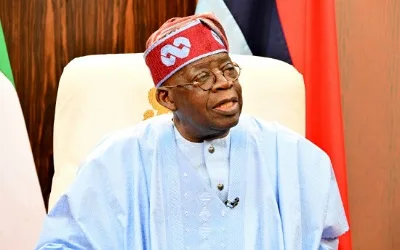
When the 2023 presidential election results were announced, many analysts and commentators gave a largely unanimous verdict regarding the voting pattern in the South-East. The region had voted almost entirely along ethnic lines. The figures told part of the story: Mr Peter Obi of the Labour Party swept the zone with over 1.8 million votes, while Asiwaju Bola Tinubu of the All Progressives Congress recorded just about 127,000 votes across the five South-east states.
Three years into the Tinubu administration, that electoral map is already being redrawn—not by rhetoric, but by landmark projects, appointments to strategic positions and deliberate political engagement. The South-East has historically complained of federal neglect, particularly in terms of federal presence. President Tinubu has moved to close that gap with visible infrastructure projects.
The federal projects, completed or ongoing in the zone, are now too numerous to count. They include the renewed federal push on the Enugu-Onitsha Expressway, the Calabar-Ebonyi-Benue Trans-Saharan Superhighway, the Enugu-Port Harcourt Road and the Second Niger Bridge access roads.
For a region whose economy runs on trade, fixing these transport arteries will directly impact businesses in Onitsha, Aba, Nnewi and other commercial hubs. I saw some of these iconic roads and the quality of work being done during a recent National Media inspection tour of federal and state government projects in the South-east organised by the Renewed Hope Ambassadors in collaboration with the Presidential Media Team.
President Tinubu has also committed to the Eastern Rail Corridor from Port Harcourt to Maiduguri, with the South-East segment prioritised. This revives a transport system that collapsed decades ago. The significance becomes even greater considering that some of the projects now being executed under President Tinubu, according to the Minister of Works, Engineer Dave Umahi, were conceived during the colonial era but left unrealised for decades.
The renaissance is not limited to road infrastructure. On energy, the inclusion of South-East states in the Siemens Power Project and renewed attention to gas infrastructure to power industrial clusters in Aba and Nnewi are significant.
During the inspection tour, we visited the ANOH Gas Project (Assa North-Ohaji South Gas Project), one of Nigeria’s largest natural gas development projects and a cornerstone of the Federal Government’s decade-long gas initiative. The processing plant, operated by ANOH Gas Company as a 50-50 joint venture between Seplat Energy Plc and the Nigerian Gas Infrastructure Company, a subsidiary of NNPC Limited, was inaugurated by President Tinubu on May 15, 2024. It is already supplying processed gas to offtakers such as Indorama Petrochemical Company.
The road and rail projects crisscrossing the South-East landscape are not campaign promises. They are budgeted projects with contractors already on site.
In politics, delivery takes slogans for lunch. Inclusion in government and strategic appointments for South-easterners also matter. The 2023 figures showed the APC’s vote deficit. However, appointments made between 2023 and 2026 reflect a deliberate effort to address the representation gap.
Key South-Eastenters now occupy strategic positions in foreign affairs, defence, works, science and technology, and security agencies. The Minister of Foreign Affairs, Mrs Bianca Odumegwu-Ojukwu, from Anambra State (although Enugu-born), is today the highest-ranking female political appointee in the Federal Executive Council.
Beyond the titles, the message is clear: the South-East is being brought to the centre of decision-making rather than being kept at the margins. This has begun shifting the conversation from “exclusion” to “what more can we get done together?”
The president’s economic reforms, including the unification of foreign exchange rates, removal of fuel subsidy and tax reforms, may be difficult, but the South-East is positioned to benefit from the shift towards production and exports.
Aba’s Made-in-Nigeria campaign, Onitsha’s trading network and Nnewi’s manufacturing base are being linked directly to federal grants, Central Bank intervention funds and export support. With the recent formal handover of the Akanu Ibiam International Airport, Enugu, to a concessionaire, the region’s logistics and commercial hub ambitions have also received a significant boost.
The Tinubu administration is treating the South-East not merely as a voting bloc but as Nigeria’s industrial engine.
In terms of political realignment, the numbers are also changing. Elections are about addition. In 2023, the APC polled 127,370 votes in the South-east. The administration’s goal for 2027 is not to win every state immediately but to expand that base gradually, state by state and local government by local government.
That growth is already evident. From controlling no state in 2019, the APC won two states in 2023 and has now increased that number to three. The remaining two states are not opposed to President Tinubu. Anambra State Governor Chukwuma Soludo of the All Progressives Grand Alliance and his Abia State counterpart, Governor Alex Otti of the Labour Party, are described as supporters of the President, his reforms and his re-election plans.
Governors across the country, including those from the South-East, have acknowledged that President Tinubu’s reforms have freed more resources for subnational governments, enabling them to embark on major infrastructure projects.
Governor Hope Uzodimma, who also chairs the Progressive Governors Forum, has remained vocal in his support for the President and in campaigning for his second term. Uzodimma also serves as Director-General of the Renewed Hope Ambassadors, the main campaign group for Tinubu’s re-election.
Speaking at a state dinner for the National Media Team, comprising more than 50 journalists, editors and members of the Presidential Communications Team in Owerri, Imo State, two weeks ago, Uzodimma described President Tinubu as the Lee Kuan Yew of Nigeria.
“In President Tinubu, I have seen another Lee Kuan Yew,” he said, praising the President’s bold economic reforms and expressing confidence that his performance would earn him a second term in 2027. “The old order is gone and there is now a new order. President Tinubu knew exactly what he came to do. He started implementing the reforms immediately because he understood the task before him,” he added.
Importantly, governors and stakeholders in the South-East are now in regular dialogue with the Presidency. Federal projects are being inaugurated with bipartisan participation, while youth and business groups that stayed away in 2023 are now engaging with APC structures because they see tangible projects in their communities.
Politics in the South-East has always been pragmatic. Where federal presence is visible, political alignment often follows. The 2023 electoral map showed where President Tinubu and the APC stood. Now, the administration’s governance record in the South-east is indicating where the region may be headed.
By linking infrastructure delivery with political inclusion and economic empowerment, the administration is redrawing the South-East political map from one defined only by election-day figures to one shaped by roads constructed, factories powered and people included in governance.
The South-East deserves to be at the centre of Nigeria’s growth story. Under President Tinubu, I dare say that repositioning has begun.
Rahman is Senior Special Assistant to the President on Media & Special Duties.