Inside Enugu’s ambitious projects
From smart schools and AI-powered security systems to a sprawling new smart city and a planned international medical hub, Enugu state is undergoing one of the most ambitious infrastructure transformations currently being attempted by any subnational government in Nigeria.
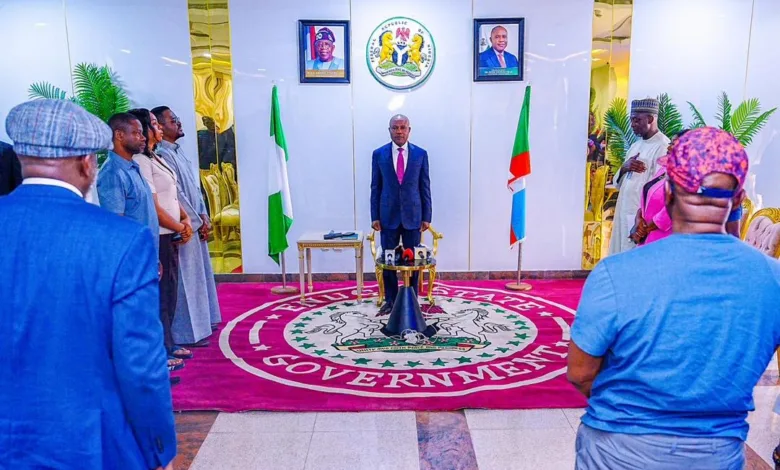
During a recent presidential media tour of projects in south-eastern Nigeria, Governor Peter Mbah disclosed a series of projects that together form the backbone of his administration’s economic vision. Mbah is eyeing a $4.4 billion to $30 billion economy for Enugu within the next eight years.
For a modern Enugu, the state government is betting on infrastructure as the foundation for growth, investment, tourism, and human capital development.

PUSH TO END NIGERIA’S MEDICAL TOURISM


Under the leadership of Mbah, Enugu is working to complete an international specialist hospital that would not only curb medical tourism in the country but also be a destination for advanced healthcare services in Africa.
“We are currently reviewing some of the infrastructure on ground and preparing to begin full operations,” George Ugwu, Enugu health commissioner, said. “In terms of manpower, we are building strategic partnerships to ensure that the best professionals in the world work alongside our local experts to deliver the highest standards of care.”

Mbah argued that the healthcare investment is tied directly to economic growth ambitions, adding that investors are unlikely to commit capital to environments lacking quality healthcare and security infrastructure.
The facility is expected to provide advanced diagnostic and therapeutic services, including oncology treatment, PET scans, and specialised medical care rarely available in the country.
SMART CITY PROJECT
With the phase already under construction, Enugu has begun a 10,000-hectare smart city project designed to decongest the old city and create what officials describe as Nigeria’s next premier investment destination.
Commissioner for Works and Infrastructure, Ben Osy Okoh, said Enugu would be dedicating 10 megawatts of off-grid electricity to power the city round-the-clock, while gas pipelines and underground utility systems are expected to significantly reduce infrastructure costs for future residents and investors.
“I don’t think there is any state government in the history of Nigeria that has started the construction of a new city. The only new city we have in Nigeria that has a master plan is Abuja and that is being undertaken by the federal government,” Okoh said.
“The development of Abuja started in 1981 and over 40 years, we have not even completed phase one of Abuja, not phase two.”
The project is structured as a public-private investment model, with the state government providing the foundational
infrastructure to attract private capital.
TOURISM DRIVE
Enugu has already secured partnerships and is investing in the upgrade of the Akanu Ibiam International Airport to drive its tourism potential.
The state is developing what officials describe as Africa’s longest zipline, stretching roughly 300 metres through the Ngwo Pine Forest area and connecting to cave systems.
A 5.6-kilometre cable car project is also underway, linking mountain locations, religious tourism sites, and scenic destinations across the state.
The government hopes the projects will significantly increase visitor traffic into Enugu and support a target of attracting three million visitors annually, with planned direct flights to the US, UK, and China.
“This is our target in December this year, to be able to get a direct flight from Enugu to the US, and from Enugu to the UK, to China,” an ecstatic Mbah said.
TECH INFRASTRUCTURE
The state is investing heavily in technology to enhance its economy and security. Enugu has now established a command-and-control system equipped with AI-enabled surveillance cameras, mobile monitoring systems, and distress response infrastructure aimed at improving rapid response capabilities.
Security vehicles and patrol personnel are fitted with embedded monitoring technology connected directly to a central command centre capable of real-time surveillance and coordination.
Infrastructure development without security would be unsustainable, Mbah said.
EDUCATION
The Enugu governor said it has built more than 260 smart schools equipped with robotics laboratories, AI learning systems, ICT hubs, and 3D printing technology.
The schools would be supported by a specialised teacher development pipeline through a Centre for Experiential Learning and Innovation, where teachers are trained in digital learning, robotics, artificial intelligence, and modern instructional methods.
The reforms also include 12 years of free and compulsory education beginning from early childhood learning at age three.
According to the governor, the education investments are central to the administration’s long-term poverty reduction strategy, with the state committing roughly one-third of its budget to the education sector over multiple budget cycles.