Navigating ‘conflicted’ communication cultures, by Omoniyi Ibietan
In 1977, the desire to enrich human communication experience with a modicum of fairness in the patterns of information exchange among countries, especially between the North pole and the global south, reached a tipping point when the UNESCO-backed MacBride Commission was instituted. There was an upsurge in opinion that information flow had become a ‘one-way street’ where the Northern Hemisphere was flooding the South with information without opportunity for reciprocity. The consequence was palpable ‘imbalance’ in information and communication patterns. So, the president of the Commission, Sean MacBride, inimitable Irish statesman and diplomat noted for righting wrongs, along with 15 other colleagues were mandated to investigate and recommend a New World Information and Communication Order (NWICO).
Their report, otherwise called “Many Voices One World…” – which contained sweeping policies to “reduce the international dominance of the Western media” – was submitted in 1980, and it became an agenda to deepen the advocacy for the global democratisation of information and communication Unbeknown to Ahmadou-Mahtar M’Bow (the Senegalese who became Director General of UNESCO and who instituted the International Commission for the Study of Communication Problems, as MacBride’s Commission was officially called), the Internet was coming to cause a fundamental upset and irreversible disruption in human communication.
Today, public communication culture is conflicted. Although the oral, the written, and the electronic cultures remain fluxed – as the emergent digital culture plausibly assumed the carrier role of all hitherto existing communication cultures, very much like mass communication was at its debut – the possibilities of the digital communication culture are huge and freaky. Manuel Castells, a leading philosopher of the Internet among others and in many works, particularly in the first volume of his classic trilogy, “The Rise of the Network Society”, described how exchange of informational resources within networks have bolstered trans-geographical, instantaneous, mass self-communication.
Humanity is now faced with a deluge of information, flagged by open access to what is famously dubbed ‘Big Data’, which totalises silos of data sets, nodes of content creators, bloggers and so on. I had described the blogger category in my first book, “Cyber Politics… (2023)”, as constituting the Fifth Estate of the Realm, a far-reaching extension of the Fourth. Yes! The Fifth Estate had become evident in the build-up to the 2004 US Presidential Election. Importantly, all these features of the digital culture came with attendant budding risks made worse by Artificial Intelligence (man’s programming of machines to function like humans), generative and otherwise. The challenge is enormous to the point that historical media sometimes became re-publishers of falsehoods originating from the human mind and made epidemiologic by social technology. By the reckoning of Huttenlocher, Schmidt and Kissinger (2021) and Yuval Noah Harari (2024), respectively, AI is dangerous in its capacity to act beyond human discretion; and in the wake of its weaponisation, it’s a lethal attack on truth and trust.




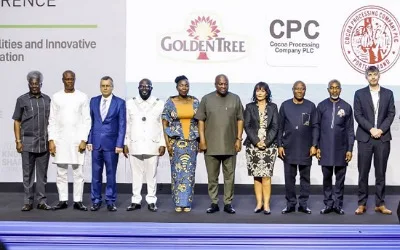
But AI is a double-edged sword. It comes with derivable benefits if thoughtfully, ethically, safely, and responsibly harnessed. The African Public Relations Association (APRA) and its partners have continued to iterate that digital communication and its offshoots will serve humanity better if utilised in a safe, ethical, and responsible manner. This conviction explained the gathering of public relations scholars, practitioners and enthusiasts in Accra last week at the “Public Relations Knowledge Sharing Conference” focused on “Global Realities and Innovative Communications”, organised by the International Public Relations Association (IPRA) and hosted by the Institute of Public Relations (IPR) Ghana in collaboration with APRA. The event commemorated the 70th anniversary of IPRA, inaugurated Esther Amba Cobbah (president of IPR) as the incoming president of IPRA, and offered the platform to present souvenirs to winners of the 2025 Golden World Awards.
At Accra, participants unpacked the challenges of modern communication through didactic exchanges and problem-solving collaborative communication. Both in plenums and special sessions of panellists, Africans and their global partners in communication management discoursed the central role of communication in mobilising citizens for development in a fluxed era of fast-paced innovating public communication. There was interesting dimensioning of the thematic focus of the conference, including Africa and its future in the era of AI, as well as cultural dimensions and implications of communicating with AI-powered tools. Concerning issues about AI were raised and posed as existential, intractable questions.
For instance, what are the implications of students’ reliance on AI? How should students use AI without mortgaging their creativity and their inherent cranial capability and intelligence? How do we use AI to communicate development? Is the corporate world ready for AI? How do we fill the gap in AI awareness and knowledge production? How do we use internal communication to get the employees ready for AI? How is the corporate world faring in Africa in the age of AI? What impact do AI tools have on Africa, and how do we leverage them? What direction is African digital policy taking? What social impact is digital policy making having on the African development agenda, especially in the age of AI?
In addition, taking oxygen from key points of the 2025 Human Development Report by UNDP, participants reflected on the choices Africans could explore in the era of AI? In essence, what insights can analytics and innovative communication offer Africa’s development agenda? What gains do private and public sectors derive from innovative communications in the context of development? For Galamsey (Ghana’s subliminal description of its troubled mining sector), what needs to be done to have a strategic response to the new challenges in the sector? What behavioural change needs to be instituted? Honourable Dele Alake, Nigeria’s Minister for Solid Minerals, was quoted to have said he received serial death threats on account of the reforms the Federal Government has instituted in the mining sector. So, what attitudinal turn do we require to berth a safe, responsible, and sustainable mining sector in Ghana, Nigeria, and all over Africa?
At relevant junctures, I called the attention of delegates to the imperative of strategy. I recalled the position of the African Union and its partners, including NEPAD, reiterated in February last year at the foyer of Nelson Mandela Hall in the AU headquarters in Addis Ababa ‘The Africa we want’ according to our leaders is visualised on the following aspirations:
- A prosperous Africa based on inclusive growth and sustainable development.
- An integrated, confident, politically united Africa and based on the ideals of Pan-Africanism and a vision of African Renaissance.
- An Africa of good governance, democracy, respect for human rights, justice, and the Rule of Law.
- A peaceful, secure Africa.
- Africa with a strong cultural identity, common heritage, values, and ethics.
- Africa, whose development is people-driven, relying on the potential of the African people.
- Africa as a strong and influential global partner.
As of February 2024, the African Union and its partners reckoned that we have recorded 37, 84, 42, 63, 45, 67, and 58 per cent milestones, respectively.
I advised delegates that whatever we want to do with emergent innovative communication culture, we have to do so within these frameworks and aspirations. I suggested that we re-evaluate these milestones and locate our roles as communication managers to strengthen the march towards realising the objectives. The ministers agreed at their session that the continent does not need to reinvent the will, but each country can adopt and adapt the continental objectives to national priorities and targets. There was emphasis by major speakers on the need for collaborative, inclusive communication to ensure people connect to the intention of governments and to leverage new technology to understand information and media literacy in order to enhance the detection and management of misinformation and disinformation. Most participants also advocate emplacing appropriate regulatory frameworks and increasing investments in the digital economy sector to reap the huge benefits that innovative technologies offer.
On communicating with the people, the ministers insisted they would focus on accuracy rather than speed because inaccurate information can cause reputational damage but participants agreed that opacity has been reduced in governance because Africa has leveraged digital communication. Both the representatives of governments across Africa and other participants agreed that the use of digital communication must be purposeful and that the young people need to be told. The Uganda minister particularly advised young people to stop wasting their time online but should invest such time in making money legitimately when they are online. Ghana stated that it was already training many young people and focusing on data forensic, data governance, cybersecurity, and many more areas where the country can harness the benefits of digital communication.
In addition, Ghana revealed its exploration of AI-generated content, language and inclusion with a focus initially on three key areas – Agriculture, Education and Health – and she is working with many partners, including the University of Ibadan in Nigeria. Ghana is revamping its community communication centres to render remote Medicare through telemedicine. In agriculture, farmers are empowered through real-time weather update, precision farming, and early detection of pests independent of agricultural extension workers, and they get the information in local languages. Large Language Models (LLM) are used for voice activation and relay. In education, curricula and lectures are shared and delivered through devices to students and other learners, even in places with challenging connectivity. Uganda also spoke to government roles as enablers of digital culture through regional innovation hubs
The event consummated a trajectory of histories. IPRA brought its 70th Anniversary celebration to Africa the same way it brought its 20th anniversary programme to Africa in 1975. It was on the sidelines of that celebration that APRA was formed in Nairobi fifty years ago. But IPRA made an additional history. It announced and decorated the first African, Esther Cobbah, to function as its president from January 2026. It was a great spectacle in form and output, and it turned out to be a great, rare assembly. President of the Republic of Ghana, John Dramani Mahama, a public relations practitioner and fellow of IPR Ghana and APRA was in attendance with some of his ministers, notably Felix Kwakye-Ofusu (Minister for Government Communications and Spokesperson of the President), Sam Martey George (Minister for Communications, Digital Economy and Innovation) and Yusif Sulemana (Deputy Minister for Lands and Natural Resources).
Geofrey Kabbyanga, Uganda Minister of State for ICT was also there, as well as Jan Eissfeldt (Director and Global Head of Trust and Safety, Wikimedia Foundation), the Serbia Ambassador, Natasa Bujas and Philip Sheppard (President and Secretary General respectively of IPRA) and some of their colleagues, president of APRA, Arik Karani, President of Nigerian Institute of Public Relations, Dr. Ike Neliaku and presidents/representatives of national public relations institutions/associations across Africa and hundreds of other mainstreamed stakeholders in public relations and communication management, academia, media, non-profits, and others in the civil society ecosystem.
-Ibietan PhD is the General Secretary of Africa Public Relations Association