Nigeria reports major progress in tobacco control, announces $110m fine against BATN
By Kunle Sanni –
The federal government of Nigeria has reported significant advances in its tobacco-control efforts, presenting new national data and enforcement actions at the Eleventh Session of the Conference of Parties (COP11) to the WHO Framework Convention on Tobacco Control (WHO FCTC) on Monday.
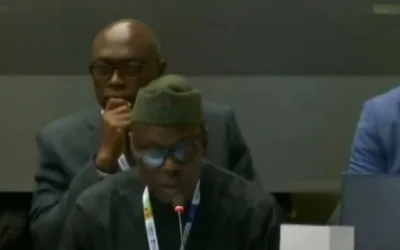
Delivering Nigeria’s statement at the global meeting in Geneva, the Minister of State for Health and Social Welfare, Dr Iziaq Adekunle Salako, said the country has intensified implementation of tobacco regulations since COP10 in 2024, with fresh survey results indicating a downward trend in tobacco use.
Nigeria has completed the second round of the Global Adult Tobacco Survey (GATS 2025), its first since 2012. According to the findings, daily tobacco use among adults has declined, which officials attribute to increased regulation, public awareness initiatives and enforcement activities.




The survey also shows that graphic health warnings are becoming more effective, with the proportion of smokers motivated to consider quitting rising from 26.7 per cent in 2012 to 43.3 per cent in 2025. Exposure to second-hand smoke in homes and public spaces has also reduced.
Dr Salako outlined several new frameworks aimed at strengthening implementation of the National Tobacco Control Act (2015) and its Regulations (2018). These include a strategic plan, a communication strategy and an enforcement plan covering 2024 to 2028. The government says the measures are improving compliance monitoring and coordination among regulatory agencies.
One of the key enforcement actions highlighted at the conference was a $110 million fine imposed on British American Tobacco Nigeria (BATN) by the Federal Competition and Consumer Protection Commission (FCCPC).
The penalty followed findings of multiple breaches of Nigeria’s tobacco-control laws and other consumer-protection regulations. Nigerian officials described the fine as one of the most significant applications of liability provisions under Article 19 of the WHO FCTC.
Nigeria also reported new regulations introduced by the National Film and Video Censors Board (NFVCB) that prohibit tobacco advertising, promotion and sponsorship across films, music videos, television and digital media.