REPORT: Mother seeks inclusive education after Ogun school rejects autistic son
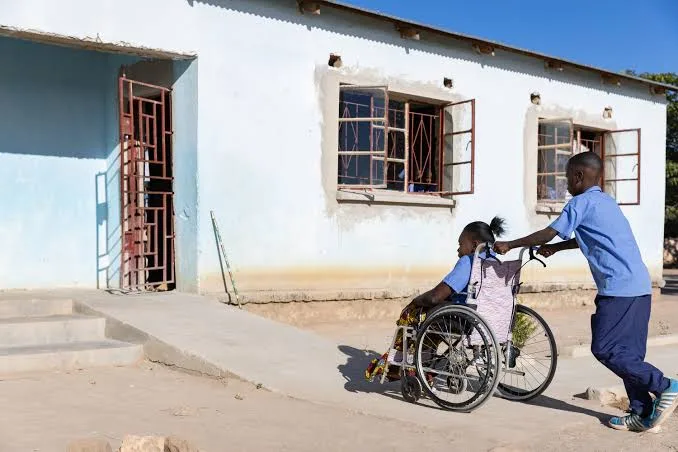
Obajimi Felicia, a widow and mother of three in Ogun State, says her 12-year-old autistic son has been unable to continue his education after a public secondary school asked her to withdraw him, citing a lack of facilities and teaching resources to meet his needs.
Felicia told Western Post that educating her three children became more difficult after her husband died eight years ago. Her sons initially attended a private school in their community but later transferred to a public secondary school because of financial constraints following their father’s death.
While her two older sons continued their education in the public school, Felicia said her youngest son, who is autistic and requires special care, struggled to fit into the system.
Asked how he coped in the private school, Felicia said he received less support when he was younger.
“Well, as at the time, he was much younger and needed less support. He wasn’t as big as he is now. The teachers could easily move him around, especially when he needed to ease himself. Also, because he didn’t begin school early like his contemporaries, most of the things he was taught were songs, stories and art.”
However, as her son grew older, Felicia said the private school became increasingly unable to meet his needs, while combining his care with her business and household responsibilities became difficult.
“Although the finances were a cause of concern after my husband’s passing, I struggled to meet up. However, it seemed that the school could no longer handle my boy and, as a result, started making all manner of excuses,” she added.
Felicia eventually withdrew him and tried homeschooling, but said the demands became overwhelming before she enrolled him in the public school attended by his older brothers.
“It wasn’t an easy task at all because I didn’t have anyone else to look after my business or the house. Soon enough, business and homeschooling became very hard. I then decided to enroll him at the public school my other children attend. After just three days of my son’s enrollment, the principal called to advise that I take him elsewhere. He told me that the school lacked the facilities to meet his needs, as teachers would need extra materials and teaching methods for him, which weren’t available.”
Felicia said she eventually had to school her son herself. She urged the government to make public education more inclusive and called on the Ministry of Education to cater to children living with disabilities, stressing that “they need access to quality education too.”
Felicia and her son’s experience is not an isolated case. The 2024 Situation Analysis of Children and Adolescents in Nigeria by the United Nations Children’s Fund (UNICEF) found that 33 per cent of primary-school-age children with functional difficulties are out of school. Similarly, updated reports from 2024 – 2026 highlight a deepening educational crisis, specifically for vulnerable groups
The implementation gap
Nigeria already has a National Policy on Inclusive Education, which provides a framework for ensuring that children with disabilities have access to education through appropriate facilities, trained personnel, learning materials and support services. However, the experience of children such as Felicia’s son suggests a gap between these policy commitments and their implementation in public schools.
In an effort to address the quagmire, the 10th House of Representatives, inaugurated in 2023 under Speaker Tajudeen Abbas, included special-needs education in its legislative agenda. The agenda committed the House of Representatives to enacting a law to promote the education of children with special needs and ensure their access to quality education in inclusive settings. It set the earliest target for 2024 and the latest for 2025.
However, the commitment did not result in a formally introduced bill. In an April 8, 2026 report, the Foundation for Investigative Journalism said a review of the National Assembly Library Trust Fund and Policy and Legal Advocacy Centre bill trackers found no bill in the House specifically targeting the education of children with special needs.
The proposed legislation was expected to address gaps in existing laws, including the Child Rights Act and the Discrimination Against Persons with Disabilities (Prohibition) Act, particularly in ensuring inclusive education for children with disabilities.
A later AdvoKC promise tracker, cited by FIJ on June 4, 2026, listed the commitment to enact laws improving access to quality education for children with special needs among the House’s unfulfilled promises.
Experts weigh in
Educationists and child rights activists have said that the exclusion of children living with disabilities from quality education reflects broader gaps in Nigeria’s efforts to provide inclusive education.
Madueke Ayobami, an educationist in Ogun State, said adequate funding, trained teachers and appropriate learning facilities were essential to making public schools genuinely inclusive. According to her, enrolling children with special needs in mainstream schools without providing the resources required to support them would only shift the burden to parents and teachers.
“I was a primary school teacher for several years. I saw firsthand what Nigerian children suffer in public schools. It’s not just enough for us to talk about these things; we need the law to ensure its enforcement. The education sector in general needs funding. When properly funded, children living with disabilities will naturally also benefit from the system because quality education is primarily meant to be inclusive,” she asserted.
In Osun State, Jethro Benson, a school proprietor and child rights activist, urged the government to move beyond policy formulation by training teachers to identify and respond to different learning and developmental needs. He said inclusive education should begin at the basic level, with schools equipped to accommodate children with disabilities rather than turning them away.
Similarly, Dr. Gboyega Olusegun, a private researcher and academic based in Lagos State, called for stronger collaboration among government agencies, schools, parents and disability-rights organisations. He also stressed the need for reliable data to help governments plan for teachers, classrooms, learning materials and other support services.
Dr. Olusegun said, “It will shock you to know that the population of children living with disabilities is very large. However, the Nigerian state seems to relegate them. It’s unfair. Challenged children seldomly have access to quality education. This is not the case in advanced countries. Nigeria is the giant of Africa. It is supposed to be the role model to others. We need to do better.”
The educationists agreed that legislation could provide a stronger framework for inclusive education but stressed that passing the bill alone would not resolve the challenges. They called for sustained funding, effective monitoring and clear implementation mechanisms.
Meanwhile, Western Post contacted the offices of the speaker, and clerk, House of Representatives, seeking the legislature’s response to the status of the promised legislation. No response had been received as of press time.
For parents such as Felicia, however, the issue remains immediate. Until public schools are adequately equipped and teachers prepared to accommodate different learning needs, many children with disabilities risk becoming illiterates despite their right to education.