Shettima defends Tinubu’s reforms as City Boy Movement rallies support for 2027
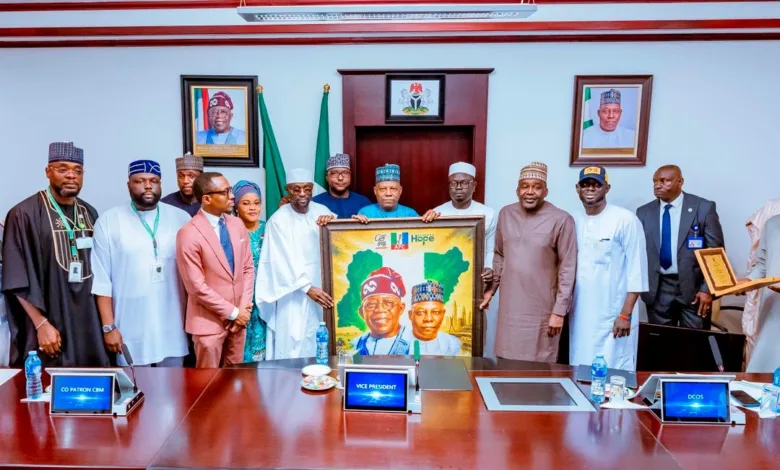
Vice President Kashim Shettima has defended the policies and programmes of President Bola Ahmed Tinubu, describing them as youth-focused and aimed at addressing contemporary national challenges through long-term reforms.
Speaking on Thursday during a courtesy visit by members of the City Boy Movement at the Presidential Villa in Abuja, Shettima said the administration remains committed to supporting young Nigerians, whom he described as critical to the country’s future development and progress.
According to the Vice President, President Tinubu’s leadership is driven by progressive ideas designed to tackle 21st-century challenges, even when such policies require difficult decisions and may not yield immediate public approval.
Shettima argued that sustainable economic recovery would require not only government intervention but also public support for ongoing reforms. He said democratic governance depends on active citizen participation beyond election periods.




“There is no verdict on a government more convincing than the solidarity of citizens who volunteer to stand for its success,” he said, while commending young Nigerians who continue to engage in governance and public affairs.
The Vice President also praised the City Boy Movement for mobilising support for government policies and encouraging civic participation across the country. He particularly acknowledged the role of Seyi Tinubu in engaging young people and building grassroots support structures.
Shettima further stated that the administration remains committed to protecting democratic freedoms, including the rights of citizens to express support or criticism of government policies.
He urged members of the movement to maintain unity, discipline and consultation, stressing that enduring political institutions are built on trust and shared objectives.
Earlier, the Director-General of the City Boy Movement, Francis Oluwatosin Shoga, praised the Tinubu administration’s performance in infrastructure development and economic reforms, saying the policies were producing positive results.