Tinubu’s absence at UNGA: When diplomatic falsehood is presented as guilt — by Olabode Opeseitan
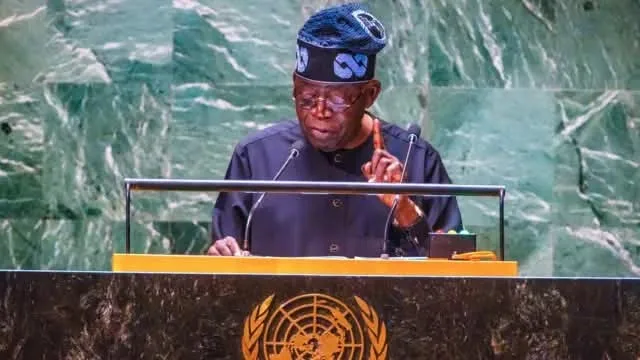
There is a particular strain of Nigerian commentary that mistakes noise for analysis, and nowhere is it louder than in the annual ritual of parsing President Bola Tinubu’s travel calendar every September. The phrase for this crowd already exists, and Wole Soyinka minted it. The Nobel laureate first called Nigeria’s online swarm “the nattering nit-wits of the Internet” back in 2016, long before Peter Obi’s supporters turned him into a cult figure, but the label was resurrected and pinned squarely on the Obidient movement in April 2023, after Soyinka published his essay “Fascism on Course,” excoriating the group’s allergy to criticism as “one of the most repulsive, off-putting concoctions” he had encountered in Nigerian politics. Whether he personally re-coined the exact phrase for that specific audience or admirers did the honours on his behalf, the label stuck, and it fits the current chorus with tailored precision.
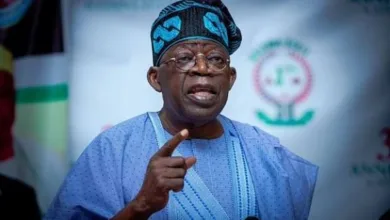
The occasion for this year’s nattering is Tinubu’s third consecutive decision to skip the United Nations General Assembly in person, sending Vice President Kashim Shettima instead, as he did in 2024 and 2025. Tinubu attended the 78th session in September 2023, his first, addressed the chamber, and rang the NASDAQ closing bell in a bid to court foreign capital. Since then he has judged, apparently correctly, that a week of ceremonial photographs in Turtle Bay is not the highest use of a president’s finite bandwidth. This is not indifference to global affairs; it is triage, and triage is precisely what strategy looks like from the outside when the strategist declines to explain himself to a peanut gallery.
The Arrest Theory Anchored in Shallowness
Here is where the nitwits found their second wind, having exhausted the first line of attack about disrespect and disengagement. When that argument sagged, a fresher and considerably sillier one took its place: that Tinubu was avoiding New York to dodge arrest by American authorities. This theory has the narrative shape of a thriller and the legal substance of a tweet. Sitting heads of state attending the UNGA carry personal immunity, ratione personae, under customary international law, reinforced by Section 11 of the 1947 UN-U.S. Headquarters Agreement, which obligates American federal, state, and local authorities to guarantee unimpeded transit to and from the UN district for official representatives of member states. No serving head of state has ever been arrested by host authorities while attending the General Assembly, a fact so settled that international law scholars discuss it less as a live controversy than as a textbook footnote.
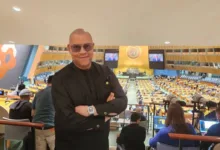
The theory also collapses on its own contradictions. This is the same Tinubu who has crossed into American territory a couple of times since his inauguration, including the very 2023 UNGA trip in which he pressed the flesh on Wall Street. A president dodging arrest does not fly to the country holding the alleged warrant, address a chamber full of cameras, and ring a bell at the NASDAQ. He also does not, per the Presidency’s own clarifications, face any documented travel or entry restriction into the United States. The arrest narrative required its authors to skip the single fact that would have deflated it: that immunity is not a courtesy extended case by case, it is a structural guarantee written into the treaty that created the very forum they imagine he was avoiding.
Good Company, Empty Podiums?
It also helps to notice who else was not on that podium. More than 60 percent of the UN’s 193 member states typically send someone other than their head of state to the general debate, and 2026 was no exception. Xi Jinping and Vladimir Putin, leaders of two of the world’s most consequential economies, again sent surrogates rather than themselves. Narendra Modi, prime minister of India, the world’s most populous nation, has also opted out of recent sessions. Claudia Sheinbaum of Mexico and Giorgia Meloni of Italy skipped the 2026 gathering entirely. If absence from UNGA were the diagnostic of guilt or diplomatic irrelevance that Tinubu’s critics imagine, half the world’s most powerful leaders would be fugitives. It is instead the ordinary calculus of leaders who have decided that a General Assembly speech, delivered to a half-empty hall during a week crowded with 190-odd competing statements, rarely outperforms a bilateral phone call or a targeted delegation.
Nigeria, notably, was not absent from anything. It was represented, argued for, and negotiated on behalf of by a vice president and a delegation whose work in New York does not evaporate because the president himself was not photographed at the lectern. Diplomacy is not liturgy; it does not require the principal’s physical presence to count as attendance. The country had a seat, a voice, and a delegation empowered to use both.
What the Complaint Is Really About?
Strip away the legal cosplay and the arrest fan fiction, and what remains is simpler and less flattering to the critics: an attempt to dictate to an elected president how he should spend his travel budget, his calendar, and his political capital. That is not oversight. It is theatre dressed as accountability, and it substitutes outrage for the harder work of reading a budget document or a central bank statement.
Because the actual scoreboard, the one built from data rather than grievance, tells a story these critics would rather not examine. In just over three years, Nigeria stopped financing its budget through the printing press and stopped mortgaging tomorrow’s oil to pay for today’s subsidy, ending the practice of running the economy on money without value and crude sold forward before it was pumped, even as the country still absorbs the tail of previous administrations’ forward-sale commitments. Nigeria’s foreign reserves have climbed to roughly $54.6 billion, an 18-year high, up from about $32.29 billion when Tinubu took office in May 2023, a nearly 70 percent increase according to the president’s own adviser, citing Central Bank data.
The Numbers That Actually Matter
Crude oil and condensate output, the lifeblood of federal revenue, has climbed from a depressed base of roughly 1.2 million barrels a day into the 1.7-to-1.8 million range through much of 2026, driven by pipeline security gains and a jump in active drilling rigs from about 14 in 2023 to more than 60 today. Nigeria’s merchandise trade balance, which swung between deficits from 2020 to 2022, turned positive from the last quarter of 2023 onward and has since produced surpluses running into the trillions of naira, including a ₦12.60 trillion surplus in the second quarter of 2026 alone, more than double the prior year’s figure. State governments across the federation, by the account of the Nigeria Governors’ Forum chairman and the president himself, no longer routinely borrow to pay civil-service salaries, a habitual crisis of the pre-2023 era that has quietly become historical trivia. GDP growth has been outpacing population growth as inflation has eased from its late-2024 peak, and productivity indicators, while uneven, point in the same direction.
None of this amounts to a finished job yet. Living standards remain under real strain, the subsidy exit’s shockwaves have not fully dissipated, and plenty of Nigerians are still waiting for macroeconomic stabilisation to translate into grocery-bill relief, even though there have been noticeable improvements. But a government that has hauled reserves to an 18-year peak, restored a functioning trade surplus, weaned states off salary-borrowing, and lifted oil output by roughly 200,000 to 500,000 barrels a day is not a government adrift; it is one mid-repair, with the receipts to prove it.
The Standard, Applied Consistently
If the nattering nitwits want to hold Tinubu to a standard, fine, but let it be a coherent one. Judge him on reserves, on the stability of the naira, on production numbers, on the trade balance, on improving infrastructure, on whether states can meet payroll without a bailout. Do not judge him on whether he shook hands under a particular UN chandelier in a year when Xi, Putin, Meloni, Sheinbaum and Modi found reasons of their own to stay away. A president skipping a plenary speech while his country runs a trade surplus and sits on its fattest reserve cushion in nearly two decades is not a scandal. It is, if anything, evidence that he is spending his time where the balance sheet actually moves, which is precisely what a strategist, as opposed to a tourist with a title, is supposed to do.