Tinubu’s reforms driving Enugu’s infrastructural boom
From expanding road networks and a planned smart city to major investments in healthcare and aviation, Enugu State is undergoing one of its most ambitious infrastructure expansions in decades. Progess the state government says has been made possible by economic reforms introduced under President Bola Ahmed Tinubu.
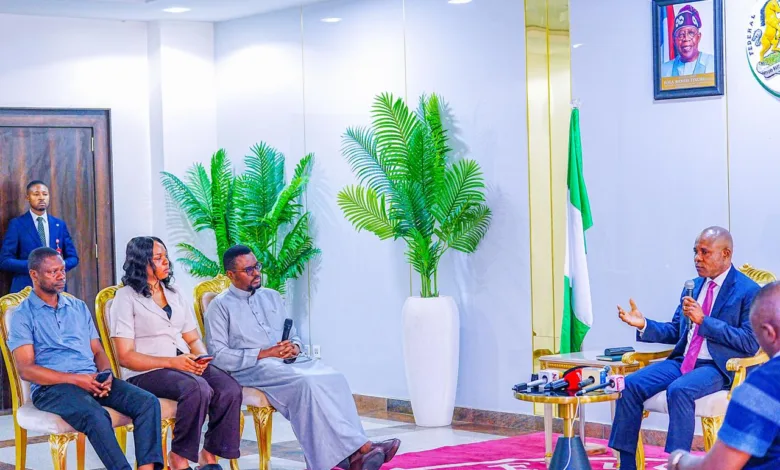
Governor Peter Mbah said the scale of ongoing projects across the state would have been difficult to embark on without recent federal policy changes that have provided more funds for subnational governments.
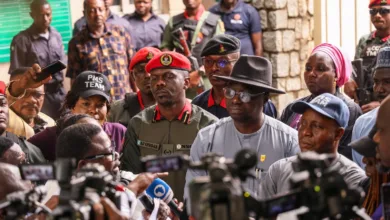
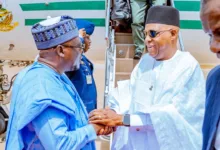
He made the remarks on Tuesday during a meeting with a delegation led by Bayo Onanuga, who was accompanied by presidential media aides on a Renewed Hope tour of projects in the South-East.
The delegation included Sunday Dare, Tunde Rahman, Tope Ajayi, Otega Ogra, Olusegun Dada, Fredrick Nwabufo, and Linda Akhigbe.


At the centre of Mbah’s argument is the impact of federal reforms, particularly the removal of fuel subsidies and the unification of the foreign exchange market. These policies have been described by analysts as “bold.”
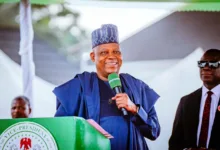
“It would have been impossible, to say the least, for us to have done things at this scale indeed, without some of the bold and courageous policies of Mr President,” Mbah told the delegation.
“What the policies of Mr President did for subnationals is largely to free up resources. What we’re seeing today at a scale is only possible because we now have more funds coming from the federation.”
According to the governor, increased federal allocations have allowed the state to simultaneously pursue capital-intensive projects in multiple sectors, from infrastructure to human capital development. He argued that the reforms have strengthened the ability of states to function as drivers of economic growth under Nigeria’s federal structure.
One of the most significant federal-backed projects cited during the remarks is the concession and upgrade of the Akanu Ibiam International Airport. Mbah described the deal as a milestone that required direct efforts by the president.
He said the airport project would reposition Enugu as a regional aviation hub, with plans for expanded connectivity, including direct international flights to destinations such as the United States, United Kingdom and China, adding that it would boost tourism, investment and diaspora engagement.
Education reform is another area where the state says federal intervention is having an impact. The administration pointed to the Nigerian Education Loan Fund as a key policy that has eased pressure on state-level scholarship schemes while widening access to tertiary education for students who previously faced financial barriers.
Beyond aviation and education, Enugu is also investing heavily in healthcare infrastructure, including a 300-bed specialist hospital designed to reverse medical tourism. The state is pairing this with investments in digital security systems, AI-enabled surveillance infrastructure, and a large-scale smart city project aimed at repositioning Enugu as a modern investment destination.
The smart city development, according to state officials, is designed to attract private capital by providing fully serviced infrastructure, including roads, water, electricity, fibre-optic networks, and underground utilities. It will create an environment where investors can build without the burden of providing basic infrastructure independently.
Mbah’s administration has consistently framed these projects as interconnected components of a broader economic strategy aimed at expanding Enugu’s economy, attracting investment, and improving living standards.
For the governor, the central argument is that subnational governments now have more room to perform and that the combination of federal policies and Enugu’s ambition are reshaping what is possible in infrastructure delivery across the country.