Weak competition, not costs, driving high cement prices in Nigeria – Agora Policy
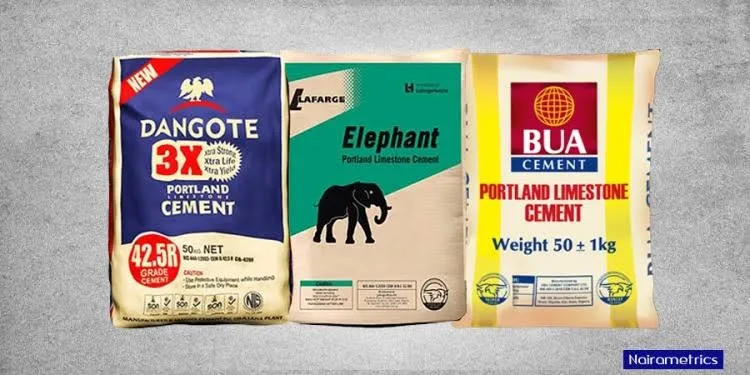
A new report by Nigerian think tank Agora Policy has blamed weak competition and market concentration, rather than production costs, for persistently high cement prices in Nigeria.
Titled “Market Power and Failure of Competition Policy in Nigeria’s Cement Industry”, the report notes that Nigeria has maintained self-sufficiency in cement production since 2012 and currently has installed capacity far above domestic demand. Despite this, prices remain high, benefiting mainly the three dominant producers: Dangote Cement, Lafarge Africa, and BUA Cement.
Agora Policy highlighted that these companies recorded average operating profit margins of 49 percent as of September 2025, up from about 30 percent in 2024—significantly higher than margins in North America, Europe, Asia, and most of sub-Saharan Africa. The think tank says this indicates that market structure, not production costs, determines pricing outcomes.
The report traced the market’s concentration to import-substitution policies in the late 1990s and early 2000s, which encouraged domestic production through tariff protection, tax incentives, and exclusive access to limestone deposits. While these policies built capacity and eliminated imports, they created a highly concentrated market dominated by a few firms.



Agora Policy also noted that excess production capacity is often used strategically to deter new entrants, allowing incumbents to maintain pricing power. Regional market segmentation due to high transport costs further enables producers to charge higher prices in certain areas.
The think tank warned that high cement prices act as a “hidden tax” on housing and infrastructure, increasing the cost of building homes, schools, hospitals, and roads, and limiting the effectiveness of government budgets.
It advised that reopening imports would not solve the problem sustainably, citing logistics challenges and the bulkiness of cement. Instead, Agora Policy called for reforms to restore competition, including open access to limestone, improved logistics, regional market oversight, and stronger regulation by the Federal Competition and Consumer Protection Commission (FCCPC).
The report concluded that Nigeria’s cement challenge is no longer about expanding capacity but ensuring that industrial policy benefits consumers, warning that continued market dominance could undermine affordable housing, infrastructure development, and inclusive economic growth.