How APC’s expanding political machinery is reshaping the presidential contest — by Gloria Adebajo-Fraser
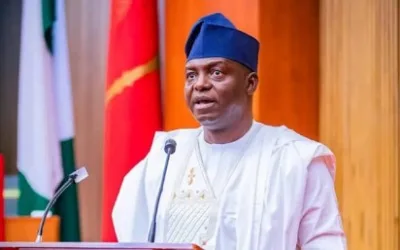
Elections are not won on social media timelines. They are contested through political structures, grassroots organisation, public confidence, credible leadership and the ability to translate national influence into votes.
As Nigeria approaches the 2027 presidential election, these considerations are central to the contest between the governing All Progressives Congress and its opponents.
The National Patriots’ working projection identifies 25 states plus the Federal Capital Territory as potential victories for President Bola Ahmed Tinubu. This political scenario, rather than a scientific opinion poll, examines nationwide organisation, evolving alliances, governorship networks and the administration’s reform record.
THE POLITICAL MACHINERY
The APC has developed an extensive network of governors, legislators, party executives and ward-level organisations. Reports place its governorship strength at 31 states. Its leadership has cited approximately 13 million registered members, although membership must be distinguished from actual votes.
In 2023, Tinubu received 8,794,726 votes, against Atiku Abubakar’s 6,984,520 and Peter Obi’s 6,101,533. Rabiu Kwankwaso received 1,496,687.
These figures demonstrate the importance of mobilisation, coalition-building and geographical reach.
Social media can amplify political messages; it cannot substitute for functioning nationwide organisation. Campaign communication must reach streets, markets, farms, campuses and polling units where citizens decide.
THE GOVERNORS AND THE PRESIDENT’S CAMPAIGN STRATEGY
A distinctive feature of the APC campaign is its emphasis on state-level organisation.
Its reported campaign arrangements involve political figures across party boundaries, including Osun Governor Ademola Adeleke, Anambra Governor Chukwuma Soludo and FCT Minister Nyesom Wike. Other prominent figures associated with campaign organisation include Senate President Godswill Akpabio, former Zamfara Governor Abdulaziz Yari, Kaduna Governor Uba Sani and Enugu Governor Peter Mbah.
President Tinubu’s Kaduna campaign engagement on October 24 illustrated the importance of regional mobilisation.
The National Patriots advocate a decentralised approach: the President should continue governing while governors and campaign organisations sustain constituency-level engagement.
Governors understand local economic grievances, security concerns, cultural sensitivities and development expectations. They know which roads remain unfinished, which hospitals require equipment and where farmers need support.
National leadership defines direction; subnational leadership understands the terrain.
Under this proposed strategy, Tinubu would concentrate on major engagements, including campaign opening and closing rallies, while governors lead extensive state-level programmes.
The FCT requires separate political organisation and ministerial coordination; it is not an additional governorship.
FAAC: GOVERNORS MUST EXPLAIN DELIVERY
State governments have received increased Federation Account allocations following petrol-subsidy removal and associated fiscal changes.
Governors should use their state campaign rallies to demonstrate precisely what these increased allocations have delivered to their constituencies.
These rallies provide opportunities to showcase completed roads, functional clinics, equipped schools, agricultural support, water projects, transport improvements and employment programmes.
Governors should present figures, timelines and verifiable evidence of completed projects. Constituents deserve to see how increased public revenues have translated into tangible development.
The EFCC has also established a dedicated directorate to monitor state government finances and the utilisation of FAAC allocations.
Federal reforms and subnational governance are interconnected. The President may initiate fiscal policy, but citizens encounter its practical results through state and local institutions.
This makes governors’ stewardship of expanded allocations an important subject for public examination during the 2027 campaign.
THE CHANGING POLITICAL MAP
The National Patriots’ scenario begins with the 12 states Tinubu won in 2023:
Ekiti, Ogun, Ondo, Oyo, Rivers, Benue, Kogi, Kwara, Niger, Borno, Jigawa and Zamfara.
It then identifies 13 additional states won by opposition candidates in 2023.
Atiku Abubakar won eight: Osun, Bauchi, Yobe, Kaduna, Katsina, Bayelsa, Taraba and Akwa Ibom.
Peter Obi won five: Lagos, Plateau, Edo, Delta and Cross River.
The Federal Capital Territory, also won by Obi in 2023, is assessed separately.
This distinction is fundamental. The scenario examines both retention of previous victories and possible changes in states previously carried by opposition candidates.
Several 2023 margins were narrow. Atiku won Osun by 10,421 votes and Katsina by 6,762. Tinubu carried Benue by just 2,096.
Other states involved wider margins. Obi led Tinubu in Plateau by approximately 159,000 votes, while Atiku led in Bauchi by nearly 110,000.
Political realignments have altered the landscape since 2023. Akwa Ibom Governor Umo Eno joined the APC, while cooperation involving figures from other parties demonstrates changing political relationships.
These developments affect organisational structures, although their effects on individual voting decisions remain to be established.
THE CUMULATIVE VOTE FACTOR
The central electoral question is cumulative national strength, not simply the number of states a candidate carries.
Tinubu’s 2023 total of 8,794,726 provides the baseline.
An illustrative 11-million-vote scenario requires 2,205,274 additional votes, representing approximately 25.1% growth.
A 12-million-vote scenario requires 3,205,274 additional votes, approximately 36.4% growth.
These are arithmetic scenarios, not polling forecasts. They demonstrate the scale of additional support required.
Nigeria’s constitutional requirements also include geographical spread. The Supreme Court has held that the FCT does not possess a separate electoral veto.
Tinubu won 12 states outright in 2023 while satisfying the geographical spread requirement. That distinction remains important.
WHERE ARE THE OPPOSITION’S NATIONWIDE RALLIES?
The opposition’s nationwide campaign programmes deserve scrutiny.
Nigerians are entitled to know when candidates intend to visit each geopolitical zone, how their grassroots organisations are developing and which policy alternatives they will present directly to communities.
Consultations, coalition negotiations, media appearances and digital engagement are legitimate campaign activities. However, rallies provide opportunities for direct public engagement.
Campaign organisations should explain their programmes concerning security, employment, infrastructure, education and living costs.
Public scrutiny must apply consistently to every party. Rally attendance should not be confused with verified electoral support.
REFORMS, PUBLIC CONFIDENCE AND THE 2027 DECISION
The administration’s governing record will remain central to electoral debate.
Supporters cite fiscal reforms, increased government revenues and infrastructure investment. Critics highlight persistent food costs, transport pressures, insecurity and household purchasing power.
These considerations deserve examination through evidence, implementation records and measurable outcomes.
Our forthcoming publication, Nigeria’s Great Reset: Rebuilding Today for a Prosperous Tomorrow, examines the historical context, implementation challenges and public consequences of national reforms.
It is intended for policymakers, media practitioners, students, professionals, Nigerians in the diaspora and the wider electorate, including undecided voters.
Citizens deserve evidence of achievements, acknowledgement of unfinished work and practical proposals with clear costs, responsibilities and timelines.
THE NATIONAL PATRIOTS’ PROJECTION
The National Patriots’ 25-state-plus-FCT scenario examines the APC’s organisational reach, political realignments, governors’ networks and the administration’s capacity to communicate its governing record.
It remains a political assessment rather than a measured voter-intention forecast.
Nigeria’s democratic future depends on informed citizens, credible election administration and meaningful competition.
Political organisation provides the machinery of an election. Public confidence gives that machinery democratic meaning.
The ballot box determines the result.
Principal Sources: INEC 2023 presidential election results; APC campaign announcements; FAAC reports; national media reporting; National Patriots’ political assessment.
- Adebajo-Fraser, MFR, FIPMD, is President of the National Patriots, a Political Strategist, Governance and Perception Management Consultant, Author, Researcher and Publisher of Nigeria’s Great Reset. She is also a Member of the APC Presidential Campaign Council Strategic Communications Committee for the 2027 elections.