How charlatans, opportunists can be flushed out from Nigeria’s civil service- Olaopa
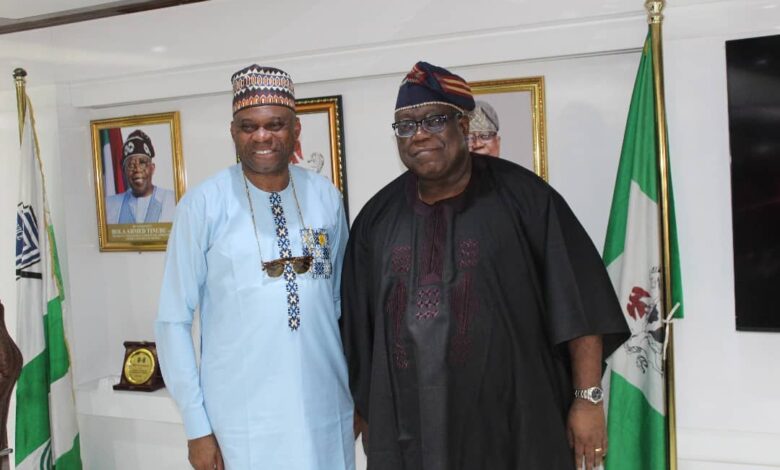
The Chairman of the Federal Civil Service Commission ((FCSC) , Prof Tunji Olaopa, on Wednesday disclosed how to flush out those he described as ‘charlatans, impostors and opportunists’ from the Nigerian civil service.
Olaopa said there is need to reprofessonalise the service and reverse its diminishing status.
He made the disclosure during a meeting with the Deputy President, African Association for Public Administration and Management (AAPAM), Mr. Dada Olugbenga, at the Commission office in Abuja.
According to Olaopa, at the heart of administrative reform of the civil service since he joined the reform struggle in 1995 as Deputy Secretary, Ayida White Paper Panel in the Presidency had been the need to reprofessionalise the public administration practice in Nigeria.


Noting the need for professionalism in the federal civil service, Olaopa said “it is professionalism that will reverse the increasingly diminishing status of this vocation that we have signed up to as our career, profession and calling.”
He said: “In this regard, I have been a civil servant all my life, and I am ever so proud to reference and revere such administrative icons of the profession as the Simeon Adebos, the Udojis, Abdul-Aziz Attah, Ayide, Asiodu, Ahmed Joda, etc. as mentors.
“I was an insider, and I know the steady but dogged efforts of colleagues over the last decades (including those in the saddle), to redeem the profession that they have dedicated their lives to
“The issue that remains for the entire community of practice and service is to confront this loaded question: how far in the reform direction has the service gone or is capable of getting?”
Olaopa lamented that the federal civil service has been degraded to such an extent that if people now apply to join it, they do so for other reasons than the desire for professionalism.
“Indeed, for a range of causative factors, the civil service jobs are most often the last on any serious professional’s preference list.
“So, we need to keep this question in focus until we get a handle on solution framework of answers to finally reposition the profession beyond the rhetoric of it. And we must also keep asking ourselves the added question of what has happened to a vocation that began as an honourable and prestigious calling that prided itself for its professionalism; for it to have reached such a degraded state that it has become the butt of derision for government non-performance”, he said.
According to Olaopa, the redemption of the civil service cannot be left to chance, and to the current corps of service leadership alone.
“The onus of responsibility therefore falls on those critical mass of professionals – public/civil servants, scholars/academics, development practitioners, etc., with the leadership and central coordination nodal points taking the lead in jumpstarting required movement to arrest the sabotage of the service and restore its professionalism”, he said.
Olaopa warned that “a profession without professional gatekeepers that ensure that the ideals and objectives of the profession are always kept under constant vigilance, has only created free entry routes for charlatans, impostors and opportunists, and can hardly gain respect, prestige and prominence it deserves.”
He added “The time is now for all of us – AAPAM, CAFRAD, CORFEPS and its states equivalents and chapters among others, to work assiduously together in the mission to revitalize that grand legacy that the founding fathers of the profession gave to us, the National Association for Public Administration and Management (NAPAM).
“NAPAM’s role will be to facilitate a continuing interchange, exchange and discourse on the state of the civil service in Nigeria, and its relationship with the Nigerian development project.
“As a body of concerned experts and stakeholders, NAPAM should be brought back to provide a critical platform where ideas, frameworks, models, dynamics and paradigms are articulated, rearticulated, and disseminated while at once providing the forum for scholars, public administrators, teachers and students of public administration to share and exchange ideas, facilitate constant conversation, and promote continuing research on the future of what’s unarguably a noble profession.”