I chose Nigeria over Obasanjo’s third-term ambition — Atiku
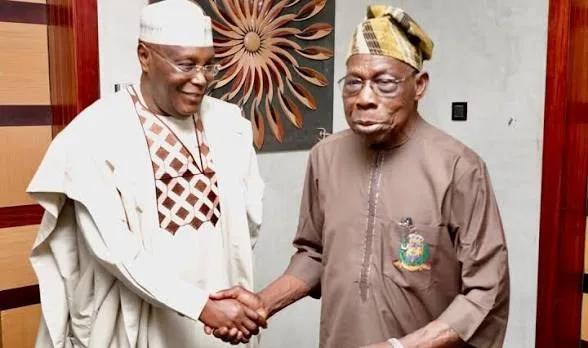
Former Vice President and African Democratic Congress (ADC) presidential candidate, Atiku Abubakar, has defended his opposition to former President Olusegun Obasanjo’s alleged third-term agenda, describing it as one of the defining moments of his political career and a victory for Nigeria’s constitutional democracy.
Reacting to Obasanjo’s recent comments about him, Atiku, in a statement issued on Saturday by his Senior Special Assistant on Public Communication, Phrank Shaibu, said the former president’s criticism stemmed from his refusal to support what he described as an unconstitutional bid to extend his tenure.
“I am proud that I stood against the third-term agenda. I am proud that I stood by the Constitution of the Federal Republic of Nigeria. I have no apology whatsoever for frustrating every attempt to subvert our democracy for personal ambition,” Atiku said.
He added, “If Chief Obasanjo’s bitterness stems from my refusal to support an unconstitutional third term, then I wear that resentment as a badge of honour. No individual, regardless of his status or accomplishments, is bigger than the Federal Republic of Nigeria.”


According to Atiku, the opposition to the third-term proposal was not a personal feud but a constitutional struggle that safeguarded Nigeria’s democracy.
“The Nigerian people won that battle. Democracy won that battle. History has already delivered its verdict,” he said.
The former vice president argued that it was ironic for Obasanjo, whose alleged third-term ambition was resisted, to now criticise those who defended the Constitution.
Atiku maintained that he had remained silent over the years out of respect for the former president but would not allow what he described as repeated attempts to distort the events surrounding the third-term controversy to go unchallenged.
“There comes a point when silence in the face of repeated distortions of history ceases to be a virtue,” he said.
“Chief Obasanjo is entitled to his opinions. He is entitled to his personal grievances. What he is not entitled to are his own facts.”