INTERVIEW: Our publishing industry reflects the state of Africa’s economy – Tade Ipadeola
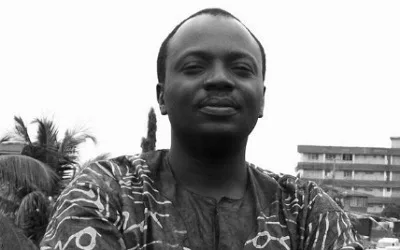
Award-winning poet and author, Tade Ipadeola, best known for his NLNG Prize-winning collection The Sahara Testament (2013), has described Africa’s publishing industry as a mirror of the continent’s struggling economy. Speaking with Western Post’s Adeola Ogunrinde at the just-concluded Quramo Festival of Words 2025, Ipadeola reflected on the growth of African literature, the challenges facing writers, and his forthcoming Yoruba prose work, Fàbú Ìgbòrò.
How would you describe the current state of African literature?
We are at a very interesting bend in the river because we now have renewed worldwide interest. For instance, a panel that went before me challenged AI, and now we cannot entirely trust what is coming out because some of it is assisted by technology. But when you look at the whole, you see a qualitative addition to what is being produced. I am particularly excited about poetry — we now have more voices across the continent, both in indigenous and colonial languages. There is a renewed interest among younger people, and I think we are doing well overall.
Since winning the NLNG Prize, we’ve seen a surge of younger poets across Africa and in the diaspora. How do you feel about this new wave of voices?


In poetry, I would say Romeo Oriogun, who was in the last NLNG category for poetry, has not only distinguished himself among younger poets but has also managed to do so outside Nigeria. I think he now teaches creative writing in the United States. Outside competitions, there is renewed interest in poetry that is performed both on the page and on the stage by young men and women.
More interesting to me is that there is now some convergence between younger and older poets. For a while, I felt there was a dangerous gap — that younger writers didn’t quite understand what older writers had done. I think there is now a renewed interest in the trajectory of African literature, and our literature is rising gradually.
Literature has always been a tool for social critique. Do you think African writers are still using their craft to effectively address societal and political issues?
Oh yes, not just in poetry — our plays and novels also critique the state of governance in Africa. Whether you’re considering South African writers, East African writers, or even North African writers (who sometimes don’t associate with us because they believe they are Arabs), you still see that element of criticism of the state. We all believe we can do better.
Of course, I understand that younger poets may be more interested in themes like sex, but if you look at three-quarters of African writers, you’ll realize that the state of Africa is still a major concern for them.
The publishing industry remains one of the biggest hurdles for writers on the continent. How would you assess the current state of publishing in Africa?
It is not yet anything to write home about. The economy is abysmal and the GDP is poor. Publishing is a capital-intensive business. When you compare what is happening here to Europe, where one book can have four editors, you see the difference. Over here, if your book has one editor, you’re lucky — and not just any editor, but one who is well paid.
Our publishing industry reflects the state of our economy in Africa. South Africa is an exception, and maybe Egypt, because their GDP is higher and they can afford to assign two editors to a book. But in East, West, and Central Africa, we still have a long way to go. That’s why young writers often look to publish in Europe or America.
Looking back from when you began your writing career to now, how would you say African writing has evolved or changed?
What I’ve observed is that once young writers discover they can write, the next thing they think about is japa because they know their talent will not receive the kind of response it deserves. This wasn’t the case thirty or fifty years ago. Back then, if you were a Kole Omotoso, Niyi Osundare, or Odia Ofeimun, you were big in Nigeria within your ecosystem.
But now, if an undergraduate wins a writing competition, the next thing you hear is that he’s gone abroad for an MFA program. We are losing a lot of writers that way — and we can’t blame them, because the environment doesn’t support their efforts.
Can you tell us more about your upcoming Yoruba prose work, Fàbú Ìgbòrò, and what readers should expect from it?
My Yoruba prose work, Fàbú Ìgbòrò, will be coming out this year. That’s what’s happening next. My poetry will follow. I’ve always written in Yoruba, but this time I’m writing in prose.
Finally, what advice would you give to young and emerging writers on the continent?
Just keep writing. Don’t allow the economy to depress your skills.