REPORT: How the King’s College concession controversy unfolded
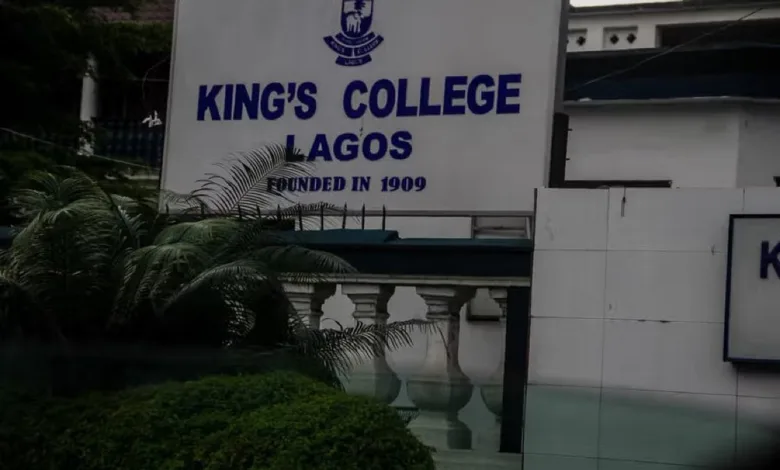
The controversy surrounding the concession of King’s College, Lagos, to the King’s College Old Boys’ Association (KCOBA) began in July 2026, following the Federal Government’s approval of a new management arrangement for the historic Federal Government school.
On July 7, KCOBA publicly announced that the Federal Government had approved the concession, describing it as a new governance framework designed to restore, modernise and sustainably manage the institution. The association also unveiled a N100 billion endowment fund to finance infrastructure renewal, teacher development, digital technology, scholarships, research, innovation and students’ welfare.
KCOBA President, Kashim Ibrahim-Imam, maintained that the arrangement was not a sale or privatisation of the school, but a partnership with the Federal Government to transform the institution.
The announcement was quickly followed by opposition from workers and parents. On July 10, the Association of Senior Civil Servants of Nigeria (ASCSN) rejected the concession, arguing that transferring the management of King’s College and other Federal Government colleges to private entities could make the institutions less affordable and threaten workers’ jobs. The union urged the Federal Government to retain ownership and control of the schools.



The Parent-Teacher Association of King’s College also formally opposed the arrangement. In a communiqué issued after its annual general meeting and reported on July 24, the PTA raised concerns about affordability, accessibility and the continued public character of the institution.
It argued that the concession could lead to increased fees and other charges that might place the school beyond the reach of children from low-income families. The PTA also questioned the level of consultation with parents and other stakeholders before the decision was taken.
The disagreement persisted through August and became more pronounced. On August 27, hundreds of parents and students staged a protest on Lagos Island against the proposed concession. The protesters demanded that the Federal Government retain control of the school, while the PTA threatened legal action and said parents could prevent students from resuming for the new academic session if their concerns were not addressed.
The dispute entered a new phase on September 4, when the Federal Ministry of Education issued a directive confirming that the processes leading to the concession had been completed and ordering its immediate implementation.
The ministry said a Transition Committee would oversee the transfer of management to KCOBA and complete the handover within six months. It further stated that, after the transition, Federal Government funding for the college from the Federation Account would cease.
The directive heightened tensions within the school. Staff opposed to the concession shut the school and resisted the proposed transfer of management, while parents continued to demand clarification over the terms of the arrangement and its implications for students and workers. By September 9, the ASCSN unit at King’s College had vowed to keep the school shut until the concession was reversed.
On September 10, the dispute widened beyond King’s College as the Joint Workers Union of the Federal Ministry of Education protested at the ministry’s headquarters in Abuja.
The workers opposed the reported 35-year concession and threatened to shut down the ministry and the Federal Unity Colleges if the government did not reverse the decision. The development turned what had initially been a dispute involving one school into a wider labour and education-sector confrontation.
The following day, September 11, the Federal Government sought to clarify the nature of the arrangement. Education Minister Tunji Alausa said King’s College had not been sold or privatised and that the Federal Government retained legal ownership of the institution. “The Federal Government retains ownership of King’s College,” he said.
Under the concession, he explained, KCOBA would be responsible for financing, rehabilitating, modernising, operating and maintaining the school, while the government would retain its statutory and regulatory powers.
The unions, however, proceeded with their opposition. In a communiqué dated September 10, the Joint Congress of Unions of the Federal Ministry of Education directed that resumption in Federal Unity Colleges be suspended until further notice.
The first-term resumption had been scheduled for September 12, and the unions linked their action directly to the King’s College concession, saying they opposed the sale, concession or privatisation of the school and other Federal Unity Colleges.
The industrial dispute affected the wider resumption of Federal Unity Colleges. On September 14, reports showed that many of the schools remained without normal academic activities as workers and parents resisted the resumption.
There is, however, a discrepancy in reports over the number of Federal Unity Colleges: the unions and several reports referred to 115 Federal Unity Colleges, while Vanguard reported 155. The more consistently cited figure in reports on the workers’ action was 115, so the dispute should not be presented as definitively affecting 155 schools without attribution.
By September 15, the disagreement had reached another flashpoint at King’s College itself. Protesting staff resisted efforts to open the school gates to KCOBA officials, who had planned to hold a press conference on the premises. Unable to enter, KCOBA President Kashim Ibrahim-Imam and other old students addressed journalists outside the school.
The association again insisted that the concession was intended to enable it to repair, modernise and manage the institution, not to acquire ownership of the school.