Inside Imo’s digital city where Nigeria’s tech problems are being addressed
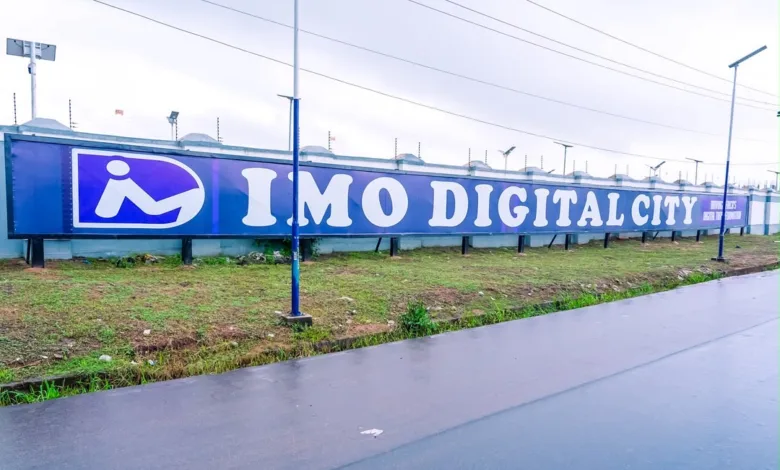
Nigeria is looking to technology to tackle some of its biggest challenges, and in the southeastern part of the country, the Imo State government hopes that a growing digital hub can become the country’s Silicon Valley. Beyond training thousands of young people in cloud engineering, coding, artificial intelligence and hardware manufacturing, Imo’s digital city is nurturing startups and entrepreneurs as the state seeks to produce the next generation of billion-dollar technology companies.
The training in artificial intelligence and other aspects of the digital sphere is supporting the manufacture of robotics and drones at the Imo digital city.
The Imo state government officials and founders told a delegation of presidential media aides who were on a recent “Renewed Hope” tour that the state’s Silicon Valley would produce the country’s next technology giants.


NVIDIA, the computer chipmaker whose meteoric rise has been fueled by the artificial intelligence boom, is now valued at about $4.8 trillion, while Apple has a market capitalization of roughly $4.3 trillion and Alphabet, Google’s parent company, stands at about $4.2 trillion are technological firms dominating the global market capitalization and private startup valuations, according to CompaniesMarketCap. The opportunities the state government seeks cannot be overemphasized.


Vehicular, phone and drone/robotic companies are some of the technological start-ups that exist at the Imo digital city.
Valentine Waturuocha, founder of TEMSConsu, said his company is already seeking solutions to security challenges. The activities of armed gangs and bandits in the country, especially in the northern part of the country, are constituting a major challenge to security agencies.
“The issue of surveillance is an issue that a lot of people in this field are already working on solutions for,” Waturuocha said. “I can tell you now that in the next five, six weeks we’ll be doing a demo where you can use a drone flying as high as an aircraft and pick up somebody carrying a concealed weapon whilst that drone is in flight.”
Chimezie Amadi, Imo’s commissioner for digital economy and e-government, said the Imo digital city is a collaboration between the public and private sectors, adding that so far $15 million have been invested into the hub by partners.
“What the government intends to achieve is to create a smart economy in the state that will pilot digital governance, job creation, innovation, stimulate innovation, and also support our youth and make them become global citizens,” the commissioner said.
“This place is a creation of a public-private partnership. We have University of California, Berkeley. Cisco is a partner here. This project attracted a $15 million investment from all these partners.”
The commissioner said the project’s longevity rests on public ownership, adding that more than 75,000 young people have been trained through the state’s Skill Up Imo programme, creating a constituency that sees value in the initiative
“Every street you enter, if you pass five youths in Imo State today, three of them have passed through this programme,” he said.
Nigeria, Africa’s most populous country with a predominantly young population, has increasingly looked to technology as a driver of economic growth as it seeks to diversify an economy long dependent on crude oil.
At the same time, Nigeria continues to grapple with a brain drain as many of its best engineers, software developers and technology professionals relocate abroad in search of better pay and more stable opportunities.
Initiatives like Imo Digital City, analysts argue, are part of a broader effort to create opportunities at home, equipping young people with skills in artificial intelligence, robotics, cybersecurity and cloud computing while encouraging them to build companies rather than seek careers overseas.
On his part, Tunde Rahman, presidential aide, said the developments in Imo aligns with the vision of President Bola Tinubu’s administration.
“More importantly, you also notice that Governor Hope Uzodimma has been doing projects that are essentially federal government projects. He says that he needs to support the federal government in line with the Renewed Hope agenda,” he said.
He said the removal of subsidies on petroleum products by Tinubu was well thought out.
“Normally when you have reforms like that, it will be painful in the beginning, but ultimately, everybody will see the beauty, the gains of those reforms. As we have seen, whether in the North where we went to the other day when we started, or in Imo, Abia, Ebonyi and the one that we visited, all the governors were telling us there will be more money for them, more space for them to be able to implement other developments,” Rahman said.
The foundation for a greater Imo and, by large, a more innovative Nigeria is being laid through investments in digital skills, entrepreneurship, artificial intelligence and local technology manufacturing.