Oba Abolarin: A ruler who uplifts, not exploits, by Babafemi Ojudu
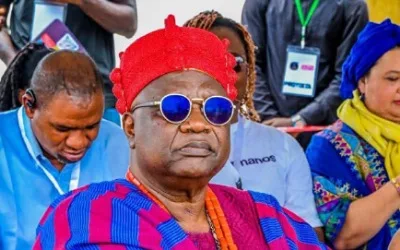
In our part of the world, leadership is too often equated with titles, positions, and the power to command resources. We see people scramble for political office, cling to it desperately, and despair when it slips away. Yet, true leadership—service that leaves an enduring impact—does not depend on political office. It is a calling, and those who embrace it find creative ways to touch lives, regardless of circumstance.
Few embody this better than Kabiyesi, Oba Adedokun Omoniyi Abolarin the Orangun of Oke-Ila. A brilliant lawyer by training, Oba Abolarin could easily have pursued a comfortable life at the bar or on the bench and in the city of Abuja or Lagos. Instead, he chose a harder, nobler path: to immerse himself in the responsibilities of traditional authority, not as a title to be flaunted, but as a duty to be lived.
A Different Kind of King
In an age when some traditional rulers bring dishonor to their stools by selling communal lands, extorting their people, or scamming innocent citizens and governments in foreign lands or indulging in vanities financed by questionable levies, Oba Abolarin stands apart. He has built a school where the children of poor farmers and traders receive quality education at no cost. But he has gone beyond the symbolism of charity: he teaches them himself, he tills the soil with them, he demonstrates by action that work is dignity.




This is not mere benevolence; it is transformational. Today, the fruits of that vision are evident—graduates of his school are excelling at universities, defying the limitations of their background, and lifting their families into a new horizon of possibility.
Service Without Office
What makes Oba Abolarin’s story especially moving is that he proves service does not end with political appointment. Too many among us imagine that without ministerial titles, governorship, or senatorial seats, our ability to serve ceases. Here is a man who shows the opposite: by returning to his community, by investing his intellect, energy, and personal resources, he has built a model of leadership that outlives electoral cycles and budgetary allocations.
His life is a reminder that the true test of leadership is not what you do when you hold office in Abuja, Lagos, or Ado Ekiti, but what you create when all you hold is influence, vision, and a commitment to your people.
Lessons for Our Time
Nigeria is in desperate need of such examples. Communities are weary of kings who behave as landlords and predators rather than guardians and visionaries. The Orangun of Oke-Ila challenges this decline. He embodies the tradition of progressive education that once flourished in this land—he himself a proud product of the University of Ife in its golden era.
His recent personal loss, the passing of his beloved wife, would have been enough to slow many down. Yet, Kabiyesi has remained steadfast, forging ahead with his mission, a living proof that service is not seasonal, but a lifelong duty.
A Call to Others
If every traditional ruler, every wealthy son or daughter of a community, every retired politician or public servant chose just one area—education, healthcare, skills, culture—and committed themselves as Oba Abolarin has, the story of our land would be different.
We do not need palaces overflowing with imported champagne while the people thirst. We do not need royal entourages of SUVs while villages remain without schools. We need more kings with hoes in their hands, chalk on their fingers, and vision in their hearts.
Conclusion
Kabiyesi, Oba Omoniyi Abolarin, teaches us that service is not about where you stand, but what you do with where you stand. He has turned the stool of Oke-Ila into a platform for transformation, not for self-glorification. His example should shame those who exploit their people and inspire those who still believe in the possibility of a new Nigeria.
May his reign be long, and may his story remind us that leadership is not conferred by office, but earned by service.